
Fly Fishing for Beginners Book: Your Fast-Start Guide
By Bobby Harris — Navy FMF Corpsman (2002–2010), founder of First Rise Outfitters

A fly fishing for beginners book is the single fastest way to go from zero experience to catching fish on the water. The right beginner’s guide to fly fishing gives you a structured roadmap covering gear, casting, fly selection, and reading water. Without that structure, most new anglers waste months picking up bad habits or buying the wrong equipment. With it, you can catch your first fish in days, not seasons.
How to choose the best fly fishing book for beginners
Not every fly fishing book serves a beginner well. Many are written for anglers who already know the difference between a midge and an elk hair caddis. The best beginner books share four qualities: plain language, photos or illustrations, step-by-step casting instruction, and a logical progression from gear to water.
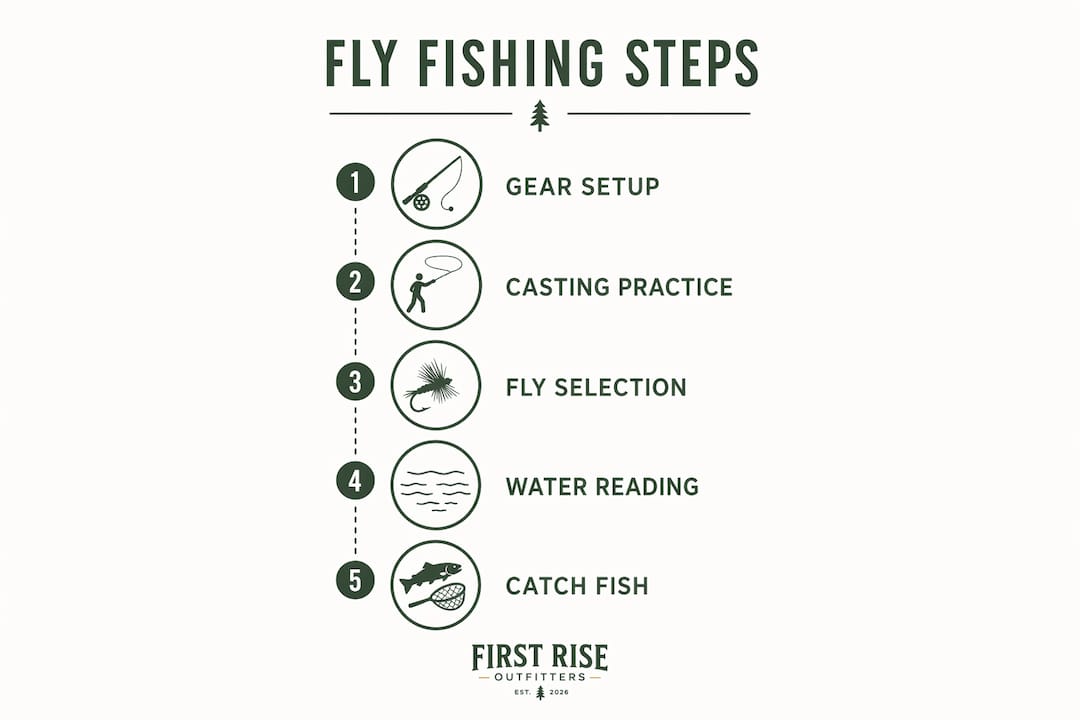
When you pick up a beginner guide, check the table of contents before you buy. A good book covers these core topics in order:
- Gear setup: rod, reel, fly line, leader, and tippet explained simply
- Casting technique: the basic overhead cast broken into clear steps
- Fly selection: a short starter list of dry flies, nymphs, and streamers
- Reading water: where fish hold and why
- Knots: the clinch knot and surgeon’s knot at minimum
- Ethics: catch-and-release handling and Leave No Trace principles
Avoid books that open with 200 pages of fly pattern recipes. Those are reference catalogs, not learning tools. You want a guide that builds your confidence chapter by chapter, not one that buries you in Latin species names on page three.
Experienced anglers recommend breaking fly fishing into manageable skills: tackle, casting, fly selection, and water reading. A book that mirrors that sequence will get you fishing faster than any other format.
Pro Tip: Read the first chapter of any book before committing. If the author assumes you already know what a “tippet” is without explaining it, put the book down and find one that does.
What topics do the best beginner fly fishing books cover?
The best beginner guides share a consistent curriculum. Here is what you should expect to learn, in the order most books teach it:
-
Gear overview. A complete beginner setup costs between $200 and $400, similar to a standard spin-fishing outfit. Reels run $50–$150 and fly lines $40–$80. Knowing this upfront prevents sticker shock and helps you budget realistically.
-
The 9-foot, 5-weight rod. The industry standard all-rounder for beginners handles dry flies to moderate streamers on most American trout waters. Every beginner book worth reading recommends starting here.
-
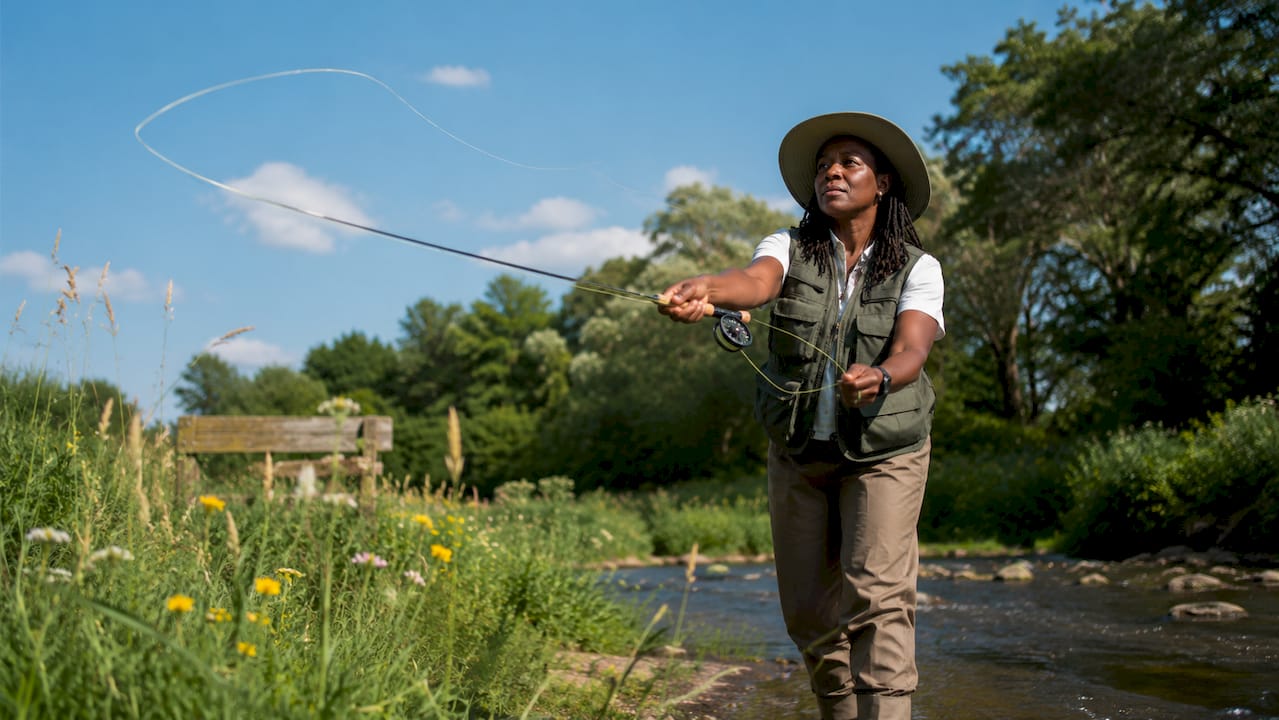
Casting basics. Good books teach the overhead cast as a clock-face motion: rod tip travels from 10 o’clock to 2 o’clock, stops abruptly, and “unloads” energy into the line. The stop is everything. Rushing the forward cast before the line straightens behind you is the most common beginner mistake, and a good book will warn you about it repeatedly.
-
Fly selection. Start with 5–10 versatile flies covering dry flies, nymphs, and streamers. A Parachute Adams, an Elk Hair Caddis, a Hare’s Ear nymph, and a Woolly Bugger streamer cover most trout situations in the United States. Confidence with a few proven patterns beats confusion with fifty.
-
Reading water. Fish hold in predictable spots: seams between fast and slow current, behind boulders, in the tail of pools, and along undercut banks. A good book teaches you to see the river as a fish does, not just as moving water.
-
Catch-and-release ethics. Wet your hands before handling fish, keep them in the water as long as possible, and revive them facing upstream before release. Most top beginner books dedicate at least one chapter to this, and for good reason.
Pro Tip: Gear matters less than you think. Understanding water and fish behavior is what actually puts fish on the end of your line. Let the book teach you to read the river before you spend money on a new rod.
How do you practice fly fishing from a book effectively?
Reading a book is step one. Practicing what it teaches is step two, and most beginners skip straight to the river. That is a mistake.
- Cast on grass first. Practicing with yarn on grass lets you focus on form without the distraction of moving water or the risk of hooking yourself. Tie a short piece of yarn to your leader and spend 20 minutes in the backyard before your first trip.
- Keep casts short. Most trout strikes happen within 20–40 feet. A soft presentation at 25 feet catches more fish than a sloppy 60-foot cast that lands like a dropped rope. Your book will tell you this. Believe it.
- Build a small fly box. Stick to 5–10 flies until you understand why each one works. Adding more flies before you understand the basics creates confusion, not options.
- Pick beginner-friendly water. Small, clear streams with visible trout are ideal for beginners. You can watch the fish react to your fly, which teaches you more in one afternoon than a week of fishing murky water.
- Take a casting clinic. A 2-hour casting lesson can accelerate your progress by weeks. Local fly shops often offer affordable or free clinics. Pair that with your book and you have a complete learning system.
The combination of book knowledge and deliberate practice is what separates anglers who catch fish in their first month from those who struggle for a year. Check out this complete beginner’s guide from Firstriseoutfitters for a solid companion resource.
What are the best fly fishing books and resources for new anglers?
Several well-regarded books consistently appear on beginner reading lists across American fly fishing communities. Here is a practical overview to help you choose:
| Book type | Best for | What it covers |
|---|---|---|
| Quick-start guides | Zero-experience beginners | Gear, casting basics, first fish in days |
| Illustrated technique books | Visual learners | Step-by-step casting with photos |
| Regional trout guides | Location-specific beginners | Local hatches, water types, fly patterns |
| E-books and digital guides | Budget-conscious beginners | Rapid learning, accessible anywhere |
| Fly shop handouts | Hands-on learners | Local conditions, free or low cost |
The Orvis Quick-Start Guide to Fly-Fishing is one of the most recommended titles for absolute beginners in the United States. It is built around the idea that simplifying tackle and focusing on presentation leads to early success, which is exactly the right philosophy for someone picking up a fly rod for the first time.
Regional guides are underrated by beginners. A book written specifically for Colorado tailwaters or the Catskills will teach you more about the fish you are actually chasing than a general guide ever could. Ask your local fly shop which regional book they recommend. Most shops have a short list they hand to every new customer.
Supplementary resources matter too. YouTube channels from reputable fly fishing organizations, online forums, and local casting clubs all reinforce what you read. A book gives you the foundation. Community gives you the feedback.
For gear guidance that complements your reading, Firstriseoutfitters has a solid wilderness fly fishing resource worth bookmarking alongside your beginner guide.
Key Takeaways
A fly fishing for beginners book works best when paired with deliberate grass casting practice, a small fly selection, and short-range accuracy on beginner-friendly water.
| Point | Details |
|---|---|
| Choose the right book | Look for plain language, photos, and a logical gear-to-water progression. |
| Start with a 9-foot, 5-weight rod | This is the industry standard all-rounder for beginners on most American trout water. |
| Practice on grass before the river | Yarn casting on grass builds muscle memory and prevents bad habits from forming. |
| Keep casts short and accurate | Most trout strike within 20–40 feet; presentation beats distance every time. |
| Supplement books with clinics | A 2-hour casting lesson from a local fly shop can accelerate your learning by weeks. |
What I wish someone had told me before I picked up a fly rod
The biggest lie in fly fishing is that it is impossibly hard. I believed it for longer than I should have. The sport has a reputation for complexity that keeps a lot of people from ever trying it, and that is a shame.
Here is what I have actually found: fly fishing is not hard. It is unfamiliar. Those are two very different things. A good beginner book makes it familiar fast. The first time I read a clear explanation of the clock-face casting stroke with a photo showing the rod position at 10 and 2 o’clock, something clicked that no amount of watching other people fish had ever produced.
The gear obsession is real and it is a trap. New anglers spend hours comparing rods and reels when the fish do not care about any of that. What they care about is whether your fly lands softly and drifts naturally. A book teaches you that. A new rod does not.
My honest advice: buy one good beginner book, read it cover to cover before you buy a single piece of gear, then go practice on grass for a week. You will show up at the river with more confidence than most people who have been fishing for years. Celebrate the first cast that feels smooth. Celebrate the first fish, no matter how small. The sport rewards patience, and patience starts with the right foundation.
— Bobby
Gear up for the water with Firstriseoutfitters
Learning fly fishing is one thing. Looking the part while you do it is another.
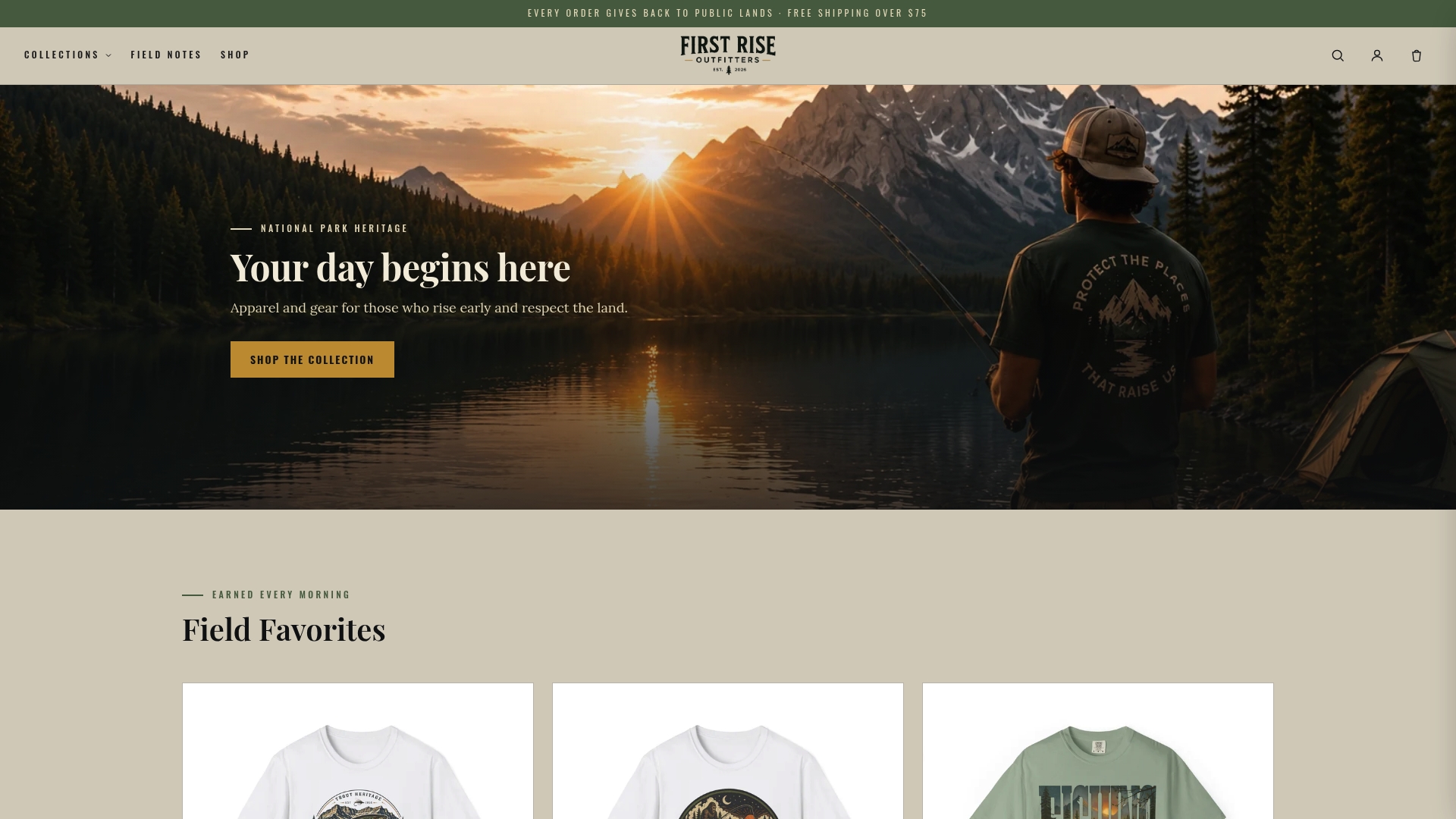
Firstriseoutfitters makes fishing apparel built for anglers who are on the water before the sun clears the treeline. The badge tee series features hand-designed artwork of brook, brown, rainbow, and cutthroat trout, printed on garment-dyed Comfort Colors blanks in muted, river-inspired tones. No loud logos, no tech-bro performance gear. Just well-made shirts that feel right on a tailgate at 5 AM. If you are just getting started, the Fishing Definition Tee makes a great first piece of fly fishing gear that you will actually wear. Grab one and get out there.
FAQ
What is a fly fishing for beginners book?
A fly fishing for beginners book is a structured guide that teaches new anglers gear setup, casting technique, fly selection, and how to read water. The best ones are written in plain language with photos and step-by-step instruction.
How much does beginner fly fishing gear cost?
A complete beginner fly fishing setup costs between $200 and $400, which is comparable to a standard spin-fishing outfit. Reels typically run $50–$150 and fly lines $40–$80.
How long does it take to catch your first fish fly fishing?
Beginners who follow structured, basics-focused instruction can catch their first fish within days of starting. Pairing a good beginner book with grass casting practice and a short casting clinic speeds up that timeline significantly.
What fly rod should a beginner start with?
The 9-foot, 5-weight fly rod is the industry standard all-rounder for beginners. It handles dry flies to moderate streamers on most American trout waters and works well across a wide range of conditions.
Do I need a casting lesson if I have a beginner book?
A book gives you the knowledge and a casting lesson gives you real-time feedback. A 2-hour lesson from a local fly shop can accelerate your progress by weeks, making it a worthwhile addition to any beginner reading plan.
Recommended
- How to Fly Fish: A Complete Beginner’s Guide – First Rise Outfitters
- Adventure Fly Fishing: A Complete Wilderness Guide – First Rise Outfitters
- Brook Trout Fishing T-Shirt | Vintage Native Waters Angler Tee – First Rise Outfitters
- Marsh Fishing: Techniques, Gear, and Top Spots – First Rise Outfitters