
Marsh Fishing: Techniques, Gear, and Top Spots
By Bobby Harris — Navy FMF Corpsman (2002–2010), founder of First Rise Outfitters
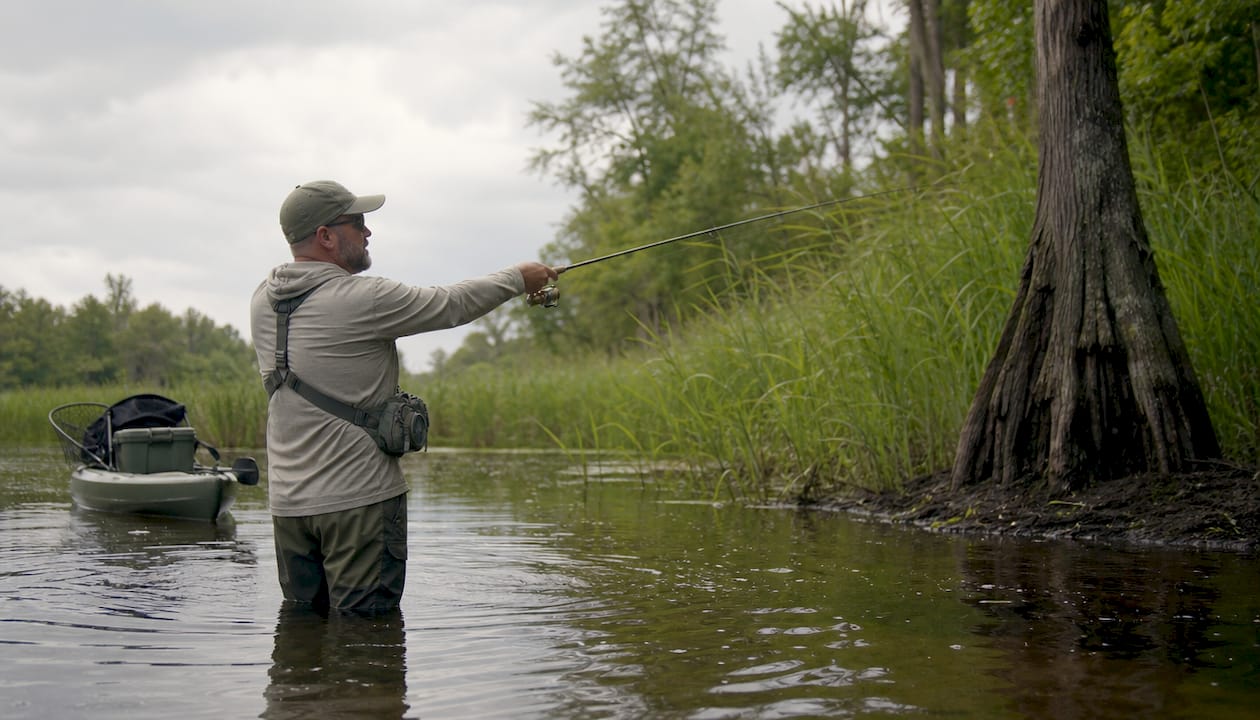
Marsh fishing is the practice of targeting game fish in wetland environments, including salt marshes, tidal creeks, and shallow coastal flats. Redfish, speckled trout, and flounder are the primary species anglers pursue in these habitats across the Gulf Coast and Southeast United States. Success depends on reading environmental cues like tidal shifts and wind history, selecting the right gear, and approaching fish without spooking them. Louisiana’s inshore marsh sets the standard for this discipline, with 2026 slot limits for redfish at 18–27 inches and a daily bag limit of 4 fish per person. Get these fundamentals right, and wetland fishing becomes one of the most rewarding experiences in inshore angling.
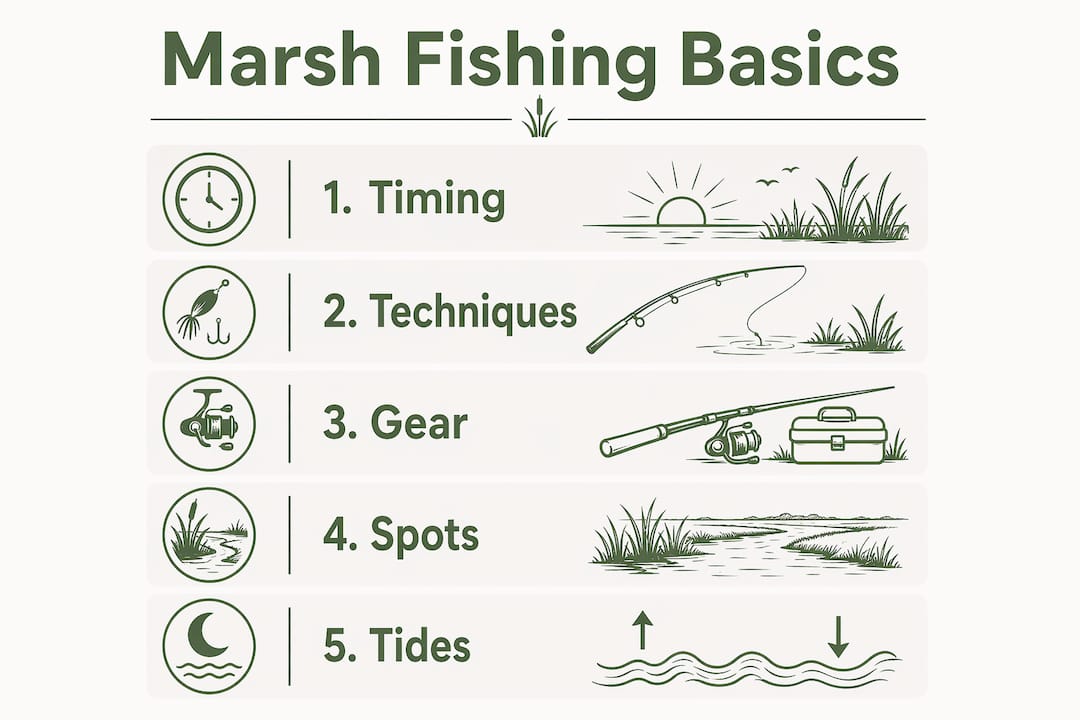
What are the best marsh fishing techniques?
The most effective wetland fishing techniques center on three principles: presenting your lure in the right place, at the right time, and without alerting the fish. Marshes are shallow and clear enough that a careless cast or a noisy approach can shut down an entire flat in seconds.
Weedless rigs are non-negotiable. Screw-lock wide-gap hooks paired with light bullet weights let you work soft plastics through thick marsh grass without constant hang-ups. This is the single most common failure point for anglers new to wetland environments. A standard exposed hook will snag on every cast.
Knowing where to cast matters just as much as what you throw. Target these high-probability zones:
- Mud boils: A sudden puff of mud rising from the bottom signals a fish that just moved. Cast near mud boils immediately, and you will often draw a strike within seconds.
- Creek mouths and cuts: Water funnels through these narrow passages on every tide change, carrying batfish and crustaceans with it. Predators stack up here to feed.
- Oyster bars: The shell structure holds baitfish and provides ambush cover. Work the edges, not the top.
- Broken marsh grass edges: These irregular lines give redfish a wall to pin bait against. Cast parallel to the edge rather than perpendicular.
Stealth is the technique most anglers underestimate. Push poles, low-speed trolling motors, or wading are the preferred approaches in skinny water. Vibrations travel far through shallow flats, and a loud motor will push fish off a flat before you ever see them.
Pro Tip: Wear polarized amber or copper lenses when scanning marsh flats. They cut through the tea-colored water and let you spot the copper backs of redfish against the mud bottom before you cast, which means you can place your lure directly in front of a fish rather than guessing.
How do tides, wind, and seasonal changes affect marsh fishing success?
Environmental timing is the single biggest variable in wetland fishing. You can have the right gear and the right lure, but if you show up at the wrong stage of the tide, you will fish empty water.
- Arrive before the tide turns. Redfish feed most aggressively during the first 30 minutes of a tidal shift, whether the tide is flooding or falling. Position yourself at your target spot before the change, not after.
- Use 72-hour wind history, not today’s forecast. A sustained north wind blowing for 72 or more hours drains shallow interior ponds and concentrates redfish at the mouths of trenasses and bayous. Current weather tells you what is happening now. Wind history tells you where the fish already are.
- Fish spring tides hard. New and full moon tides create the most extreme flooding and draining cycles in marsh flats. Bait gets pushed deep into the marsh on the flood and funneled out through cuts on the fall. Predators follow every step of that movement.
- Adjust for water temperature seasonally. In summer, fish move to deeper potholes and shaded creek bends during midday heat. In fall and winter, shallow flats warm faster than open water, pulling fish up to feed during the warmest part of the afternoon.
- Match your boat draft to the season. Interior ponds hold the most fish under the least pressure, but they require a boat that draws under 10 inches to access them.
The angler who studies the last three days of wind before launching will consistently outfish the angler who only checks the morning forecast. Wind history shapes where fish are. Tide timing shapes when they feed. Master both, and the marsh becomes predictable.
Seasonal strategy also means adjusting your lure weight and retrieve speed. Cold water slows fish metabolism, so a slower, bottom-dragging presentation outperforms a fast retrieve in winter months. Spring and fall are the most forgiving seasons for beginners because fish are actively feeding across multiple depth zones.
What gear is essential for effective marsh fishing?
Marsh fishing gear is defined by one priority: function in shallow, vegetation-dense water. Every piece of equipment you bring should help you move quietly, cast accurately, and land fish before they reach structure.
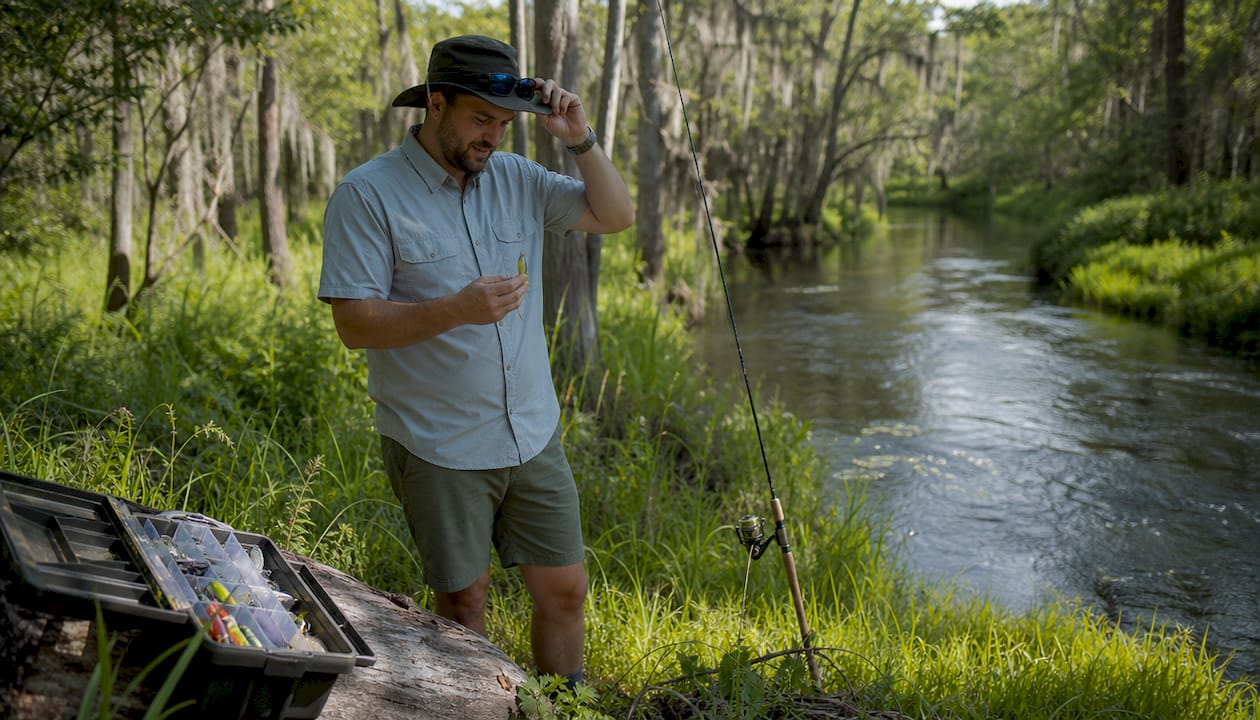
Rods and reels: A 7-foot medium-light spinning rod rated for 10–17 lb braid gives you the casting distance and sensitivity needed for sight fishing on flats. Pair it with a 2500 to 3000 series reel spooled with 20 lb braided line and a 20–25 lb fluorocarbon leader. Braid cuts through water and gives you direct feel. Fluorocarbon disappears in tannic water.
Lures that work in marsh conditions:
- Soft plastic paddle tails and shrimp imitations on weedless jig heads
- Popping cork rigs with a live shrimp or soft plastic suspended underneath
- Gold or chartreuse spinnerbaits for low-visibility water
- Topwater frogs and walkers for early morning action along grass edges
Optics: Amber or copper polarized lenses improve contrast in tannic water far better than gray lenses. This is not a minor upgrade. Spotting a redfish at 40 feet versus 15 feet changes whether you get a clean cast or spook the fish entirely.
Boat selection: A draft under 10 inches is the threshold for accessing interior marsh ponds. Shallow-draft skiffs that draw as little as 4.5 inches reach water that bay boats simply cannot. Less access pressure means more fish.
Pro Tip: Tune your drag before you launch. Experienced anglers apply the 1/3 drag rule in open water but tighten drag near oyster reefs and pilings to turn fish quickly and prevent them from cutting the line on shell structure.
Apparel matters more than most anglers admit. Long-sleeve sun shirts protect against UV exposure during full-day flats fishing. Lightweight, quick-dry fabrics keep you comfortable whether you are wading or running between spots. A good fishing shirt that breathes well and covers your arms is as practical as any lure in your box.
Where are the top marsh fishing spots and habitats?
The most productive marsh habitats share one trait: they concentrate bait. Find the bait, and the predators are close behind. Feeder creeks and oyster beds funnel crustaceans and baitfish during low tide, making them reliable feeding stations for redfish and speckled trout.
| Habitat type | Why it holds fish | Best tide stage |
|---|---|---|
| Creek mouths | Funnels bait on every tide change | First 30 min of tide shift |
| Oyster bars | Structure holds bait and ambush cover | Falling tide |
| Grass flat edges | Broken edges pin bait against a wall | Flooding tide |
| Interior potholes | Deeper water holds fish in heat and cold | Midday, slack tide |
| Tidal drain cuts | Concentrates bait on falling water | Last hour of falling tide |
Regional differences shape which habitats you prioritize. Louisiana’s inshore marsh offers vast interior pond systems accessible only by shallow-draft skiffs. The Georgia and South Carolina coast features narrower tidal creeks with heavy oyster bar structure. Florida’s Gulf Coast marshes tend toward open grass flats with scattered pothole systems. Each region rewards the same reading skills, applied to slightly different terrain.
- Louisiana Gulf Coast: Interior ponds and trenasse systems; redfish and speckled trout dominate
- Texas coast: Expansive grass flats and spoil islands; redfish and flounder
- Georgia and South Carolina: Narrow tidal creeks with dense oyster structure; redfish and flounder
- Florida Gulf Coast: Open grass flats with pothole systems; redfish and snook
Key Takeaways
Successful marsh fishing requires reading environmental timing, using weedless gear, approaching fish quietly, and targeting structure that concentrates bait.
| Point | Details |
|---|---|
| Time your arrival by tides | Position at your target spot before the tidal shift, not after it begins. |
| Use 72-hour wind history | Sustained north winds drain interior ponds and concentrate redfish at bayou mouths. |
| Rig weedless every time | Screw-lock wide-gap hooks with bullet weights prevent snagging in marsh grass. |
| Prioritize amber polarized lenses | Copper-tinted lenses improve fish visibility in tannic, tea-colored water. |
| Match boat draft to habitat | A draft under 10 inches accesses interior ponds with far less fishing pressure. |
What I have learned from years on the marsh
The marsh has a way of humbling anglers who rely on gear over observation. I have watched anglers with expensive setups work a flat for two hours and catch nothing, while a guy in a kayak with a push pole and a $6 soft plastic cleaned up 50 yards away. The difference was not the lure. It was the approach.
The biggest shift in my own fishing came when I stopped checking the morning weather and started studying the wind from the previous three days. That single habit change put me on fish consistently when others were scratching their heads. The marsh does not reset overnight. It responds to accumulated conditions, and the angler who understands that has a real edge.
I also think the wetland ecosystem deserves more respect than it gets from casual anglers. Marsh grass beds are nursery habitat for the same species we chase. Driving a prop through a grass flat to reach a spot faster is a trade-off that costs everyone in the long run. Pole in, wade in, or stay out. The fish will still be there next season if you treat the habitat right.
One more thing: do not underestimate the value of local knowledge. A guide who has fished the same marsh for 20 years knows which pothole holds fish in a north wind and which one goes dead in summer. That knowledge takes years to build. If you are new to a region, one guided trip is worth more than a dozen solo days of trial and error.
— Bobby
Gear up for the marsh with Firstriseoutfitters
Marsh fishing starts before sunrise, and the right gear makes those early hours a lot more comfortable.
Firstriseoutfitters builds fishing apparel for anglers who are already on the water when most people are still hitting snooze. The badge tee series features hand-designed artwork printed on garment-dyed Comfort Colors blanks in muted, river-inspired tones. These are shirts built for tailgates at 5 AM and long days on the flats, not for the gym. Check out the angler tee collection for well-made shirts that look as good off the water as they do on it. If you want something with a classic outdoor feel, the vintage fishing tee is a solid choice for any angler who takes their time on the water seriously.
FAQ
What fish can you catch marsh fishing?
Redfish, speckled trout, and flounder are the most common targets in coastal marsh environments. Largemouth bass and bowfin are common in freshwater marsh systems further inland.
When is the best time to fish in a marsh?
The first 30 minutes of a tidal shift produces the most aggressive feeding activity. Early morning and late afternoon during spring and fall offer the most consistent action across species.
What rig works best for marsh fishing?
A weedless soft plastic on a screw-lock wide-gap hook with a light bullet weight is the most reliable setup. It moves through marsh grass without snagging and presents naturally to feeding fish.
How does wind affect marsh fishing?
A sustained north wind blowing for 72 or more hours drains shallow interior ponds and pushes redfish toward bayou mouths and deeper cuts. Checking wind history rather than current conditions is the most reliable way to predict fish location.
Do you need a special boat for marsh fishing?
A shallow-draft skiff drawing under 10 inches is the preferred vessel for interior marsh access. Bay boats with deeper drafts are limited to larger passes and miss the most productive, low-pressure fishing areas.