Sustainable T-Shirt Materials: How to Choose the Best Fabric
By Bobby Harris — Navy FMF Corpsman (2002–2010), founder of First Rise Outfitters
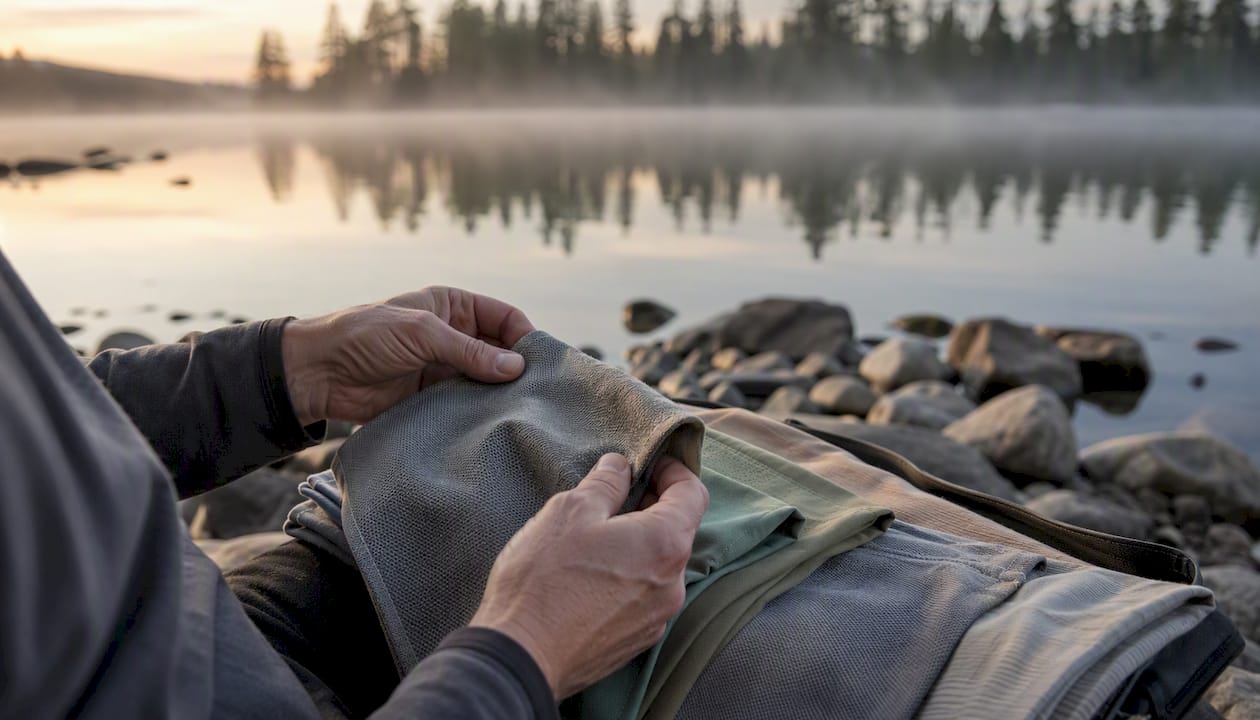
The most sustainable t-shirt material depends on your single biggest priority. If you want low chemical input and a shirt that biodegrades at end of life, lean toward organic cotton or linen. If circularity and waste reduction matter most, recycled cotton or recycled polyester are your best bets. When low water use and closed-loop processing are the goal, Tencel/lyocell or LENZING™ ECOVERO™ pull ahead. No single fiber wins on every axis, and that’s actually good news: it means you can match the material to what you care about most.
Three quick checks you can do in under 10 seconds on any product page:
- Look for GOTS (Global Organic Textile Standard) if the shirt claims organic fiber. GOTS verifies the full supply chain, not just the raw cotton.
- Look for GRS or RCS (Global Recycled Standard / Recycled Claim Standard) if the shirt claims recycled content. These certifications verify the percentage and source of recycled material.
- Look for OEKO-TEX® STANDARD 100 if you want assurance that the finished fabric has been tested for harmful substances, regardless of fiber type.
For lifecycle comparisons across materials, the Higg Materials Sustainability Index (Higg MSI) is the industry’s most widely used LCA reference tool. Brands like Firstriseoutfitters use it alongside supplier certificates when evaluating blanks. The sustainable fabrics guide from Printful offers a useful consumer-facing overview of how these criteria apply across common materials.
Key Takeaways
Choosing the right eco-friendly t-shirt fabric comes down to matching your priority (water use, biodegradability, circularity, or durability) to the material and certification that actually delivers on it.
| Point | Details |
|---|---|
| Match material to your priority | Organic cotton/linen for biodegradability, recycled cotton for circularity, lyocell for low water use. |
| Verify certifications by number | GOTS, GRS, and OEKO-TEX license numbers are publicly verifiable; a name alone is not enough. |
| Longevity beats material swaps | A durable tee worn 200 times has a lower per-wear footprint than a “recycled” shirt that fails in 30 washes. |
| Check fabric weight (gsm) | A 180+ gsm jersey construction signals durability and better print quality over the shirt’s life. |
| Firstriseoutfitters | Tees built on Comfort Colors and Bella+Canvas blanks with published fiber specs and garment-dye processes. |
Table of Contents
- How do sustainable t-shirt materials compare side by side?
- What makes natural fibers a responsible choice for t-shirts?
- How do recycled and regenerated fibers reduce impact for t-shirts?
- Which production steps drive the most environmental impact?
- Which certifications actually mean something for t-shirts?
- How do you choose the most sustainable t-shirt at checkout?
- How Firstriseoutfitters selects sustainable blanks
- Why longevity and transparency usually beat single-material claims
- Firstriseoutfitters tees that meet the checklist
- Sources
How do sustainable t-shirt materials compare side by side?
The table below covers the materials you’ll encounter most often. Use it to narrow your options before reading the deeper sections.
| Material | Water/GHG footprint | Pesticide/chemical use | Biodegradability | Durability | Comfort for tees | Price/availability | Key certifications | Best use |
|---|---|---|---|---|---|---|---|---|
| Organic cotton | Moderate water; lower GHGs than conventional | Very low (no synthetic pesticides) | Yes, fully biodegradable | Good; similar to conventional cotton | Soft, breathable, familiar | Moderate; widely available | GOTS, OEKO-TEX | Everyday tee, warm-weather wear |
| BCI cotton | Similar to conventional; some improvement | Reduced vs. conventional; not pesticide-free | Yes | Good | Same as conventional cotton | Low cost; very widely available | BCI Cotton label | Budget everyday tee |
| Recycled cotton (RCOT™/Texloop) | Significantly lower; Higg MSI data shows ~91% less water vs. conventional in a 50/50 blend | Near zero (diverts waste) | Yes, if not blended with synthetics | Moderate; shorter fibers require blending | Slightly coarser; depends on blend | Moderate; growing availability | GRS, RCS | Casual tee, workwear |
| Recycled polyester | Lower than virgin polyester; still fossil-fuel derived | Low (no growing inputs) | No; persists in landfill | Excellent | Moisture-wicking; less breathable | Low; widely available | GRS | Activewear, performance tee |
| ECONYL® (regenerated nylon) | Lower than virgin nylon | Low | No | Excellent | Smooth, stretchy | Higher; limited | GRS | Trims, blended performance items |
| Tencel™/Lyocell | Low water; closed-loop solvent recovery | Low; wood-pulp sourced | Yes, biodegradable | Good | Silky, drapey, soft | Moderate | OEKO-TEX, FSC wood source | Soft everyday tee, warm-weather |
| LENZING™ ECOVERO™ | At least 50% lower water and carbon vs. generic viscose | Low; controlled wood sources | Yes | Good | Soft, fluid drape | Moderate | EU Ecolabel, OEKO-TEX | Drapey, lightweight tee |
| Linen (flax) | Very low water and inputs | Very low; grows in poor soil | Yes, fully biodegradable | Very good; gets softer with wear | Crisp, breathable; less stretchy | Moderate | OEKO-TEX | Warm-weather tee or shirt |
| Hemp | Very low water; no pesticides typically | Very low | Yes, biodegradable | Excellent; abrasion-resistant | Slightly coarse; softens with blending | Moderate; growing | OEKO-TEX | Durable everyday tee, outdoor wear |
Quick picks by priority:
- Lowest water use: Linen, hemp, or LENZING™ ECOVERO™
- Best circularity: Recycled cotton (RCOT™) or recycled polyester
- Best biodegradability: Organic cotton, linen, hemp, or lyocell
- Best durability per wear: Hemp, linen, or recycled polyester blends
- Softest everyday tee feel: Organic cotton or Tencel™/lyocell
What makes natural fibers a responsible choice for t-shirts?
Natural fibers are the most familiar category, and they cover a wide range of environmental profiles. Understanding the differences helps you read product pages with a sharper eye.
Organic cotton
Organic cotton is grown without synthetic pesticides or fertilizers, and GOTS (Global Organic Textile Standard) verifies that standard across the entire supply chain, from farm to finished garment. That’s the key distinction: a shirt labeled “made with organic cotton” without a GOTS license number may only contain a fraction of certified fiber, with no verification of the dyeing or finishing stages. GOTS covers both.
For t-shirts specifically, organic cotton behaves almost identically to conventional cotton. You get the same soft hand, the same breathability, and similar fabric weights (a 5.0–6.1 oz/sq yd range is typical for a quality tee). The cost premium is real but modest, and availability has grown significantly as more brands adopt it.
Hemp
Hemp is one of the lowest-input crops you can grow. It typically needs no pesticides, very little water compared to cotton, and actually returns nutrients to the soil. The fiber is naturally strong and abrasion-resistant, which translates to a longer-wearing tee. Pure hemp fabric can feel stiff at first, but blending it with organic cotton (a 55/45 or 60/40 hemp/cotton ratio is common) softens the hand considerably while keeping the durability advantage. For outdoor and fishing tees that see real use, hemp blends hold up well over time.
Linen (flax)
Linen has a strong case as one of the original low-impact textiles. Flax grows in poor soil with minimal water and pesticide inputs, and the whole plant can be used with little waste. The trade-off for t-shirts is texture: linen is naturally crisp and structured rather than stretchy or drapey. It breathes exceptionally well in warm weather, but it wrinkles easily and doesn’t have the soft, relaxed feel most people expect from a tee. Linen works best in a looser, more shirt-like cut rather than a fitted knit tee.
Bamboo (mechanically processed vs. chemically processed)
This one trips people up. Bamboo grows fast and needs little water, which sounds great. But most “bamboo fabric” on the market is actually bamboo viscose, a chemically processed fiber that uses solvents similar to conventional rayon production. Mechanically processed bamboo (where the fiber is extracted physically, like linen) is genuinely a natural fiber, but it’s rare and expensive. If a product page says “bamboo viscose” or “bamboo rayon,” it’s a chemically derived fiber, not a natural one. Check for OEKO-TEX certification to at least verify the finished fabric is free of harmful residues.
Practical buying notes for natural fiber tees:
- Look for fabric weight in grams per square meter (gsm) or oz/sq yd. A 160–200 gsm range is typical for a comfortable, durable everyday tee.
- Check the fiber breakdown percentage. “Contains organic cotton” without a percentage is a red flag.
- Knit constructions (jersey, interlock) are standard for tees and generally more recyclable than woven constructions because they use a single fiber type.
Pro Tip: When comparing two tees with similar fiber content, the knit construction tells you a lot about longevity. A tighter, heavier jersey (180+ gsm) will hold its shape and resist pilling far longer than a lightweight open-knit, which means a lower per-wear environmental cost over the shirt’s life.
How do recycled and regenerated fibers reduce impact for t-shirts?
Recycled and regenerated fibers solve different problems than natural fibers. Instead of reducing agricultural inputs, they either divert waste or replace virgin raw materials with more efficiently processed alternatives.
Recycled cotton (RCOT™/Texloop)
Recycled cotton comes from two sources: pre-consumer waste (factory offcuts and yarn scraps) and post-consumer waste (old garments). Pre-consumer feedstock tends to produce cleaner, more consistent fiber. Post-consumer is harder to process but diverts more end-of-life waste.
The practical challenge is fiber length. Recycled cotton fibers are often shorter and weaker than virgin fibers, which is why most recycled cotton tees blend RCOT™ with virgin organic cotton to maintain strength and a smooth finish. A 50/50 RCOT™/organic cotton blend is a common sweet spot.
Recycled polyester
Recycled polyester (often labeled rPET, made from plastic bottles or post-industrial polyester waste) is durable, moisture-wicking, and holds color well. For activewear and performance tees, it’s a strong choice. The significant caveat is microplastic shedding: polyester fabrics release synthetic microfibers during washing, and those particles enter waterways. A GuppyFriend wash bag or a Cora Ball can reduce shedding, but it doesn’t eliminate it. At end of life, polyester doesn’t biodegrade, so circularity depends on textile-to-textile recycling infrastructure, which is still limited in the US. For an everyday casual tee, a natural or regenerated fiber is a better fit. For a fishing or hiking performance tee where moisture management matters, recycled polyester earns its place.
ECONYL® (regenerated nylon)
ECONYL® is regenerated nylon made from ocean plastic, fishing nets, and industrial waste. It’s a genuinely circular material with strong durability, but it’s not a typical base fabric for basic tees. You’ll find it more often in trims, linings, or blended performance items. If a brand claims ECONYL® content, look for GRS certification to verify the recycled feedstock.
Tencel™/lyocell and LENZING™ ECOVERO™
These are the regenerated fibers that make the most sense for soft, drapey everyday tees. Both are made from wood pulp using a closed-loop solvent recovery process, meaning the solvents used to dissolve and spin the fiber are captured and reused rather than discharged. Coats’ EcoRegen™ lyocell process, for example, claims approximately 99.7% solvent recovery, which dramatically reduces chemical discharge compared to conventional viscose.
LENZING™ ECOVERO™ goes a step further with certified or controlled wood sourcing and EU Ecolabel certification in some markets. Lenzing reports at least 50% lower water consumption and carbon emissions compared to generic viscose production. For a lightweight, breathable tee with a silky hand, ECOVERO™ is one of the most credible options available.
Stat to know: A 50% RCOT™/50% organic cotton blend uses significantly less water per kilogram compared to 100% conventional cotton, based on Higg MSI data cited by Circular Systems.
A note on microplastics and end-of-life: Any tee with polyester content sheds microfibers in the wash. If biodegradability or end-of-life matters to you, stick with natural or lyocell-based fibers and avoid synthetic blends.
Which production steps drive the most environmental impact?
Knowing where impact happens in a t-shirt’s life cycle helps you read brand claims more critically. The fiber is just the beginning.
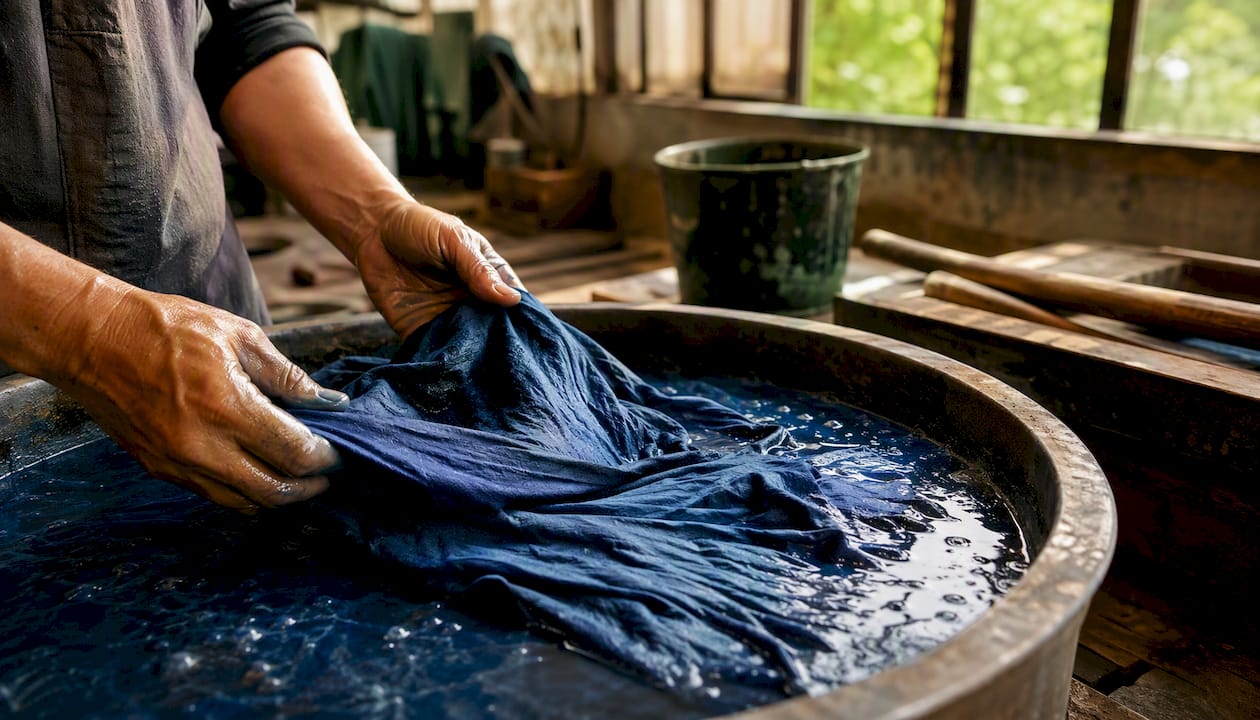
A t-shirt moves through roughly six stages before it reaches you: fiber cultivation or sourcing, spinning and yarn formation, fabric knitting, dyeing and finishing, garment assembly, and printing or decoration. Two of those stages typically dominate the environmental footprint: fiber growing (for natural fibers) and dyeing and finishing.
Conventional cotton growing accounts for a disproportionate share of global pesticide use relative to the land it occupies. Dyeing and finishing, meanwhile, are water-intensive and often involve chemical auxiliaries, fixatives, and heat energy. Garment-dyeing (dyeing the finished garment rather than the yarn or fabric) can reduce water and dye waste because the process is applied once to a finished piece rather than across a long run of fabric. Spin-dyeing (adding pigment during fiber extrusion) is even more efficient for synthetic fibers because it eliminates a separate dyeing step entirely.
Printing matters too. Direct-to-garment (DTG) printing uses water-based inks and applies them only where needed, which reduces waste compared to screen printing large runs. For graphic tees like those at Firstriseoutfitters, garment-dye plus DTG or water-based screen printing is a lower-impact combination than piece-dyed fabric with plastisol inks. For more on how printing choices affect eco impact, the sustainable graphic clothing guide from 3 Wizard Clothing covers decoration methods in practical detail.
Production red flags and green signals:
- 🚩 No fiber breakdown percentage listed
- 🚩 “Eco-friendly” or “sustainable” with no certification or third-party verification
- 🚩 Conventional dyeing with no mention of water treatment or chemical management
- 🚩 Plastisol inks on a tee marketed as environmentally responsible
- ✅ GOTS, GRS, or OEKO-TEX certification with a verifiable license number
- ✅ Garment-dye or spin-dye process noted
- ✅ Water-based or discharge inks for printing
- ✅ Mill name or country of manufacture disclosed
Which certifications actually mean something for t-shirts?
Labels are only useful if you know what they verify. Here’s what each one actually covers.
GOTS (Global Organic Textile Standard) is the gold standard for organic fiber claims. A GOTS license number on a product page is verifiable at Global-standard.
GRS (Global Recycled Standard) and RCS (Recycled Claim Standard) verify recycled content. GRS covers the full supply chain and includes social and environmental processing criteria. RCS is a simpler chain-of-custody standard that verifies content percentage only.
BCI (Better Cotton Initiative) is widely misunderstood. BCI describes itself as the world’s leading cotton sustainability program, training farmers in water stewardship, soil health, and better pesticide use. But BCI is not an organic certification. BCI cotton can still be grown with synthetic pesticides and fertilizers; the program focuses on measurable improvement, not elimination. As of the 2023–2024 season, BCI accounted for roughly 23% of global cotton production, with 1.39 million licensed farmers producing about 5.64 million tonnes. That scale is meaningful for systemic change, but it’s not the same as buying certified organic.
OEKO-TEX® STANDARD 100 tests the finished fabric for harmful substances: pesticide residues, heavy metals, formaldehyde, and similar chemicals. It doesn’t verify how the fiber was grown or whether the supply chain is transparent. Think of it as a safety floor, not a full sustainability claim.
Higg MSI is a lifecycle assessment tool used by brands and suppliers to compare materials on water, energy, and GHG metrics. It’s a useful internal benchmark, but it’s not a consumer-facing certification. When a brand cites Higg MSI data, ask whether the figures are product-specific or category averages, and whether they’ve been independently verified.
Fairtrade covers the social and economic side of sustainability: fair wages, safe working conditions, and community investment for farmers and workers. Fairtrade certification is worth looking for alongside environmental labels, especially for cotton, where farm-level labor conditions vary widely.
How to read a product label:
- Check for a certification name AND a license or certificate number you can verify
- Look for the fiber breakdown as a percentage (e.g., “55% organic cotton, 45% recycled cotton”)
- Note whether the mill or country of manufacture is disclosed
- Treat any claim without a verifiable third-party certification as marketing, not evidence
How do you choose the most sustainable t-shirt at checkout?
A clear priority makes the decision much easier. Work through these steps in order.
- Define your priority. Water use? Biodegradability? Circularity? Durability? Your answer narrows the field immediately. If you’re not sure, organic cotton or a GOTS-certified hemp blend covers most bases reasonably well.
- Read the fiber breakdown. Look for the percentage of each fiber. “Contains recycled materials” without a number is not useful information.
- Check certifications. GOTS for organic, GRS/RCS for recycled content, OEKO-TEX for chemical safety. Verify the license number if you want to be sure.
- Check fabric weight and construction. A heavier jersey (180+ gsm) in a knit construction will outlast a lightweight open-knit by years. Longevity is one of the biggest sustainability levers available to you.
- Check dye and finish claims. Garment-dyed, water-based inks, and low-impact finishing are worth paying attention to. No mention of dyeing process is a mild red flag.
- Check care instructions and repairability. A shirt that can be cold-washed, air-dried, and easily mended at a small hole will have a far lower per-wear footprint than one that requires special care or falls apart at the seams after 30 washes.
Red flags to avoid:
- “Sustainable” or “eco-friendly” with no certification, fiber breakdown, or supply-chain detail
- Closed-loop claims without third-party verification (e.g., “100% circular” with no GRS or independent audit)
- Fiber blends that include elastane or polyester in a tee marketed as biodegradable
Care tips that extend garment life:
- Wash in cold water and skip the dryer when you can. Heat degrades fibers faster than almost anything else.
- Wash less often. Spot-clean when possible.
- Mend small holes before they grow. A five-minute repair can add years to a shirt’s life.
- Store folded rather than hung to prevent shoulder distortion on heavier tees.
Pro Tip: For active use like fishing or hiking, a recycled polyester or polyester-blend tee often makes more practical sense than a pure natural fiber, even though it scores lower on biodegradability. The durability and moisture management offset the end-of-life trade-off when the shirt genuinely lasts longer. Match the material to the use case, not just the label.
How Firstriseoutfitters selects sustainable blanks
At Firstriseoutfitters, evaluating a blank starts before a single shirt is ordered. The process covers material spec sheets, supplier certifications, mill traceability, and hands-on sample testing for feel, shrinkage, and print adhesion. A blank that looks good on paper but pills after five washes or fades unevenly after garment dyeing doesn’t make the cut.
The brand works with blanks from Comfort Colors, Bella+Canvas, and Gildan, all of which publish material and certification information at the product level. For a tee like the Cutthroat Trout Anatomy T-Shirt on Bella+Canvas 3001, the blank spec is listed directly on the product page so you can verify fiber content and construction before buying.
When evaluating any supplier, the practical checks that matter most are:
- Request the certification license number, not just the certification name. A GOTS or GRS number is verifiable in seconds.
- Ask for Higg MSI scores where available, especially for recycled or regenerated fiber blends.
- Confirm whether recycled content is pre-consumer or post-consumer, and what percentage is verified by GRS or RCS.
- Check whether the blank supplier discloses the mill name and country of manufacture.
These aren’t bureaucratic hoops. They’re the difference between a shirt that genuinely reduces impact and one that just uses the right words on a hang tag.
Pro Tip: Always ask for fabric weight in gsm and yarn count when comparing blanks from different suppliers. Weight and yarn count tell you more about durability and print quality than the fiber label alone.
Why longevity and transparency usually beat single-material claims
Here’s the thing most sustainable fashion guides won’t say plainly: the material is often not the most important variable. How long you wear the shirt usually matters more.
A well-made organic cotton tee worn 200 times has a dramatically lower per-wear footprint than a “recycled” tee that pills after 30 washes and ends up in a landfill. The math is straightforward. Extending a garment’s useful life by doubling the number of wears cuts the per-wear impact roughly in half, regardless of what the fiber is. That’s a bigger gain than most material substitutions can deliver.
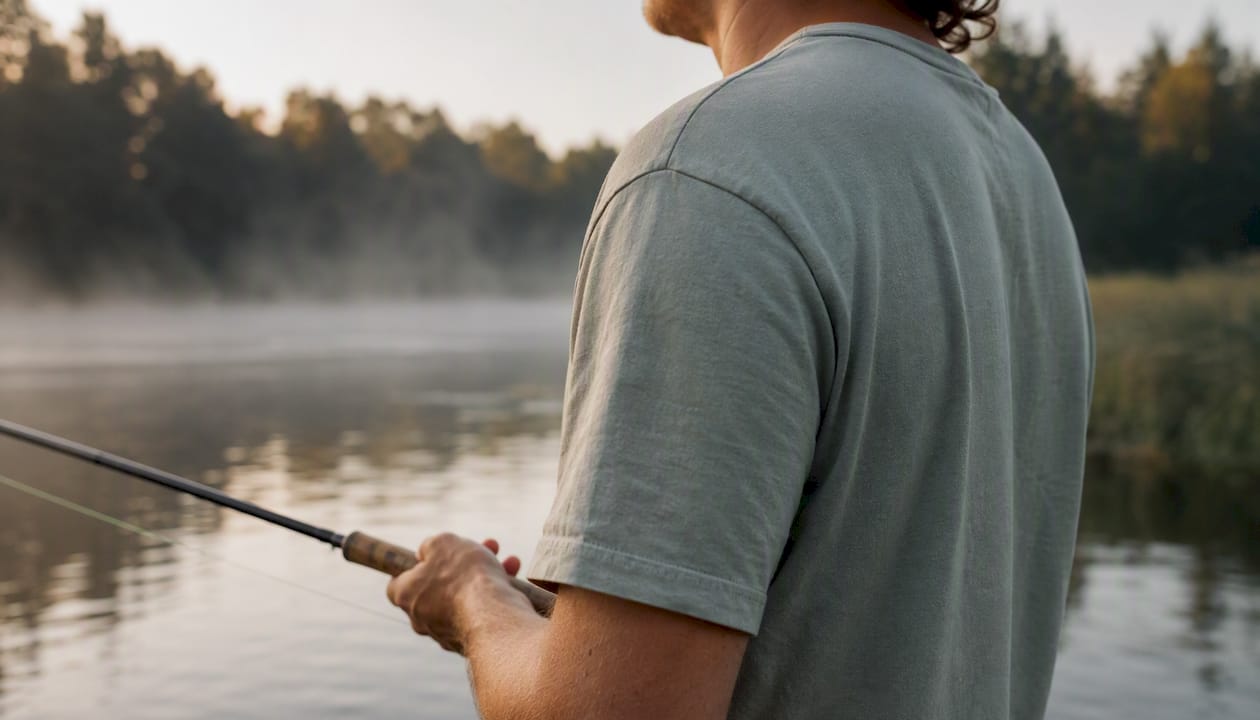
Transparent labeling and verifiable certifications add real value because they let you make that durability bet with confidence. A GOTS number you can look up, a mill name you can find on a map, a gsm weight that tells you the shirt was built to last: these signals are worth more than a vague “sustainably sourced” claim with no backing.
A few practical mental rules worth keeping:
- Choose timeless designs over trend-driven graphics. A shirt you’ll wear for five years beats a shirt you’ll wear for one, regardless of fiber.
- Verify certificates before trusting claims. License numbers are public.
- Prefer garments you can repair. A reinforced seam or a simple patch extends life significantly.
- When in doubt about fiber, lean toward reputable blanks with published specs. The blank manufacturer’s transparency is often a proxy for the overall supply chain’s quality.
Firstriseoutfitters tees that meet the checklist
Firstriseoutfitters builds its tee line on blanks chosen for durability, feel, and honest construction. Comfort Colors garment-dyed tees use a piece-dye process that gives each shirt its muted, river-toned character while reducing the dye waste associated with fabric-level dyeing. Bella+Canvas blanks bring a tighter jersey construction and published fiber specs that make it easy to verify what you’re buying.
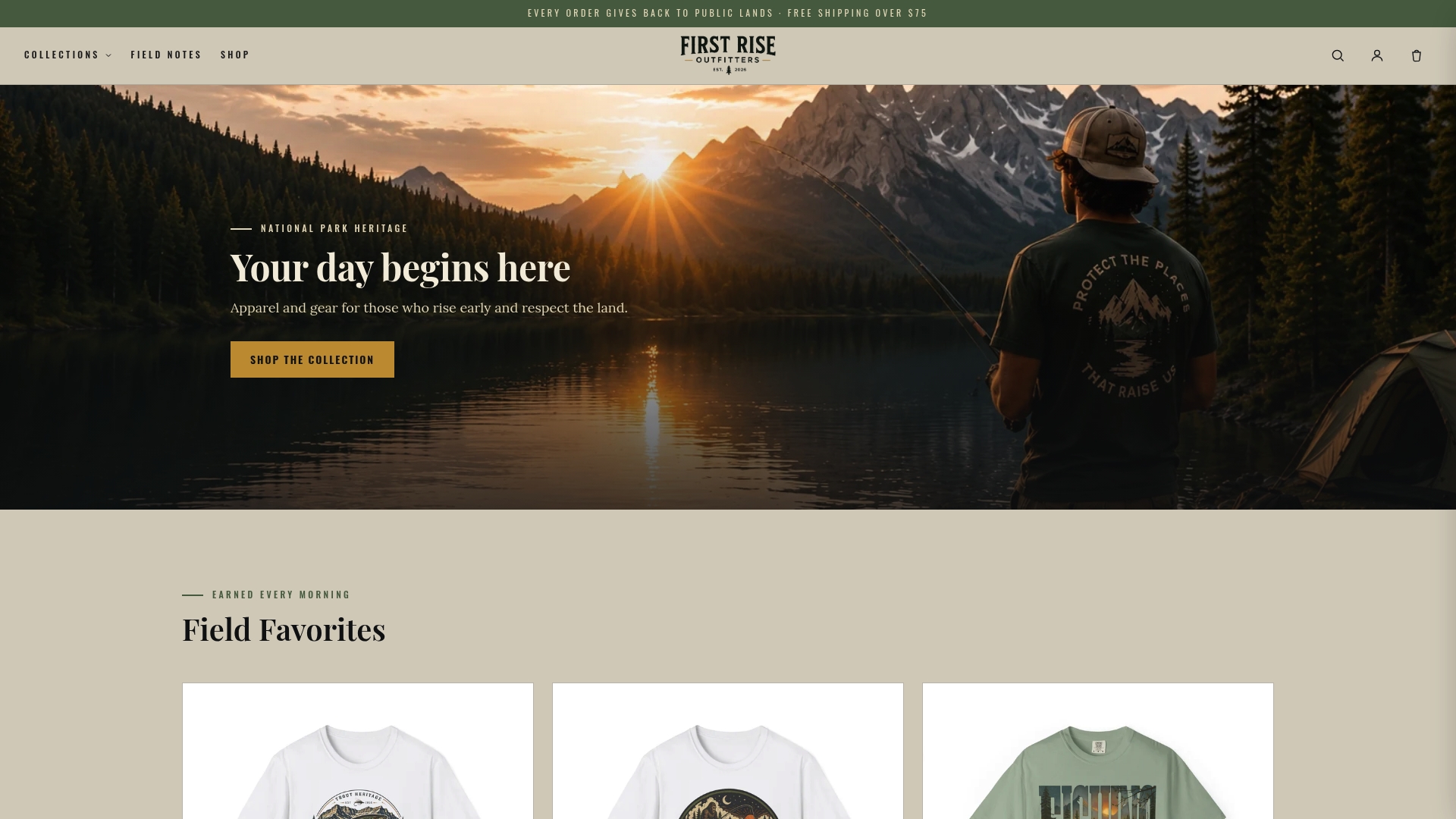
Every product page lists the blank model, fiber content, and care instructions so you can run through the checklist from this guide before you buy. The Brook Trout Fishing T-Shirt and the Cutthroat Trout Anatomy Tee on Bella+Canvas are two strong starting points if you want a well-made shirt with transparent blank sourcing. Browse the full Trout Heritage collection to find the design that fits your water.
Sources
- Sustainable fabrics — Printful blog