
Brook Trout Colors: A Field Guide to Seasonal Changes
By Bobby Harris — Navy FMF Corpsman (2002–2010), founder of First Rise Outfitters
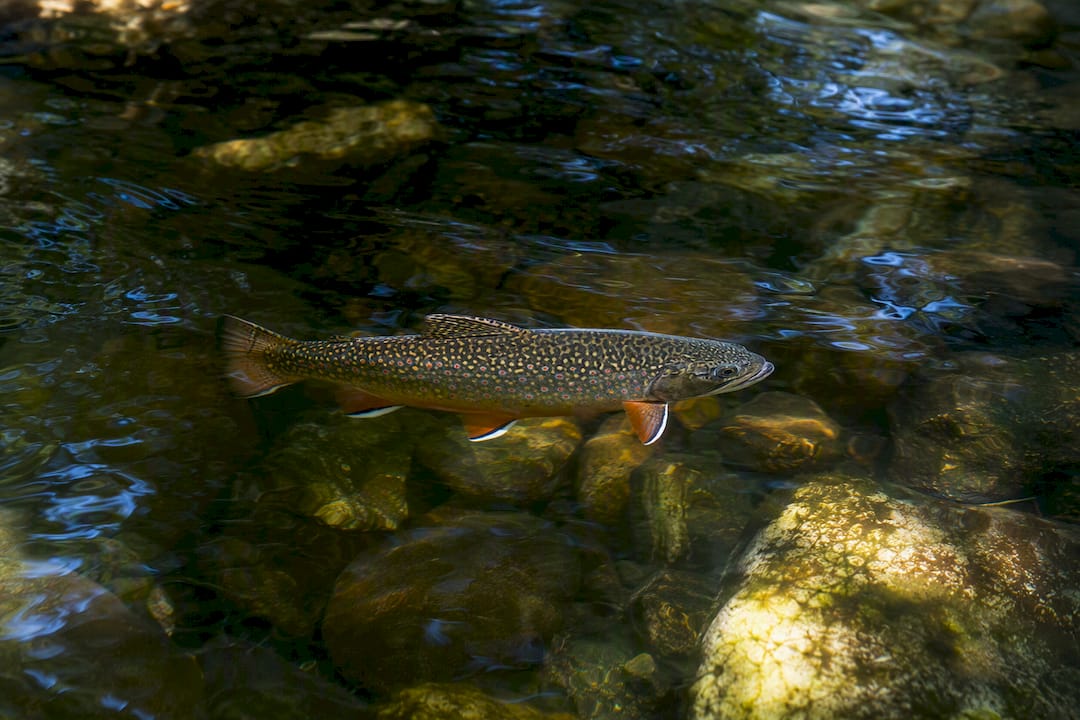
A brook trout is a dark olive to gray-green fish covered in wavy pale vermiculations, with red spots ringed in pale blue on the flanks and orange to red lower fins edged in white. If you can find those white fin margins, you’ve found your fish. Even a dull, mud-colored brookie fresh out of a shaded pool will hold onto that white stripe.
Before you go any further, run through this list on the fish in your hand:
- Back and sides: dark olive-green to gray-green base with squiggly, worm-like vermiculations
- Flank spots: pale yellow spots scattered among red spots, each red spot often haloed in pale blue
- Belly and lower sides: cream to white normally, shifting to vivid orange or red during spawning season
- Fins: orange to red lower fins with a bright white leading edge and a thin black stripe just behind it
- Confirmation check: if the white fin edges and blue-haloed red spots are both present, you’re holding a brook trout
Key Takeaways
Brook trout are most reliably identified by white-edged lower fins and blue-haloed red spots, both of which persist even when overall body color fades with habitat or season.
| Point | Details |
|---|---|
| Check fins first | White leading edges with a thin black stripe on lower fins are the most durable ID mark. |
| Spots confirm it | Blue-haloed red spots alongside pale yellow spots distinguish brookies from true trout. |
| Fall color is normal | Bright orange/red bellies and kype on males signal spawning, not a different species. |
| Water shapes shade | Sandy streams produce paler fish; tannic or dark-bottom water produces darker, near-black fish. |
| Chars vs. true trout | Light spots on a dark body mean char; dark spots on a light body mean brown or rainbow trout. |
Table of Contents
- What Makes Brook Trout Colors So Distinctive?
- How Do You Identify Brook Trout by Their Markings?
- Why Do Brook Trout Turn Orange in the Fall?
- Does Water Type Change a Brook Trout’s Color?
- Do Young Brook Trout Look Different From Adults?
- Brook Trout vs. Brown Trout vs. Rainbow Trout: What’s the Difference?
- How Do You Photograph Brook Trout Colors Accurately?
- Why Brook Trout Colors Matter Beyond Identification
- Spotting a True Brookie in the Wild
- Where to Learn More About Brook Trout Identification
- Frequently Asked Questions
- Sources
What Makes Brook Trout Colors So Distinctive?
Brook trout aren’t technically trout at all. Salvelinus fontinalis is a char, and that classification explains almost everything about how the fish is colored. Chars carry light spots on a dark background, the reverse of true trout like browns and rainbows, which wear dark spots on a lighter body. That single rule of thumb will save you more identification headaches than any other fact in this guide.
Brook trout range across cold headwater streams, spring-fed creeks, high-elevation lakes, and a handful of coastal rivers where they run to salt water and back. Each of those environments produces its own look. Stream fish, often called “brookies” by anglers, tend to run small and vividly marked. Lake-dwelling brook trout, known as coasters, grow considerably larger and can carry a more silvery cast. Salters, the sea-run form found in a few Northeastern watersheds, spend part of their life in brackish or salt water and take on a chrome-like sheen before returning to fresh water and regaining typical brook trout coloring. The species is native to eastern North America but has been widely introduced elsewhere, so a brookie in a Western mountain lake and one in a Maine stream can look noticeably different while still sharing the same core pattern.
How Do You Identify Brook Trout by Their Markings?
Start at the back. Brook trout carry a dark olive to gray-green base color across the dorsal surface, and that base is broken up by pale, wormlike markings called vermiculations. These squiggles often run right onto the dorsal fin itself, which is a detail a lot of anglers miss on a quick glance. Biologists think the pattern helps break up the fish’s outline under moving water, scattering its silhouette the way ripples scatter light on a stream bottom.
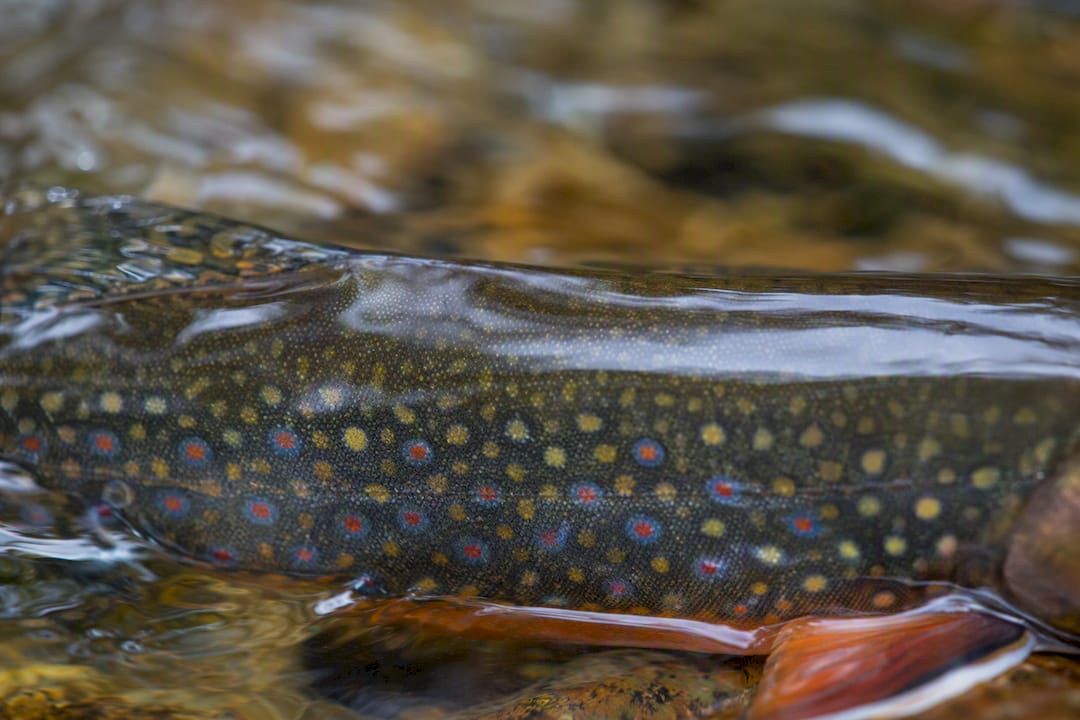
Move to the flanks and the picture gets more colorful. Pale yellow spots dot the sides, joined by scattered red spots, and many of those red spots carry a distinct halo of pale blue around them. That blue-ringed red spot is one of the most reliable, most photogenic marks on the fish, and it shows up on brookies from three-inch stream fingerlings to twenty-inch coasters.
Then check the fins. The lower fins, meaning the pectoral, pelvic, and anal fins, run orange to red with a crisp white leading edge trailed by a thin black stripe just inside it. This white-and-black fin edge is arguably the single most dependable diagnostic feature on the entire fish, and it holds up even on pale, washed-out individuals. Round out your check with the tail, which is only slightly forked and nearly square compared to other trout, and a mouth that extends back past the eye on adult fish.
If you’re shooting photos for later reference, get a shot with an arrow or mental note pointing at that white fin margin, plus a tight close-up of one blue-haloed red spot.
Pro Tip: When color looks muted, whether from a cloudy day, deep water, or a fish that’s been out of its territory, the white fin margins and dorsal vermiculations are the last things to fade. Check those two features first if the overall color leaves you second-guessing.
Why Do Brook Trout Turn Orange in the Fall?
If you catch a brookie in October with a belly like a stoplight, you haven’t found a rare morph. You’ve found a male in spawning condition. As spawning season approaches, males intensify the orange and red along their lower sides to a degree that can look almost artificial, and older males often develop a hooked lower jaw called a kype. Females don’t color up as dramatically, but they show visible abdominal fullness from the eggs they’re carrying.
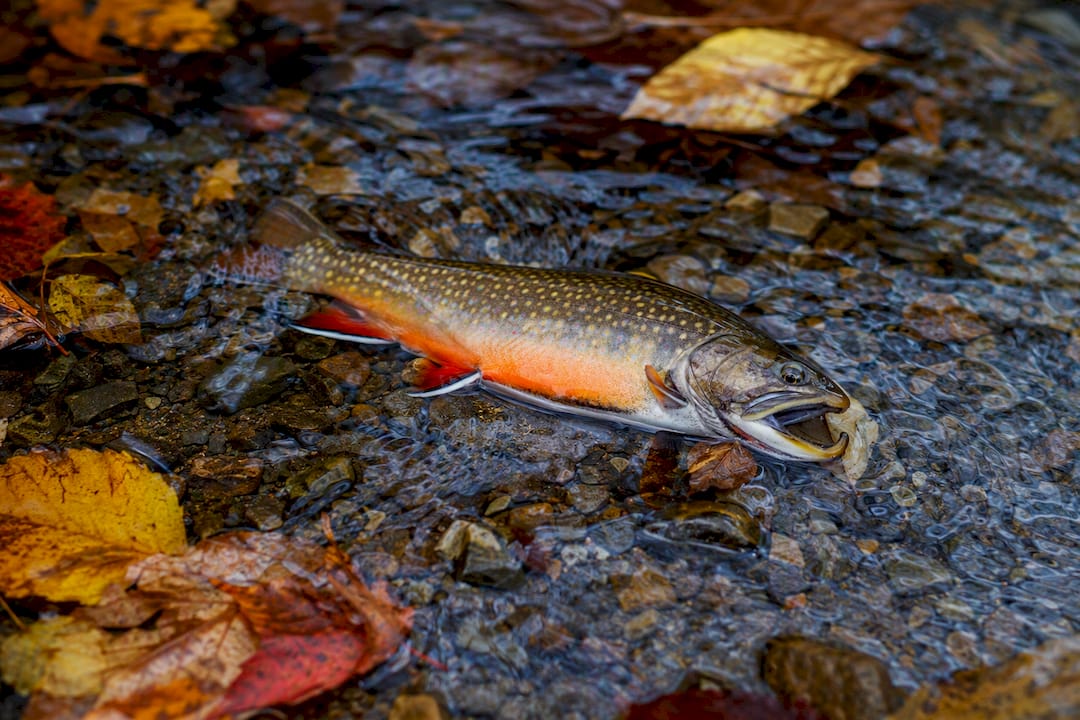
The trigger for this transformation is shortening day length combined with cooling water temperatures, both signals that tell the fish autumn spawning season has arrived. The color shift itself comes down to hormonal changes that concentrate pigment in the skin, and it serves two purposes at once: it signals reproductive readiness to potential mates and it functions as a warning display to rival males defending the same spawning gravel.
Key seasonal markers to watch for:
- Pre-spawn (late summer): colors begin deepening, especially on males
- Peak spawn (fall): lower sides and belly reach maximum orange-red intensity, kype visible on mature males
- Post-spawn: color fades back toward the muted, everyday palette over the following weeks
Lay two photos side by side, one from midsummer and one from late October, and the same fish can look like it belongs to two different species. That’s not an exaggeration so much as the whole point of spawning coloration.
Does Water Type Change a Brook Trout’s Color?
Yes, and often within minutes. Brook trout can shift shade to match their surroundings, and a fish that moves from a dark pool into a sunlit gravel riffle will visibly lighten. Streams with sandy or light-colored bottoms tend to produce paler fish, while clear water over dark gravel sharpens contrast and produces the deepest, most striking vermiculations and spot color. Tannic water, the kind stained the color of strong tea by decaying leaves and bark, can push brook trout coloring toward nearly black.
Habitat form matters just as much as water clarity. Lake-dwelling coasters often carry a more silvery overall tone than their stream-dwelling cousins, especially in deeper, clearer lakes. Salters take this furthest: while running in salt or brackish water, they can look almost chrome, with markings faded nearly to invisibility, only to regain full brook trout coloration within days of returning to fresh water.
If you’re photographing fish across different trips, keep a mental note of the water type. A pale brookie from a sandy Appalachian headwater stream and a near-black one from a tannic bog-fed creek can be the same population expressing the same genetics under different light and substrate. Don’t mistake water-driven color shifts for a different strain or subspecies.
Do Young Brook Trout Look Different From Adults?
Juvenile brook trout, still carrying the vertical bars called parr marks, look noticeably different from full-grown adults. Those bars fade as the fish matures, gradually giving way to the complete vermiculation pattern and the blue-haloed red spots that define adult coloration. A brookie in its first year might show only faint traces of the pattern that will eventually cover its back.
Size ranges vary enormously by population. A brook trout in a cold, infertile mountain headwater might top out around six to eight inches and never grow much larger, while the same species in a productive lake as a coaster can reach well over the size, with color intensity and fin proportions shifting accordingly. Larger, older fish often show deeper, more saturated color and more pronounced kype development in males, simply because they’ve had more seasons to build both size and hormonal maturity.
Brook Trout vs. Brown Trout vs. Rainbow Trout: What’s the Difference?
The fastest way to separate a brook trout from its two most common look-alikes comes down to one rule: chars wear light spots on a dark body, true trout wear dark spots on a light body. Brown trout show black and reddish-orange spots against a golden-brown base. Rainbow trout show black spots against a silvery body with a pink to red lateral stripe. Neither carries the blue-haloed red spots or the white-edged fins that mark a brookie.
| Feature | Brook trout | Brown trout | Rainbow trout |
|---|---|---|---|
| Typical coloration/markings | Olive to gray-green with pale spots on dark base | Golden-brown with dark and orange spots on light base | Silvery with black spots and a pink lateral stripe |
| Spawning color changes | Vivid orange/red lower sides, kype on males | Deeper gold with red spot intensification | Rosier lateral stripe, subtle darkening |
| Habitat-driven variants | Stream, lake/coaster, sea-run salter | Stream and lake forms, some sea-run strains | Stream, lake, and steelhead (sea-run) forms |
| Fin coloration and white edges | Orange/red fins with white leading edge and black stripe | No white fin edges; fins tend to match body tone | No white fin edges; fins mostly translucent to silvery |
| Size/age differences | Small in headwaters, larger as coasters | Grows large in rivers and lakes | Grows large, especially anadromous steelhead |
Run your quick field check in this order: white fin margins first, blue-haloed red spots second, dorsal vermiculations third. Two out of three confirms a brookie almost every time.
How Do You Photograph Brook Trout Colors Accurately?
Colors on a screen rarely match colors in the water, so a little technique goes a long way. Work through this sequence before you release the fish:
- Shoot a full side profile first, catching the whole flank pattern in one frame
- Get a tight close-up on two or three flank spots to capture the blue halo detail
- Photograph the fin edge straight on to show the white margin and black stripe clearly
- Use natural, indirect light rather than direct flash, which washes out the vermiculations
- Include your hand or a ruler in one frame for a size reference
Pro Tip: Cup the fish just below the surface for photos instead of lifting it fully into bright sun. Submerged or partially submerged shots against natural light render the true color far more accurately than a fish held up into direct glare.
Brook trout are sensitive to warm water and rough handling. Wet your hands before touching one, keep it in the water as much as possible, limit air exposure to a few seconds per photo, and revive it fully in current before letting go. Cold-water species like this one don’t recover well from extended stress, especially in warmer months.
Why Brook Trout Colors Matter Beyond Identification
Brook trout aren’t just visually striking. Their presence is a signal. These fish need cold, clean, oxygen-rich water to survive, and state and park wildlife guides consistently point to brook trout populations as an indicator of healthy watershed conditions. Losing the color show described throughout this guide often means losing the cold-water habitat that makes it possible in the first place.
A stream that still holds vividly marked brook trout, complete with sharp vermiculations and saturated fall color, is a stream doing something right. That’s not a coincidence. It’s a direct read on water temperature, oxygen levels, and habitat quality that took decades to build.
That connection between color and conservation runs through the trout conservation guide Firstriseoutfitters publishes for anglers who want to do more than admire the fish. It’s also why the muted, river-inspired tones on Firstriseoutfitters apparel pull directly from brook trout coloring rather than a generic fish silhouette. The design choice reflects a genuine appreciation for what these fish look like in hand, not just what sells on a shirt.
Spotting a True Brookie in the Wild
There’s a specific moment every brook trout angler knows: you tip a fish sideways in the net, and the blue-haloed spots catch the light before anything else registers. I check the fin edges next, out of habit more than doubt, because that white stripe is the detail that never lies even when the rest of the fish looks washed out from a long fight or overcast sky.
That quick scan, spots first, fins second, takes maybe three seconds, and it’s enough to confirm what you’re holding before you release it. Respecting that fish enough to handle it fast and let it go is part of what keeps a stream worth fishing next season.
Where to Learn More About Brook Trout Identification
For deeper range maps, spawning timing, and habitat needs beyond what’s covered here, these sources are worth bookmarking:
- Shenandoah National Park’s brook trout profile covers color detail and cold-water habitat requirements
- Washington Department of Fish & Wildlife documents fin markings and typical size ranges
- Virginia DWR’s species page breaks down spawning-season timing and behavior
- NC Wildlife’s brook trout profile explains habitat-driven color variation and ecological forms
- Maine IFW’s species information confirms which ID marks hold up under muted coloring
If a fish’s story stays with you after the release, Firstriseoutfitters’ brook trout tee carries that same vermiculated pattern and blue-haloed spot detail onto a garment-dyed shirt built for the drive home at first light.
Frequently Asked Questions
What color are brook trout normally? A brook trout typically shows a dark olive to gray-green back covered in pale vermiculations, with yellow and blue-haloed red spots on the flanks and orange to red lower fins edged in white.
Why do brook trout turn orange or red? That intense orange to red coloring appears mainly on males during fall spawning season, driven by hormonal shifts tied to shortening days and cooling water. It signals reproductive readiness and territorial status to other fish.
How can you tell a brook trout from a brown trout by color? Brook trout carry light spots on a dark body, including blue-haloed red spots, while brown trout carry dark and orange spots on a lighter, golden-brown body. The white fin edges on a brookie are absent on browns.
Do brook trout change color based on where they live? Yes. Fish in sandy, light-bottomed streams tend to look paler, those in clear gravel streams show sharper contrast, and those in tannic, dark water can look nearly black. Sea-run salters turn silvery in salt water and regain typical coloring back in fresh water.
Do young brook trout look different from adults? Juveniles show vertical parr marks that fade with age, gradually replaced by full vermiculation and the blue-haloed red spots seen on mature fish.
Sources
- Brook Trout - Shenandoah National Park (U.S. National Park Service)
- Brook trout | Washington Department of Fish & Wildlife
- Brook Trout | Virginia DWR
- Brook Trout | NC Wildlife
- Brook Trout | Maine IFW