
Trout Conservation Guide for Anglers: Act Now
By Bobby Harris — Navy FMF Corpsman (2002–2010), founder of First Rise Outfitters
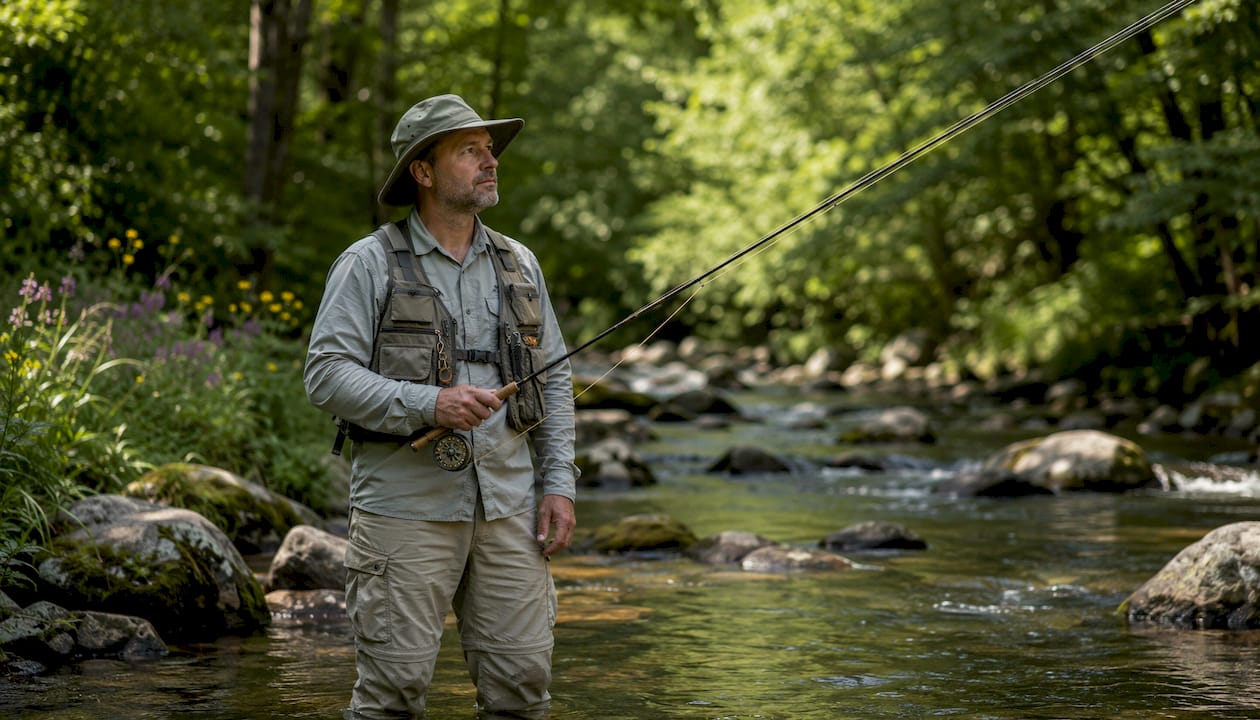
You can protect trout right now by maintaining riparian buffers, practicing conservation-minded angling, reporting habitat threats, and supporting local restoration groups. That’s the short version. Organizations like Trout Unlimited, the U.S. Fish & Wildlife Service (USFWS), and the National Fish Habitat Partnership have spent decades proving these actions work. Firstriseoutfitters backs that same mission through trout-heritage apparel that keeps the conversation alive on and off the water.
Your quick-start checklist for your next trip:
- Practice proper catch-and-release (wet hands, barbless hooks, quick release)
- Stay out of visible spawning redds (gravel nests) when wading
- Pack out all trash, including monofilament line
- Report any illegal stream alterations to your state fish & wildlife agency
- Follow Leave No Trace principles at every access point
Table of Contents
- Why are trout populations declining in the U.S.?
- The four-pronged conservation framework that actually works
- What can you do today? A practical, step-by-step checklist
- How to find and join local conservation efforts
- What do habitat projects actually cost and how long do they take?
- How to choose conservation-minded gear and apparel
- Sustainable fishing practices beyond catch-and-release
- How anglers can monitor and report trout populations
- Policy and regulatory frameworks that shape trout conservation
- How to spread the word and bring others into conservation
- Key Takeaways
- Why this work matters more than most anglers think
- Firstriseoutfitters’ trout-heritage collection supports the mission
- Trusted sources for going deeper
Why are trout populations declining in the U.S.?
Brook, brown, rainbow, and cutthroat trout all face mounting pressure across their native ranges. The causes overlap and compound each other, making recovery slow without coordinated effort.
- Habitat degradation: Logging, agriculture, and development strip streamside vegetation, causing banks to erode and sediment to smother spawning gravel.
- Warming water temperatures: Losing shade trees along stream banks raises water temperatures into ranges lethal for coldwater species during summer heat events.
- Non-native species competition: Introduced brown trout and rainbow trout displace native brook trout and cutthroat trout in many western and eastern streams.
- Fragmented waterways: Outdated culverts, dams, and road crossings block trout from reaching cold headwater refuges during warm months.
Brook trout have been lost from a large portion of their historic range in parts of the United States due to habitat degradation, poor water quality, and competition from non-native species.
You can see these pressures firsthand: silted banks where the gravel used to be clean, shallow runs that feel warm by mid-morning, and stretches where woody debris has been cleared out entirely. Those are the warning signs worth noting and reporting.
The four-pronged conservation framework that actually works
Trout Unlimited and its partners use a four-part strategy that gives every angler a clear place to plug in, whether you have an afternoon or a year.
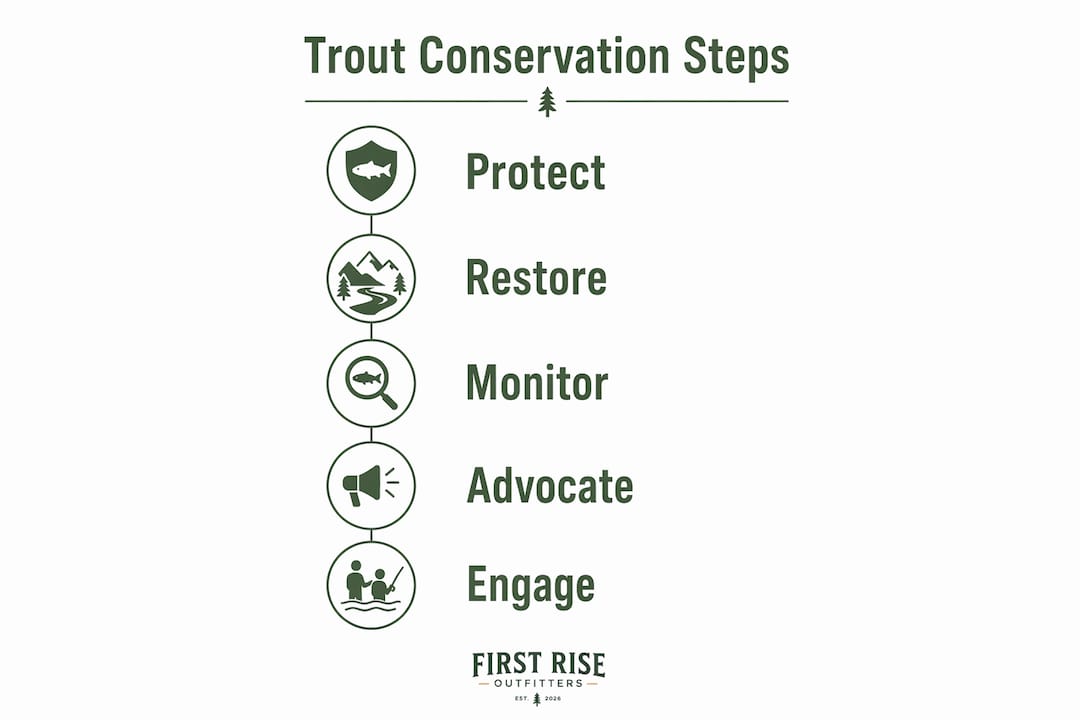
- Protect: Defend intact coldwater headwaters before they degrade. This means advocating for public lands protections and opposing poorly sited development near cold streams.
- Reconnect: Remove or replace barriers like undersized culverts and low-head dams so trout can move freely between habitats.
- Restore: Replant riparian corridors, add woody debris, and stabilize eroding banks to rebuild stream structure.
- Sustain: Keep the wins in place through community engagement, angler advocacy, and long-term monitoring.
NOAA Fisheries recognizes that protecting trout requires managing water quality, stream connectivity, and riparian vegetation together, not in isolation. Each pillar of this framework addresses one of those dimensions.
Pro Tip: Protecting high-quality headwaters before they degrade yields the strongest long-term outcomes for trout. If your local chapter is choosing between projects, headwater protection almost always delivers the highest return.
What can you do today? A practical, step-by-step checklist
Start with the actions that cost nothing but attention, then build from there.
On-river behaviors (do these every trip)
- Use barbless hooks and wet your hands before handling fish.
- Keep fish in the water as much as possible; aim for releases under 30 seconds.
- Avoid wading through visible spawning redds, especially in fall and spring.
- Pack out all trash, including tangled line, split shot, and packaging.
Volunteer-level actions (a few hours to a weekend)
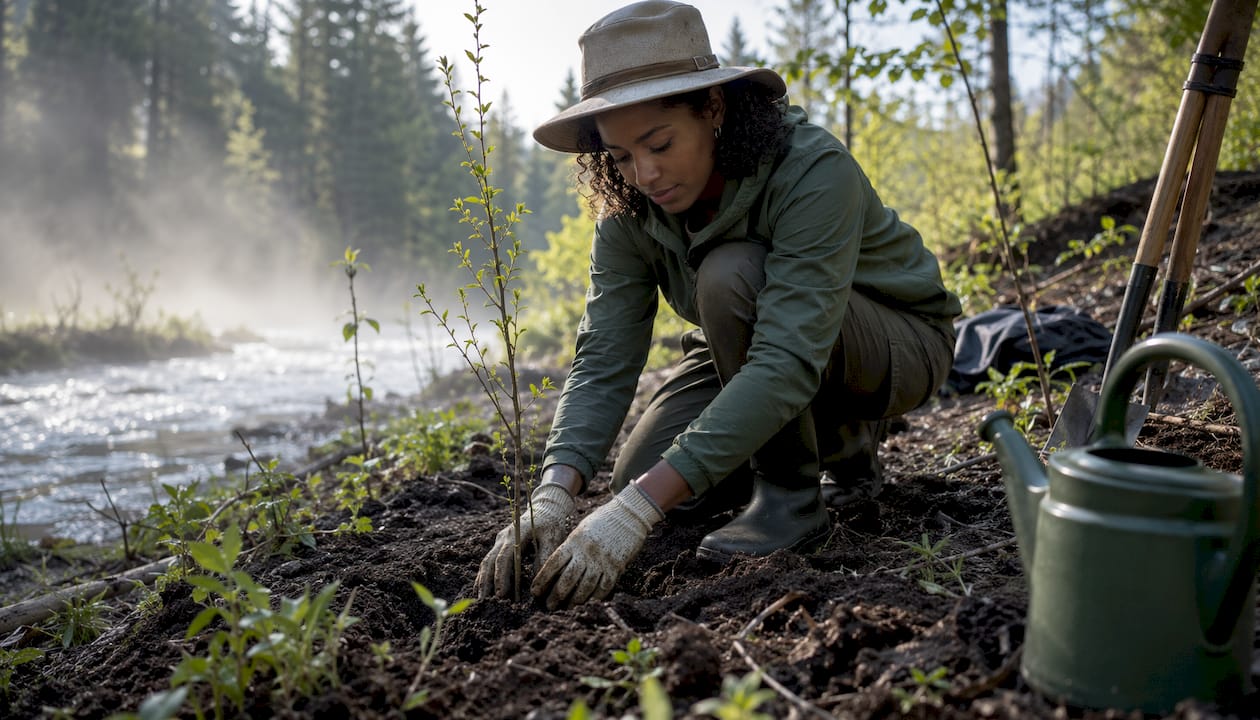
- Plant native shrubs and trees along stream banks during organized restoration events. Riparian buffers reduce sediment and shade streams to lower water temperatures.
- Help place woody debris in permitted restoration projects to create fish cover and slow erosion.
- Work with willing landowners to fence livestock out of stream corridors on private land.
Higher-effort commitments (ongoing)
- Join or donate to your local Trout Unlimited chapter, which organizes culvert replacement campaigns, dam removal projects, and citizen-science monitoring.
- Participate in state-run electrofishing surveys or stream temperature monitoring programs.
- Attend public comment meetings for land-use decisions affecting cold-water streams.
Pro Tip: When planting riparian buffers, prioritize native shade trees (cottonwood, alder, willow), deep-rooted shrubs (buttonbush, spicebush), and sedges over grass alone. Grasses help but don’t provide the canopy shade trout need most during summer.
How to find and join local conservation efforts
Finding your local group is easier than most anglers expect.
- Trout Unlimited chapters: Use the chapter finder at tu.org to locate your nearest group. Chapters run volunteer days, stream cleanups, and advocacy campaigns year-round.
- Watershed councils: Search “[your county or river name] watershed council” to find locally focused groups that often partner with TU and state agencies on restoration work.
- State fish & wildlife agencies: Your state agency (e.g., Colorado Parks & Wildlife, Pennsylvania Fish & Boat Commission) posts volunteer opportunities and citizen-science programs on their websites.
- Conservation districts: Local soil and water conservation districts often coordinate riparian planting programs and can connect you with landowners open to restoration work.
At a typical volunteer restoration event, you’ll get a safety briefing, tools, and a clear assignment. Most events run four to six hours. Wear clothes you can get muddy, bring waterproof boots, and expect to sign a liability waiver. Citizen science and angler monitoring provide important local data and are a cost-effective way to detect illegal alterations or emerging habitat threats early.
To report a habitat threat, contact your state fish & wildlife agency’s enforcement line or your local TU chapter. They can escalate to the appropriate authority faster than going it alone.
What do habitat projects actually cost and how long do they take?
Knowing the realistic scale of a project helps you decide where your time and money matter most.
- Riparian planting day: Planning takes two to four weeks; the planting itself is a single-day volunteer event. Costs are low when native plants come from state nursery programs. Maintenance visits in years one through three are critical for survival rates.
- Culvert replacement: Permitting and engineering typically take six to eighteen months. Construction costs run from moderate to high, usually requiring grants from programs like the National Fish Habitat Partnership or USFWS.
- Small dam removal: Multi-stakeholder projects that often span two to five years from feasibility study to completion. Funding typically combines federal grants, state agency budgets, and nonprofit contributions.
Many effective trout habitat projects are delivered by partnerships of landowners, agencies, nonprofits, municipalities, and volunteers rather than by state agencies alone — meaning your volunteer hours and donations directly move projects forward.
The Eastern Brook Trout Joint Venture coordinates range-wide assessments that help prioritize which projects get funded first, so local chapters aren’t working blind.
How to choose conservation-minded gear and apparel
What you wear to the river sends a signal. Choosing apparel thoughtfully extends your conservation values beyond the water.
- Look for durable blanks: Garments printed on Comfort Colors or Bella+Canvas blanks last longer, which means fewer replacements and less waste.
- Check for species-specific or watershed artwork: Designs featuring brook trout, cutthroat trout, or named rivers start real conversations about why those fish and places matter.
- Verify giveback claims: Ask whether a brand supports conservation organizations or events directly, not just in marketing language.
- For volunteer days: Choose muted, earth-toned colors that won’t show every mud stain. Quick-dry layers help when you’re working in and around water.
Pro Tip: A shirt with a named species or river on it is a conversation starter at the boat ramp, the fly shop, and the tailgate. That kind of low-key awareness-raising adds up. The Cutthroat Trout Anatomy tee from Firstriseoutfitters is a good example of species artwork that earns a second look.
Sustainable fishing practices beyond catch-and-release
Catch-and-release is the floor, not the ceiling. Sustainable fishing practices also include:
- Respecting seasonal closures: Many states close certain streams or sections during spawning seasons. Check your state regulations before every trip, not just once a season.
- Gear limitations: Barbless hooks, single hooks, and artificial-only regulations exist on many wild trout streams for good reason. Follow them even when enforcement is light.
- Targeting selectively: On heavily pressured streams, consider targeting less-vulnerable species or sections to reduce cumulative stress on wild trout populations.
- Water temperature awareness: When stream temperatures exceed 68°F, trout are already stressed. Many experienced anglers simply don’t fish during the hottest parts of summer days.
How anglers can monitor and report trout populations
You don’t need a biology degree to contribute meaningful data. State agencies and organizations like Trout Unlimited run structured programs where anglers log catch data, water temperatures, and habitat observations through apps and paper forms. Programs like Stream Monitoring and Reporting for Trout (SMART) in some states let you submit data directly to fisheries managers.
The simplest step: keep a fishing log. Note the date, location, water temperature, species caught, and any habitat observations. That record, shared with your local TU chapter or state agency, becomes part of a larger picture managers use to set regulations and prioritize restoration funding.
Policy and regulatory frameworks that shape trout conservation
Federal and state regulations set the baseline for trout protection. The Clean Water Act governs water quality standards that directly affect trout habitat. The Endangered Species Act provides protections for species like bull trout and certain cutthroat subspecies. At the state level, fish & wildlife agencies set season dates, gear restrictions, and catch limits through public rulemaking processes you can participate in.
Individual advocacy matters more than most anglers realize. Submitting written comments during public rulemaking periods, attending state wildlife commission meetings, and contacting your congressional representatives about funding for USFWS habitat programs all create the political support that keeps conservation budgets intact. Science-based decisions and stakeholder engagement are the foundation of U.S. fisheries management, and anglers are recognized stakeholders in that process.
How to spread the word and bring others into conservation
The most effective conservation multiplier you have is the people you fish with. A few practical ways to amplify your impact:
- Teach, don’t lecture: Show a new angler proper catch-and-release technique on the water rather than explaining it in the parking lot.
- Share local stories: Post about a stream cleanup or planting day on social media with the specific watershed name. Local specificity gets more traction than generic conservation messaging.
- Bring a friend to a TU event: First-time volunteers are far more likely to return when they come with someone they know.
- Use your gear as a prompt: A trout-species tee or a river-named hat invites questions that open natural conversations about why these fish need protection.
Angling culture and community engagement are critical to sustaining conservation wins because volunteers create the public and political support that keeps funding and protections in place.
Key Takeaways
Protecting trout requires riparian buffer maintenance, conservation-minded angling, local group involvement, and sustained advocacy working together across every watershed.
| Point | Details |
|---|---|
| Protect riparian buffers first | Native shade trees and shrubs along stream banks are the highest-impact defense against lethal summer temperature spikes. |
| Use the four-pronged framework | Protect, reconnect, restore, and sustain: each pillar maps to specific actions any angler can take. |
| Join your local TU chapter | Chapters run culvert campaigns, planting days, and monitoring programs that move projects from plan to reality. |
| Go beyond catch-and-release | Respect seasonal closures, gear restrictions, and water temperature thresholds to reduce cumulative stress on wild trout. |
| Firstriseoutfitters | The trout-heritage collection pairs species-specific artwork with durable blanks, keeping conservation conversations going on and off the water. |
Why this work matters more than most anglers think
There’s a version of trout conservation that lives entirely in policy documents and grant applications. That version matters, but it doesn’t move without the people who show up at 6 AM to plant willows in the rain, or who spend twenty minutes teaching a kid how to hold a brook trout before releasing it. The connection between clean water and angling culture isn’t abstract. It’s the reason you drove two hours to fish a particular stretch of river, and it’s the reason that stretch still holds fish.
What I’ve come to believe, after spending time on these streams and reading the research behind the four-pronged conservation approach, is that the gap between “caring about trout” and “actually helping trout” is almost always just one step: finding your local chapter and showing up once. Everything else follows from that.
Firstriseoutfitters’ trout-heritage collection supports the mission
If you want your gear to reflect what you care about on the water, the Trout Heritage collection at Firstriseoutfitters is worth a look. The line features hand-designed artwork of brook, brown, rainbow, and cutthroat trout printed on garment-dyed Comfort Colors and Bella+Canvas blanks in muted, river-inspired tones. These aren’t loud logo shirts. They’re the kind of thing you wear to a planting day, a tailgate, or a fly shop and people actually ask about.
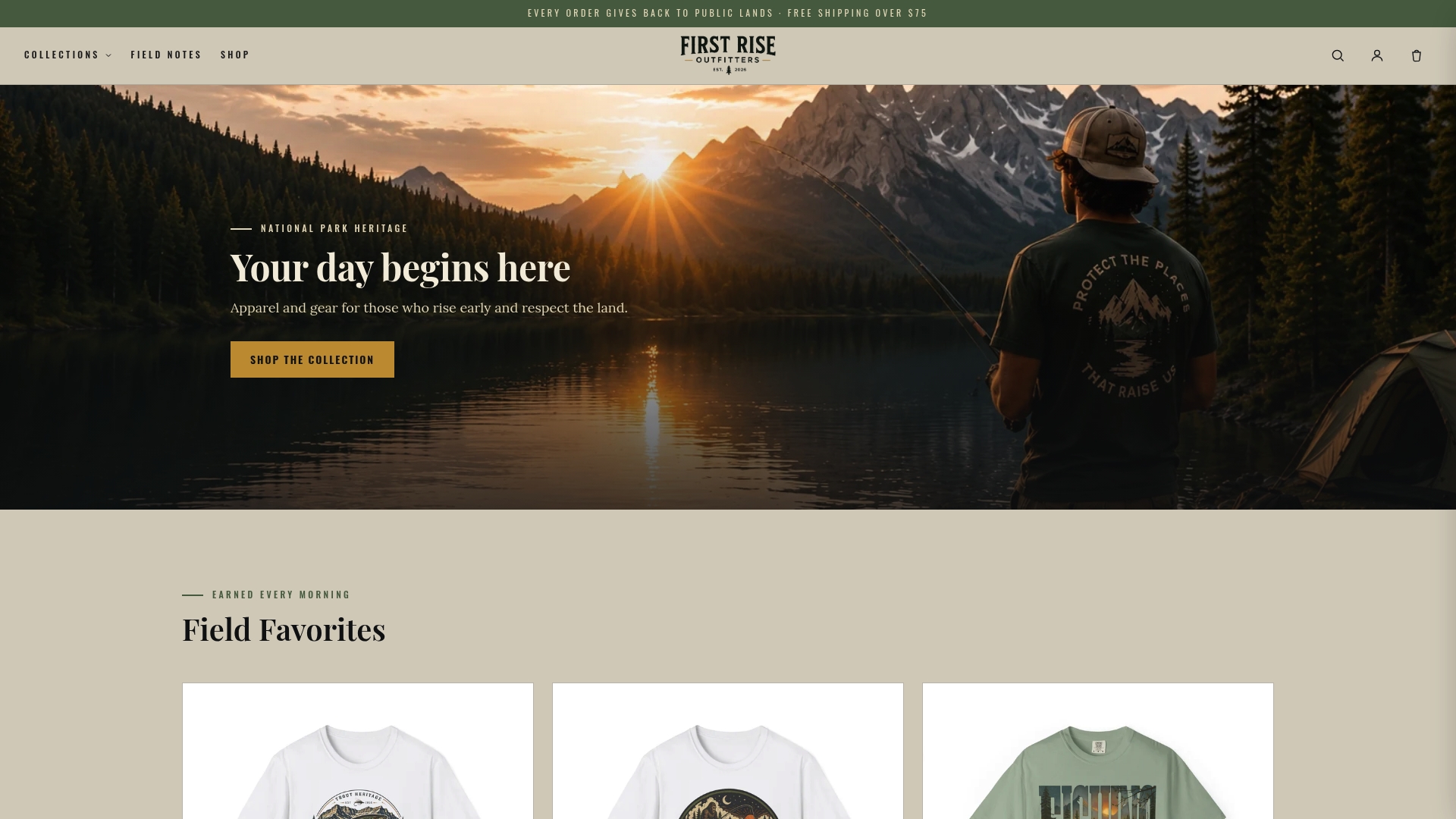
The Brook Trout Native Waters tee and the Cutthroat Anatomy tee are two standouts that carry species-specific messaging without feeling like a billboard. Both are built to last through seasons of real use. Browse the full collection and pick something that starts a conversation the next time you’re on the water.
Trusted sources for going deeper
- Trout Unlimited: Chapter finder, conservation approach overview, and the National Conservation Agenda for organized, multi-scale strategy.
- Eastern Brook Trout Joint Venture roadmap: Range-wide assessments and priority-setting for brook trout conservation across the Eastern U.S.
- USFWS — Habitat Conservation: Federal funding programs, species status assessments, and partnership grant opportunities.
- NOAA Fisheries — Sustainable Fisheries: Ecosystem-based management principles and science-driven policy context.
- National Fish Habitat Partnership: Coordinated habitat funding and project prioritization across federal, state, and nonprofit partners.
- West Virginia Rivers Coalition — Brook Trout Brochure: Accessible overview of brook trout range loss and threats, useful for sharing with new volunteers.
- North Carolina Wildlife Resources Commission: Riparian buffer guidance and stream restoration resources applicable across the Eastern U.S.