
Water Based vs Plastisol Ink: Which Should You Choose?
By Bobby Harris — Navy FMF Corpsman (2002–2010), founder of First Rise Outfitters

For bold, durable prints on dark garments and high-volume runs, plastisol is your go-to. For a soft, breathable hand on premium cotton tees, water-based ink is the better fit. That single axis, garment feel versus print durability and opacity, drives most of the decision.
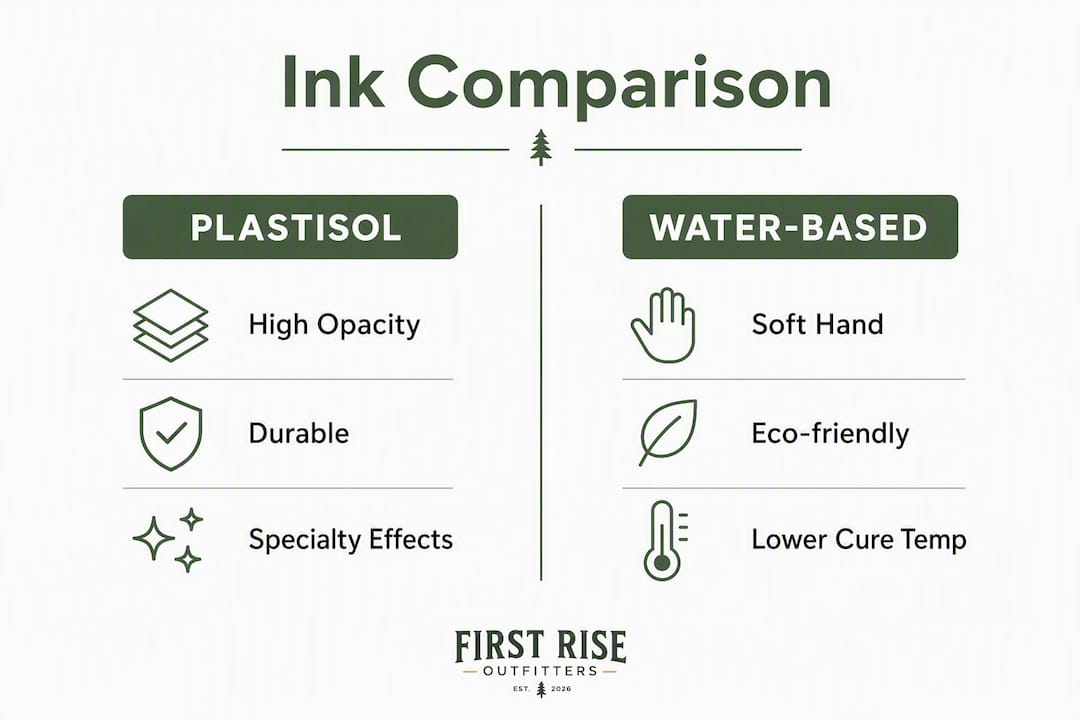
Here’s the quick version:
Plastisol strengths:
- Sits on top of the fabric for vivid, opaque coverage on dark garments
- Stays open on the screen during long runs, so you get fewer reprints and less waste
Water-based strengths:
- Absorbs into the fabric for a near-invisible hand on light cotton, the feel premium retail brands want
- Dramatically lower VOC emissions and soap-and-water cleanup
Cure temperature snapshot: Plastisol cures at roughly 300°F–330°F; water-based inks typically cure at 250°F–270°F. That 30°F–60°F gap matters when you’re dialing in your conveyor oven for a mixed-substrate run.
Table of Contents
- How are plastisol and water-based inks formulated?
- How do the two inks compare side by side?
- Which ink should you use for common jobs?
- Practical tips for better prints and fewer reprints
- Safety, cleanup, and environmental impact
- Key Takeaways
- What water-based printing means for First Rise Outfitters tees
- Useful sources for deeper research
- The shirts are already made — you just have to pick one
- A printer’s honest take on the water-based debate
How are plastisol and water-based inks formulated?
Understanding what’s actually in each ink makes the tradeoffs click into place.
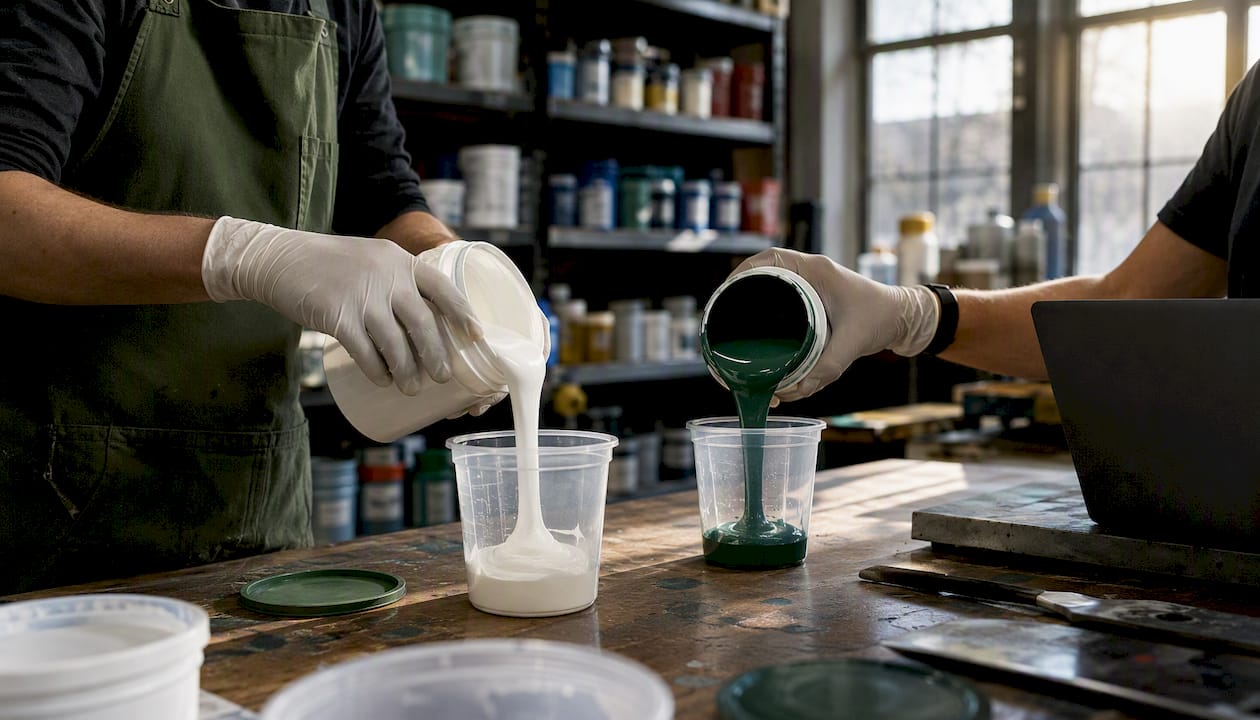
Plastisol is a suspension of PVC (polyvinyl chloride) particles in a plasticizer. It doesn’t dry at room temperature at all. Heat is what triggers the cure: when the ink reaches its target temperature, the PVC particles fuse together and bond to the fabric surface. The result is a layer that sits on top of the fibers rather than inside them.
Water-based ink uses water as its carrier instead of a plasticizer. Pigment or dye is suspended in that water along with a binder. During curing, the water evaporates and the binder chemically bonds the pigment to the fiber. Because the ink penetrates the weave before the water leaves, the print becomes part of the fabric rather than a coating over it.
| Property | Plastisol | Water-based |
|---|---|---|
| Carrier / binder | PVC particles in plasticizer | Water + pigment/dye + binder |
| Cure mechanism | Heat fusion (vinyl melts and bonds) | Evaporation + binder fixation |
| Cure temperature | 300°F–330°F | 250°F–270°F |
| Ink location on garment | On top of fibers | Bonded into fibers |
| Dries on screen? | No | Yes, if not managed |
The lower cure temperature of water-based ink sounds like a win, and it often is, but it also means the ink starts drying on your screen if press cadence slows. Plastisol’s higher cure point is offset by the fact that it stays completely workable at room temperature, which is why beginners often start there.
How do the two inks compare side by side?
Here’s how plastisol and water-based stack up across the attributes that actually matter on press and at retail.
| Attribute | Plastisol | Water-based |
|---|---|---|
| Hand / softness | Heavier, rubbery feel; can be stiff on thick deposits | Soft, breathable; nearly undetectable on light cotton |
| Opacity / vibrancy | Excellent on dark and light garments | Strong on light fabrics; needs discharge or underbase on darks |
| Fabric compatibility | Works on cotton, blends, polyester | Best on 100% cotton; needs additives for high-poly blends |
| Cure temperature | 300°F–330°F | 250°F–270°F |
| Wash durability | ~50+ washes (practitioner estimate) | ~30–40 washes depending on fabric and cure |
| Printability / ease of use | Stays open on screen; forgiving for beginners | Dries on screen; requires faster cadence or flooding |
| Cleanup / environmental impact | Requires solvents; higher VOC exposure | Soap and water; near-zero VOCs in practice |
| Cost and materials | Lower ink cost; solvent-based cleanup supplies | Slightly higher ink cost; water-resistant emulsion required |
| Typical use cases | Dark garments, workwear, specialty effects, high volume | Premium retail tees, soft-hand fashion, light cotton |
Opacity on dark garments
Plastisol’s biggest advantage is coverage. On a navy or black shirt, you can lay down a bright white or yellow with a single pass and get clean, opaque results. Water-based ink on a dark garment is a different challenge. You have two realistic options: a water-based underbase (which adds a screen and a flash step) or discharge printing, which chemically removes the garment dye and replaces it with ink color. Discharge requires an activator mixed on-site and has a limited pot life, so it demands more planning. It also only works on specific reactive-dyed cotton, not every blank.
Wash durability
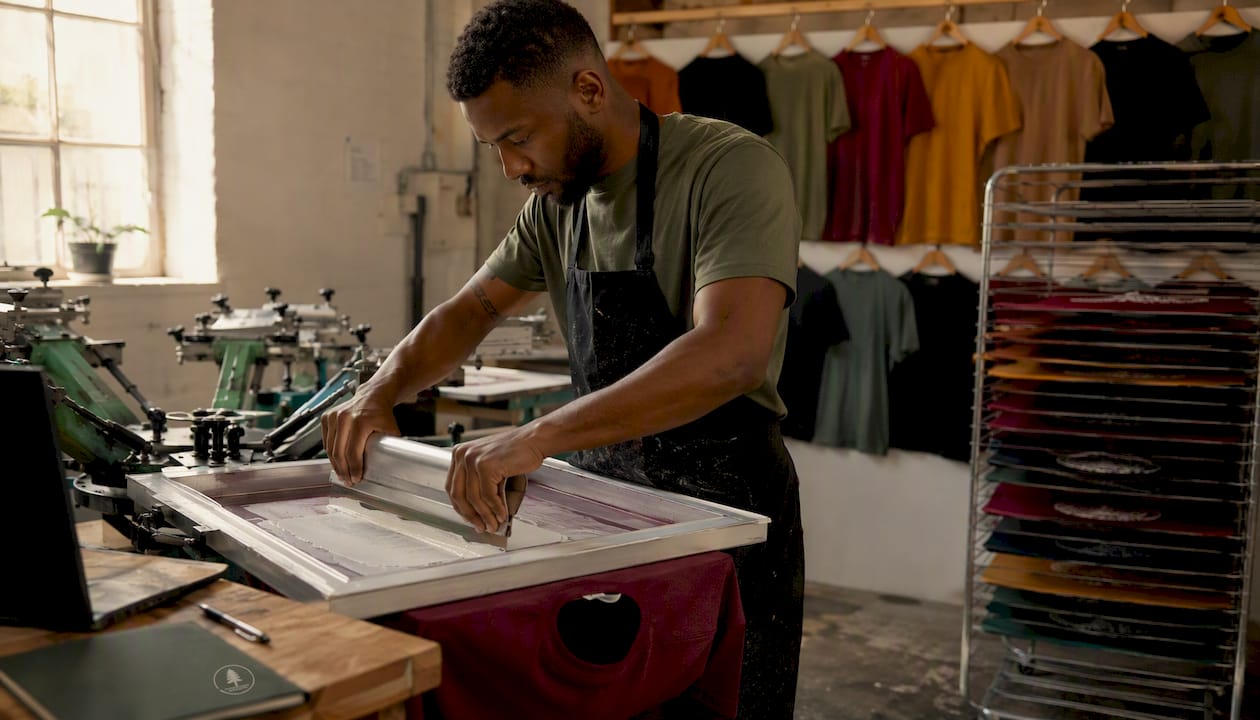
Industry practitioners estimate plastisol prints hold up for 50 or more washes, while water-based prints typically last around 30–40 washes depending on fabric and cure quality. That gap narrows significantly when water-based ink is properly cured on 100% cotton. The real durability killer for water-based is an undercure, which is more common because the ink looks dry to the touch long before the binder has fully set.
Specialty effects
Plastisol is the conventional base for specialty effects like puff, metallic, high-density, and glitter. If your design calls for a raised texture or a foil look, standard water-based formulations won’t get you there. That creative range is a real reason some shops keep plastisol in rotation even when they prefer water-based for everyday work.
Pro Tip: If you’re printing a multi-color design on a dark garment with water-based ink, count your screens carefully. A discharge underbase adds one screen and one flash step compared to a plastisol underbase. On a five-color job, that can meaningfully change your quote and your press setup time.
Which ink should you use for common jobs?
Match the ink to the job, not the other way around. Here’s a quick map:
- High-volume dark-garment merch → Plastisol. Opacity, speed, and screen-open time all favor it.
- Premium retail tees on light cotton → Water-based. The soft hand is the selling point, and the fabric shows it off.
- Garment-dyed blanks (Comfort Colors, similar) → Water-based or discharge. The vintage, worn-in look pairs naturally with a print that lives inside the fabric.
- Workwear and uniforms → Plastisol. Durability and resistance to industrial washing matter more than hand feel.
- Performance polyester or high-poly blends → Plastisol, or a specialty low-bleed plastisol. Standard water-based inks don’t bond well to synthetic fibers without additives, and dye migration from polyester can muddy colors. For more on how fabric composition affects print outcomes, the tri-blend vs cotton comparison at PuckFuel breaks down the tradeoffs clearly.
- Tri-blends (cotton/poly/rayon) → Low-cure plastisol or a water-based formula designed for blends. Standard plastisol cure temps can scorch the rayon content.
- Specialty effects (puff, metallic, high-density) → Plastisol. No standard water-based equivalent exists for most of these.
Pro Tip: If you’re a brand owner selling retail tees, water-based prints justify a price premium because customers can feel the difference immediately. Plastisol specialty effects, like a high-density logo, can also command a higher price point, but for a different reason: visual texture and perceived craftsmanship. Know which story you’re telling before you spec the ink.
Practical tips for better prints and fewer reprints
Mesh and emulsion
For plastisol, a 110–160 mesh count works for most standard designs. Water-based ink needs a water-resistant emulsion, not a standard dual-cure or diazo emulsion. Standard emulsions degrade quickly when water-based ink sits in the screen. A 156–200 mesh count is common for water-based work, especially on finer detail designs.
Underbase and flashing
Plastisol underbases flash quickly and stay put on the shirt. Water-based underbases need a longer flash time to fully evaporate before you print the next color. Rushing that step leaves moisture trapped under subsequent layers, which shows up as adhesion problems after washing.
Confirming cure
Plastisol cures at 300°F–330°F; water-based at 250°F–270°F. A heat gun or donut probe on the ink surface (not the belt) gives you the actual ink temperature. The stretch test works for plastisol: pull the print firmly and it should stretch without cracking. For water-based, a wash test is more reliable. Run a sample through a hot wash and dry cycle before approving a production run. If the print fades or cracks, you have an undercure.
Common problems and fixes:
- Bubbling or blistering → Oven temperature too high or dwell time too long; reduce heat or speed up the belt.
- Cracking after wash → Undercure; increase dwell time or raise oven temp slightly and retest.
- Color shift on polyester → Dye migration; switch to a low-bleed plastisol or reduce cure temperature.
Pro Tip: When running water-based ink, flood the screen between every pull if your press cadence drops below one print every 30–45 seconds. A misting bottle of water near the press is a simple backup. Batch your water-based jobs together so you’re not stopping and starting, which is when clogging happens.
Cure reminder: Water-based ink can look and feel dry to the touch at room temperature while still being significantly undercured. Always verify with a donut probe or wash test, not a finger test alone.
Safety, cleanup, and environmental impact
The environmental gap between these two ink families is real and worth understanding, especially if you’re running a U.S. shop subject to local air-quality or wastewater regulations.
Cleanup and disposal:
- Plastisol requires solvent-based cleaners (mineral spirits, screen wash) to break down ink on screens and squeegees. Those solvents generate hazardous waste that must be disposed of according to local regulations, not poured down a drain.
- Water-based ink cleans up with soap and water. The wastewater still contains pigment and binder, so check your local municipality’s discharge rules before sending it to the drain. Most shops use a settling tank or filter system.
- Discharge activators (used in water-based discharge printing) contain formaldehyde-releasing compounds in some formulations. Handle with gloves and ventilation, and check the SDS sheet for your specific product.
VOCs and air quality: Water-based formulations maintain VOC emissions near zero in practice, while solvent-based cleanup workflows for plastisol can emit significantly more. If your shop is in an area with air-quality permit requirements, water-based ink reduces your compliance burden. Modern water-based pigment inks have closed much of the durability gap with solvent-based systems while keeping VOCs low, which makes them a practical choice for shops trying to reduce chemical exposure.
Shop PPE and ventilation:
- Wear nitrile gloves when handling plastisol, solvents, and discharge activators.
- Run ventilation or exhaust fans over your flash dryer and conveyor oven regardless of ink type. Heated plastisol releases fumes from the plasticizer; heated water-based ink releases steam and binder vapors.
- Keep your SDS binders current and accessible. OSHA’s Hazard Communication Standard (HazCom) requires them for all chemical products in U.S. workplaces.
Key Takeaways
Plastisol wins on opacity and durability; water-based wins on hand feel and sustainability, and the right choice depends on your fabric, your garment color, and your production workflow.
| Point | Details |
|---|---|
| Cure temperature matters | Plastisol cures at 300°F–330°F; water-based at 250°F–270°F — verify with a probe, not a finger test. |
| Dark garments favor plastisol | Opacity on dark fabrics is plastisol’s clearest advantage; water-based needs discharge or underbase. |
| Cotton is water-based’s home | Water-based bonds best to natural fibers; high-poly blends need specialty inks or additives. |
| Wash durability gap | Practitioners estimate 50+ washes for plastisol versus 30–40 for water-based, depending on cure quality. |
| Firstriseoutfitters tees | Garment-dyed Comfort Colors and Bella+Canvas blanks pair naturally with soft-hand water-based printing for a retail-ready feel. |
What water-based printing means for First Rise Outfitters tees
The ink choice behind a shirt is invisible to most buyers, but you feel it the moment you pull it on. At Firstriseoutfitters, the preference for garment-dyed Comfort Colors blanks and premium Bella+Canvas cuts isn’t accidental. Those blanks are chosen specifically because they reward soft-hand printing methods. A water-based or discharge print on a garment-dyed tee looks like it was always part of the fabric, which is exactly the worn-in, river-worn aesthetic the brand is after.
Here’s how that plays out across the line:
- The Brook Trout fishing t-shirt | Vintage Native Waters Angler Tee is printed on a retail-friendly blank where soft-hand water-based methods are a natural fit. The vintage feel of the design lives or dies by the print not feeling like a sticker on the chest.
- The Cutthroat trout anatomy t-shirt | Bella+Canvas 3001 uses a blank that’s widely paired with water-based or soft-hand printing for a premium, fashion-forward finish.
- The Funny Fisherman Shirt, Fishing Definition Tee leans toward bold, punchy graphics where plastisol’s opacity and wash durability make it a strong candidate for keeping colors vivid through repeated washing.
If you’re ordering a custom run or asking about a specific print method, water-based prints on cotton blanks typically add a small cost premium and may extend lead time slightly due to the additional cure verification steps. Plastisol prints on blended or dark-garment styles are generally faster to produce and more forgiving across substrates.
Useful sources for deeper research
These are the most practical references for verifying cure specs, workflow details, and environmental guidance:
- Water-based ink vs. plastisol — Real Thread: Good explanation of how water-based ink absorbs into fabric and why that matters for retail hand.
- Plastisol vs. water-based inks — Screen Print Direct: Covers discharge technique, screen-clogging behavior, and emulsion choices in practical terms.
- Water-based vs. plastisol — French Press Custom: Useful for specialty effects and creative applications where plastisol still leads.
- Plastisol — Wikipedia: Technical background on PVC-based plastisol composition and properties.
Run a short wash test on any new ink-blank combination before committing to a production run. The workflow tips section above covers exactly how to set that up.
The shirts are already made — you just have to pick one
If you’ve read this far, you know the ink debate is real. But here’s the thing: at Firstriseoutfitters, the hard choices have already been made for you.
Every tee in the line is printed on blanks chosen specifically for how they wear and how they print. The garment-dyed Comfort Colors and Bella+Canvas cuts that make up the core collection are paired with print methods that match the design’s intent, whether that’s a soft, faded-in brook trout graphic or a bold fishing definition print that holds its color through a season of tailgate mornings. You’re not buying a blank shirt with ink on it. You’re buying something that was thought through from the blank to the artwork to the way it feels after fifty washes.
Browse the Trout Heritage collection to see the full line, or go straight to the Yellowstone River Co. Fishing T-Shirt if you want a vintage-style tee that wears like it’s been on the river for years.
A printer’s honest take on the water-based debate
The screen printing world has spent years treating water-based ink as the “better” choice, mostly because of its environmental story. And that story is true. But the framing sometimes oversells it in ways that set up real-world disappointment.
Water-based ink is genuinely superior for soft-hand retail prints on 100% cotton. On a garment-dyed Comfort Colors blank, a well-cured water-based print feels like the design grew out of the fabric. Nothing else replicates that. For a brand like Firstriseoutfitters, where the whole aesthetic is built around a worn-in, early-morning-on-the-river feel, that matters enormously.
But the honest version of the story also includes this: water-based ink is less forgiving. It dries on your screen. It needs a water-resistant emulsion. It demands a faster press cadence and a more disciplined cure verification process. And on dark garments or synthetic blends, it requires either discharge chemistry or specialty formulations that add complexity and cost.
Plastisol isn’t going anywhere, and it shouldn’t. For high-volume dark-garment work, workwear, and specialty effects, it’s still the most practical tool. The shops that do the best work aren’t ideologically committed to one ink family. They choose the right ink for the job, and they know how to run both.