
Glacier National Park: What to Wear for Anglers, Hikers & Early Risers
By Bobby Harris — Navy FMF Corpsman (2002–2010), founder of First Rise Outfitters
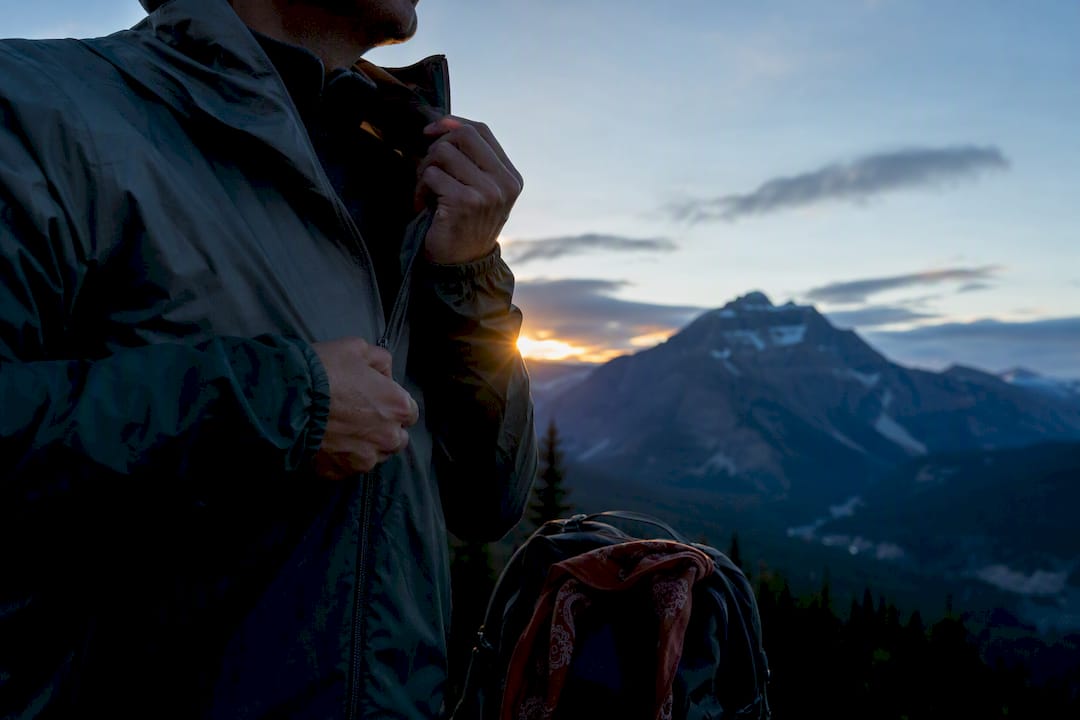
The best Glacier National Park–themed shirts skip the loud tourist-shop logos and go with vintage, nature-inspired artwork printed on garment-dyed blanks like Comfort Colors or Bella+Canvas. That combination holds up to years of wear, not just one trip. Before you buy, check that the seller lists fabric percentages, names the actual blank, and says something honest about how the shirt was made and who it supports.
TL;DR:
- Choose vintage-style, nature-inspired designs with subtle conservation references over loud logos for long-lasting wear and authenticity.
- Prioritize garment-dyed cotton shirts like Comfort Colors for their softness and faded look, and verify fabric percentage and blank brand before purchasing.
- Ensure accurate sizing by comparing with a favorite shirt, considering shrinkage, and looking for detailed model information on the listing.
- Follow proper washing and packing advice, such as washing cold, inside out, and rolling instead of folding, to extend shirt lifespan.
- Look for transparent sourcing, specific conservation partnerships, and artwork credited to actual illustrators to ensure ethical, authentic park apparel.
Table of Contents
- What Makes a Great Glacier National Park–Themed Tee
- What Blank and Fabric Details Actually Matter?
- How Do You Spot Authentic, Ethically Sourced Park Artwork?
- Getting the Sizing and Fit Right for a Souvenir Tee
- Keeping Your Glacier Tee Wearable for Years
- An Ethical Buying Checklist for Any Seller
- What’s the Weather Actually Like in Glacier National Park?
- Why Layering Matters So Much in Mountain Weather
- What Footwear Actually Holds Up on Glacier’s Trails
- Which Accessories Actually Earn Their Space in Your Bag?
- How Clothing Choices Affect Safety in Bear Country
- Why These Choices Matter for Anglers, Hikers, and Early Risers
- Get the Glacier National Park Shirt from First Rise Outfitters
- Sources
What Makes a Great Glacier National Park–Themed Tee
You’re not buying a trinket. You’re buying something you’ll actually wear on Tuesdays. That’s a different job than a magnet or a shot glass, and it changes what “good” looks like.
Apparel earns a permanent spot in your drawer because it combines memory with function in a way small trinkets never do — you get to relive the trip every time you throw it on for a coffee run. That’s a big part of why souvenir apparel outperforms trinkets as a purchase category among park visitors, and it’s also why shopping shows up as a common activity among nonresident travelers to Glacier and the broader region.
The design itself makes or breaks whether that shirt survives past the drive home. What separates a shirt you wear for a decade from one that ends up in a donation pile:
- Narrative artwork over billboard logos. A ridgeline at sunrise or a hand-drawn cutthroat trout reads as art. A giant “GLACIER NATIONAL PARK” across the chest reads as a receipt.
- Muted, wearable color instead of neon tourist palettes that clash with everything else in your closet.
- Subtle conservation cues — a small line about protecting cold-water habitat, a species name, a river reference — that signal the buyer cares about more than the postcard version of the park.
Vintage and nature-inspired designs paired with genuinely comfortable materials are consistently what recreational outdoor shoppers gravitate toward when they’re choosing park-themed casual apparel. Loud graphics might grab attention in the gift shop. They rarely make it into the weekly rotation.
What Blank and Fabric Details Actually Matter?
The artwork gets you to click. The blank determines whether you’ll still be wearing the shirt next year. “Blank” is just industry shorthand for the actual garment before anything gets printed on it, and it matters more than most shoppers realize.
Garment-dyed cotton, the kind Comfort Colors is known for, gets dyed after the shirt is already sewn together. That process gives the fabric a soft, slightly faded look straight out of the package, the kind of feel other shirts take years of washing to earn. If a listing names Comfort Colors specifically, that’s a real quality signal, not just marketing filler.
Fiber content changes how the shirt behaves day to day:
- 100% cotton feels the softest and breathes best, but it shrinks more and dries slower.
- Cotton/polyester blends resist shrinking and dry faster, trading a little softness for durability.
- Recycled polyester blends hold color well and pack light, useful if you’re stuffing a shirt into a daypack.
Printing method matters just as much as fabric. Screen printing tends to hold up longer on high-contrast designs, while direct-to-garment printing handles detailed, multi-color artwork better but can fade faster with rough washing. Fabric details and fiber type matter more than vague marketing language on a product page, and that’s exactly what you should be scanning for before you check out.
Pro Tip: If a listing doesn’t mention the blank brand or fabric percentage anywhere, that’s usually a sign the seller is more focused on the design mockup than the shirt itself.
How Do You Spot Authentic, Ethically Sourced Park Artwork?
Good park artwork looks like something you’d frame, not something you’d see on a rack at a gas station. Species-specific illustrations, like a detailed brook or cutthroat trout rendered in muted river tones, tend to signal a designer who actually cares about the subject rather than a template pulled from a clip art library.
Authenticity is only half the equation, though. Ethical souvenir shopping guidance consistently points buyers toward brands that disclose where and how items are made, and toward transparent sourcing and conservation partnerships over vague “eco-friendly” claims with nothing behind them. That same guidance warns travelers to watch for inauthentic goods dressed up as local craft, a problem that shows up constantly in gateway towns near national parks.
Before you buy, look for:
- A stated donation percentage or named conservation partner, not just a generic “we give back” line.
- Manufacturing transparency, even something as simple as naming the printer or blank supplier.
- Artwork that credits an actual illustrator rather than a stock template reused across a dozen unrelated products.
Sellers who tie their national park apparel to donation-driven conservation work are increasingly what separates a memorable purchase from a forgettable one. For anglers and hikers who care about the water and trails they’re standing on, that distinction is worth the extra thirty seconds of reading a product description.
Getting the Sizing and Fit Right for a Souvenir Tee
Nothing kills the excitement of a new shirt faster than pulling it out of the dryer a size smaller. Souvenir tees are notorious for surprise shrinkage because garment-dyed cotton behaves differently than the poly-blend shirts most people are used to.
- Read the size chart against a shirt you already own and love, not against your general sense of “medium.” Brands size differently, and garment-dyed cotton runs slightly different than standard blends.
- Account for shrinkage on 100% cotton blanks. A shirt that fits perfectly on arrival may tighten up after a few washes, so sizing up by one notch is often the safer call for cotton-heavy blanks.
- Size up intentionally if you want that lived-in, slightly oversized look that a lot of vintage-style park tees are designed around. Stick to true-to-size if you prefer a fitted, everyday layer.
Look for listings that include model height and the size they’re wearing in photos, plus the exact fabric percentage. Those two details alone eliminate most of the guesswork that leads to returns.
Keeping Your Glacier Tee Wearable for Years
A good print outlasts a bad wash routine. Garment-dyed and screen-printed tees hold their color best in cold water, turned inside out, with a mild detergent, and skipping bleach entirely. Bleach doesn’t just fade the fabric, it can eat straight through the ink on a printed design.
For travel, roll the shirt instead of folding it flat, or consider versatile options like Men’s Lightweight Fishing Pants breathable quick-dry that pack easily and dry fast for outdoor use. Rolling cuts down on the deep crease lines that turn into permanent wrinkles by the time you unpack at a lodge or campsite. A lightweight garment bag protects the print from friction against boots, tackle, or anything else sharing space in a duffel.
- Wash cold, inside out, mild detergent, no bleach.
- Roll rather than fold for travel to reduce creasing.
- Hang to dry when possible. Tumble drying is the fastest way to shrink cotton blends and crack printed ink over time.
Pro Tip: A shirt that hangs a little loose and travels a little rumpled without complaint is usually a better daily companion than one that needs babying. That’s a fair trade for years of wear.
An Ethical Buying Checklist for Any Seller
Retail spending, including apparel, makes up a meaningful share of what visitors spend in Glacier Country, according to regional nonresident travel spending estimates. That demand means you’ll see dozens of near-identical shirt designs across different sellers. Use the same checklist every time to sort the good ones from the rest:
- Named fabric percentage and blank brand listed directly on the product page, not buried in a size chart image.
- Model sizing information so you know how the shirt actually fits a real person.
- A clear, specific return policy, not a vague “contact us for issues.”
- Some form of conservation giving or partnership, disclosed plainly rather than implied through a mountain graphic.
Sellers willing to put this much detail on a product page are usually the ones who tested the shirt before listing it, not just uploaded a mockup and hoped for the best. When two sellers offer visually similar designs, the one with more disclosed detail is almost always the safer purchase.
What’s the Weather Actually Like in Glacier National Park?
Glacier’s weather swings hard, and it swings fast. Summer days at lower elevations regularly climb into the 70s and 80s Fahrenheit, but temperatures at higher trailheads and passes can sit 20 degrees cooler, with wind that makes it feel colder still. Mornings start cold enough for a light jacket even in July, then warm up enough by midday that you’re stripping down to a T-shirt.
Spring and fall bring genuine unpredictability. Snow is possible at higher elevations well into June and again as early as September, while valley floors might still see comfortable, mild afternoons. Winter turns the high country into a different world entirely, with sustained cold and heavy snowpack that closes most of the park’s interior roads.
None of this changes what you should be wearing casually around the park’s gateway towns and lower-elevation areas, where a well-made cotton tee works fine for most of the day. It does mean your daily park outfit needs room to adjust as the sun climbs and drops. A shirt that photographs well at the visitor center in the morning should still feel comfortable once the afternoon sun is directly overhead.
Checking the forecast the night before matters more here than in most places, simply because the range of possible conditions in a single day is wider than what most visitors expect walking in.
Why Layering Matters So Much in Mountain Weather
Layering isn’t really about staying warm. It’s about staying comfortable through a temperature swing you can’t predict from the parking lot. Glacier’s mountain climate can shift 20 or 30 degrees between a sunrise overlook and a midday valley stop, and no single piece of clothing handles that range well on its own.
Think of it in three simple layers: something breathable against your skin, something you can add or shed as the temperature moves, and something waterproof or windproof you keep accessible but don’t necessarily wear all day. A comfortable cotton tee works well as that base layer for casual walking and town visits, especially once the sun’s out and temperatures climb into the 70s.
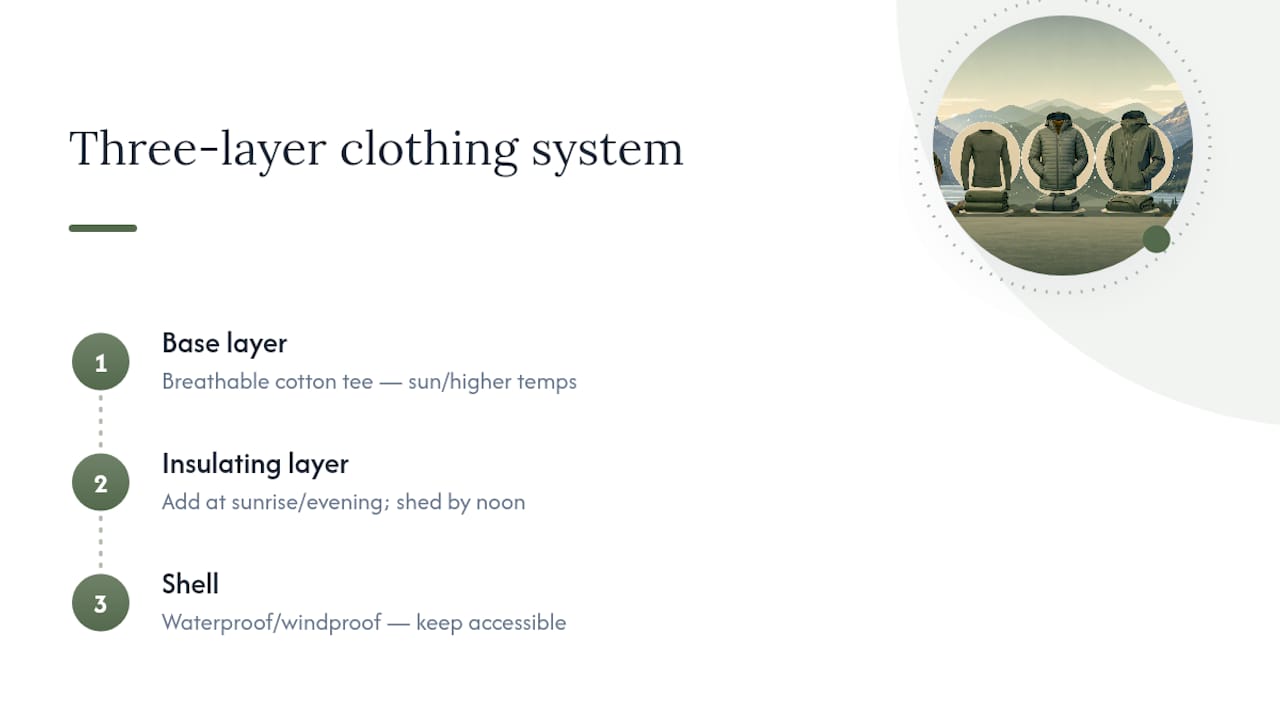
The mistake most first-time visitors make is dressing for the temperature at 8 a.m. and sticking with it. By noon they’re overheated. By early evening, when temperatures drop again near the water or higher elevations, they’re underdressed. Building in the ability to adjust, rather than committing to one outfit for the whole day, solves that problem without requiring a suitcase full of options.
What Footwear Actually Holds Up on Glacier’s Trails
Trail conditions in Glacier range from smooth, packed boardwalks to loose rock and mud, sometimes on the same short walk. Footwear needs to match the terrain you’re actually planning to cover, not the terrain you’re hoping for.
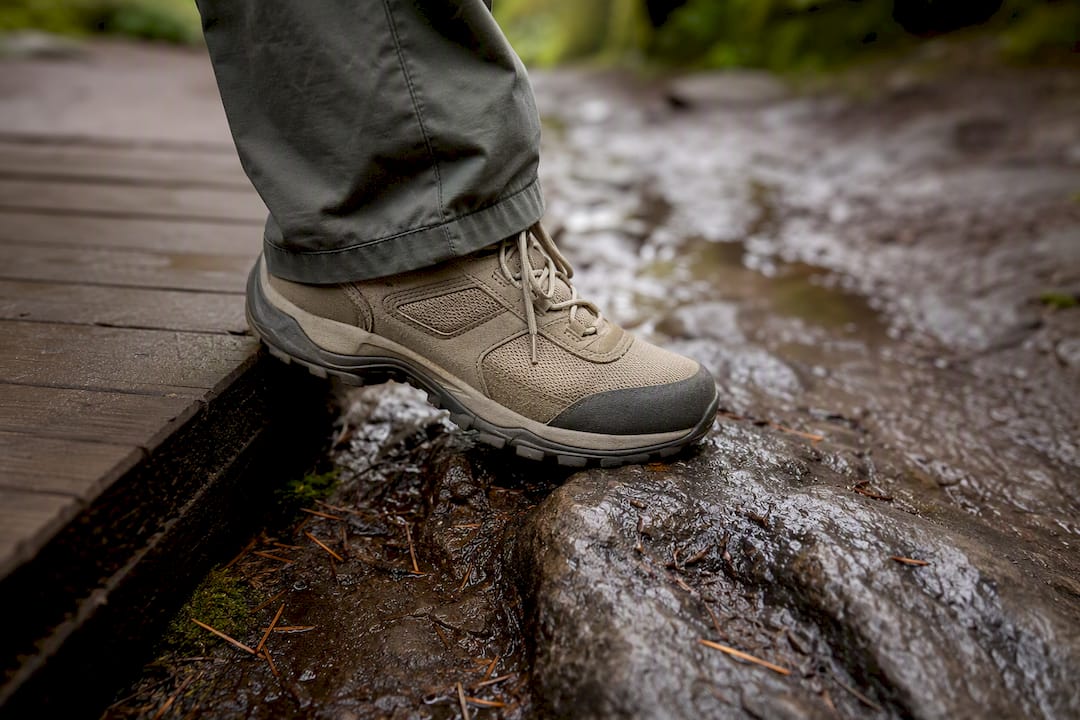
For casual walking near visitor centers, lodges, and easy paved paths, a comfortable sneaker with decent tread is fine. Once you’re heading onto actual trails, especially anything with elevation gain or loose rock, supportive hiking shoes or boots with real ankle support and grippy soles make a noticeable difference. Wet rock and mud show up often enough, even on maintained trails, that traction matters more than most visitors expect.
Break in any new footwear before the trip. Trail shoes that feel fine in a store can produce blisters fast on a six-mile hike, and Glacier’s terrain doesn’t offer many shortcuts back to the trailhead once you’re a few miles in.
Which Accessories Actually Earn Their Space in Your Bag?
A hat does more work than almost any other accessory you’ll pack. Glacier’s sun is strong at elevation, and a wide-brim hat or a simple ball cap protects your face and neck through long stretches without shade on exposed ridgelines.
Sun protection matters beyond the hat, too. UV exposure at higher elevations is stronger than most visitors expect, even on cool or overcast days, so sunscreen and sunglasses belong in the daily routine, not just on the sunniest afternoons.
Gloves earn their spot for early morning starts, especially if you’re heading out before sunrise to fish or catch a sunrise view from a ridge. Temperatures at dawn can sit well below what the afternoon forecast promises, and a light pair of gloves costs you nothing in pack space.
Round it out with a small daypack for layers you shed as the day warms, a reusable water bottle, and a bandana or buff that works as both sun protection and a quick sweat wipe on a climb.
How Clothing Choices Affect Safety in Bear Country
Clothing color and scent both matter more in Glacier than in most parks, simply because you’re sharing trails with an active grizzly bear population. Bright, high-contrast colors like blaze orange or vivid yellow make you more visible to other hikers on shared trails, which matters on blind curves or dense brush where sightlines are short.
Scent is the bigger issue with clothing you might not think about. Strongly scented laundry detergent or fabric softener can linger on clothes long after washing, and that scent travels farther than most hikers realize in bear country. Washing hiking clothes with a mild, low-scent detergent reduces that risk without requiring specialty gear.
Layering also plays into visibility during low-light hours. Early morning starts, common among anglers heading to the water before sunrise, happen in dim light when a bright outer layer makes you easier to spot for both wildlife and fellow hikers. None of this means covering every trip in orange. It means treating visibility as one more practical factor, alongside making noise on the trail and carrying bear spray, rather than an afterthought.
Why These Choices Matter for Anglers, Hikers, and Early Risers
Anglers gravitate toward muted, trout-focused artwork for the same reason they get up before sunrise: it’s not about the catch everyone else sees, it’s about the quiet hour nobody else is awake for. A garment-dyed tee with honest artwork fits that same mindset. It doesn’t shout. It just shows up ready, morning after morning, the way a good rod does.
That’s the whole idea behind First Rise Outfitters: shirts built for the first light, not the gift shop rack.
— Bobby
Get the Glacier National Park Shirt from First Rise Outfitters
If you’ve read this far, you already know what to look for: honest artwork, a real blank brand, and fabric details that aren’t buried in fine print. The Glacier National Park Shirt from First Rise Outfitters is built on a garment-dyed Comfort Colors 1717 blank, printed with vintage mountain goat artwork that reads like a trail map illustration instead of a souvenir logo.
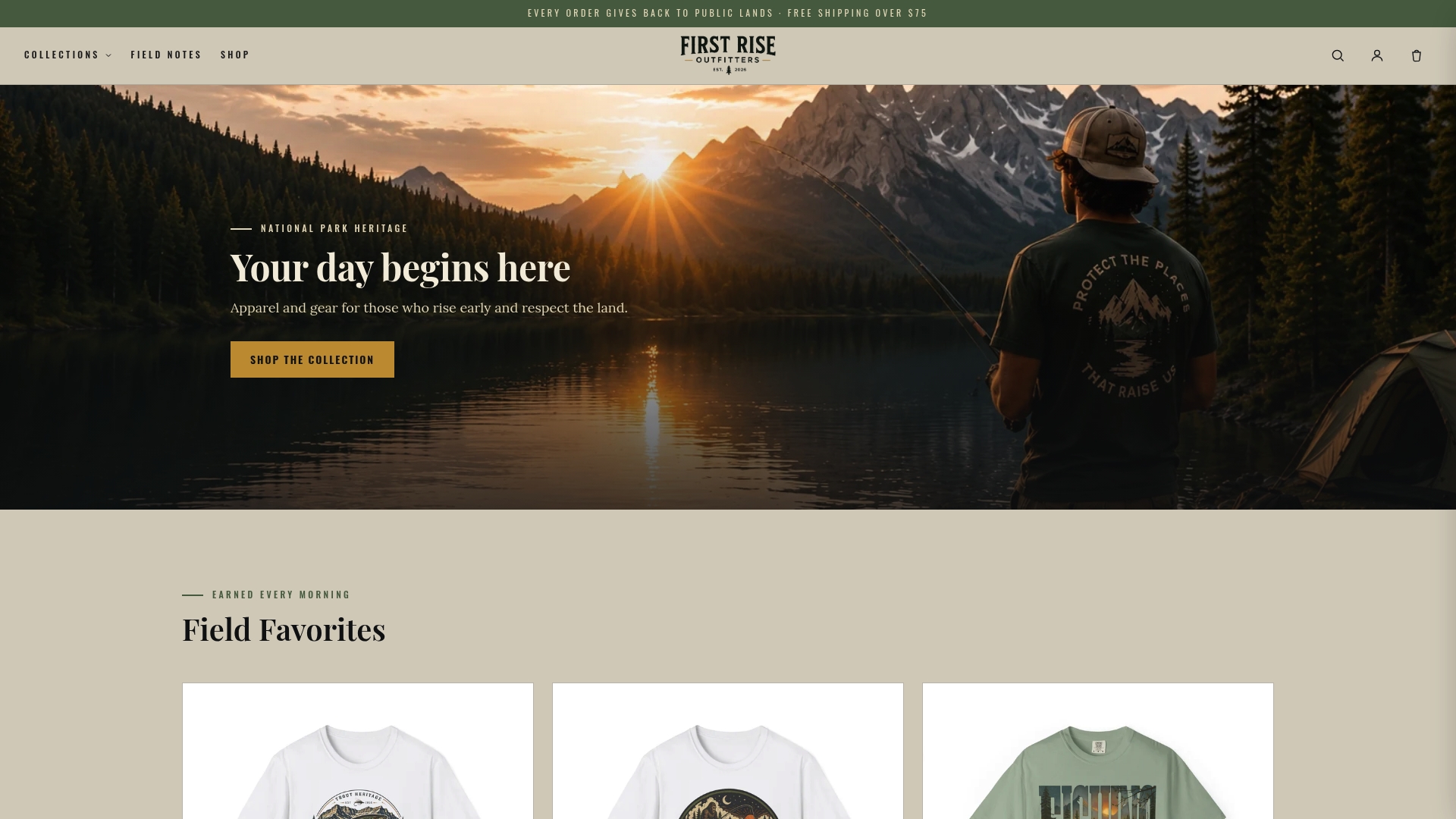
The shirt is available in various sizes to accommodate personal fit preferences, suitable for layering or wearing alone.
| Detail | What to Know |
|---|---|
| Blank | Comfort Colors 1717 (garment-dyed) |
| Fit | True to size; size up for a relaxed fit |
| Best for | Trail wear, everyday layering, gifting |
Shipping and return details are listed on the product page, so check those before you order if you’re buying for a specific trip date. If you’re shopping for someone who spends more time on the water than the trail, the Trout Heritage collection is worth a look too, and the Adventure Awaits Vintage Camping Tee covers the broader outdoor crowd. Order the Glacier tee now and it’ll be ready for your next dawn start, whether that’s a trailhead or a riverbank.
Sources
- Outdoor Industry press release: Landmark project spring 2026 collection
- Impact Travel Alliance — A Guide to Ethical Souvenir Shopping
- Nonresident visitor profile (University of Montana research report)
- National Geographic — Ethical souvenir shopping guide