
What to Wear Hiking in Summer: Your Hot-Weather Guide
By Bobby Harris — Navy FMF Corpsman (2002–2010), founder of First Rise Outfitters
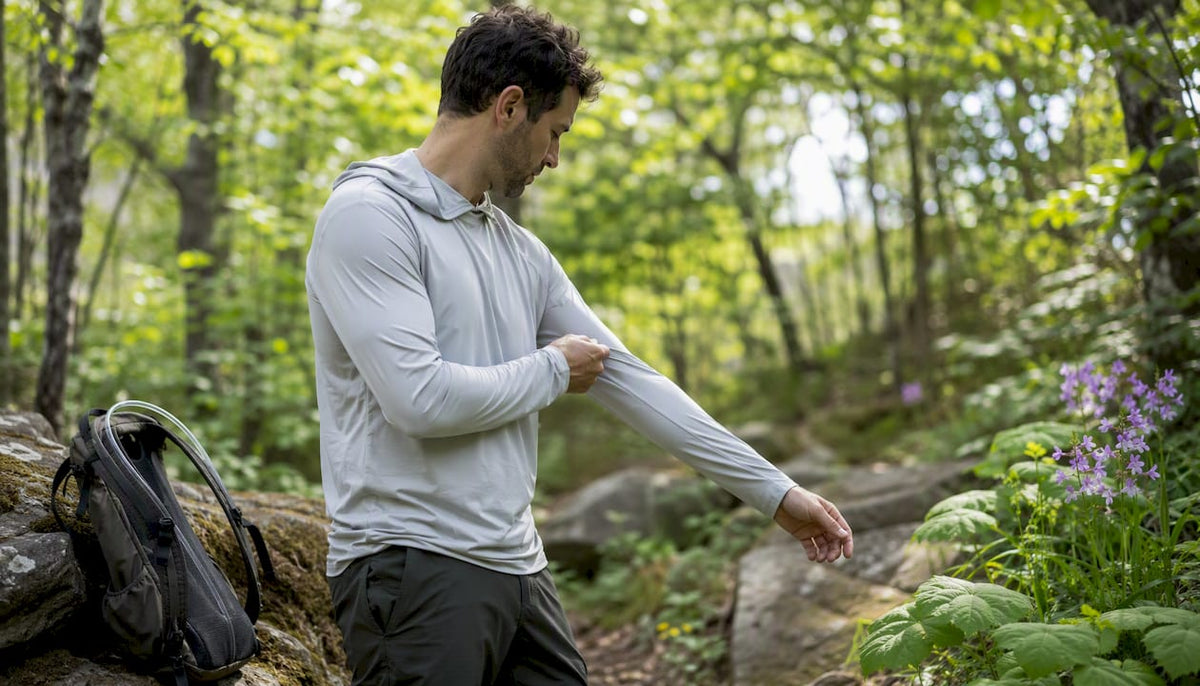
The short answer: a moisture-wicking base layer, a UPF 50+ sun hoodie or lightweight long-sleeve shirt, breathable shorts or light pants depending on terrain, non-waterproof trail runners, a wide-brim hat, UV400 sunglasses, SPF 30+ sunscreen, and more water than you think you need. That system keeps you cooler, protects your skin, and gives you a real margin of safety when the temperature climbs.
Here’s your head-to-toe starting checklist before you hit the trail:
- Hat: wide-brim (3+ inches) or running cap with neck flap
- Sunglasses: UV400, wrap-style
- Top: UPF 50+ sun hoodie or lightweight long-sleeve for exposed routes; breathable short-sleeve tee for shaded hikes
- Bottom: lightweight nylon shorts or convertible pants based on brush and sun exposure
- Underwear/sports bra: synthetic or merino with flat seams
- Socks: lightweight merino or synthetic, not cotton
- Footwear: breathable non-waterproof trail runners
- Sun protection: SPF 30+ sunscreen, SPF lip balm
- Hydration: water plus electrolyte tabs or salted snacks
- Safety note: if the route is fully exposed and the heat index is above 103°F, consider rescheduling or choosing a shaded alternative. Heat exhaustion can develop faster than you expect.
Key Takeaways
A breathable moisture-wicking base, UPF 50+ coverage, non-waterproof trail runners, and a proactive hydration plan form the core of a safe, comfortable summer hiking system.
| Point | Details |
|---|---|
| UPF long sleeves beat bare skin | UPF 50+ fabric blocks most ultraviolet radiation and can feel cooler than bare skin in direct sun by blocking radiant heat. |
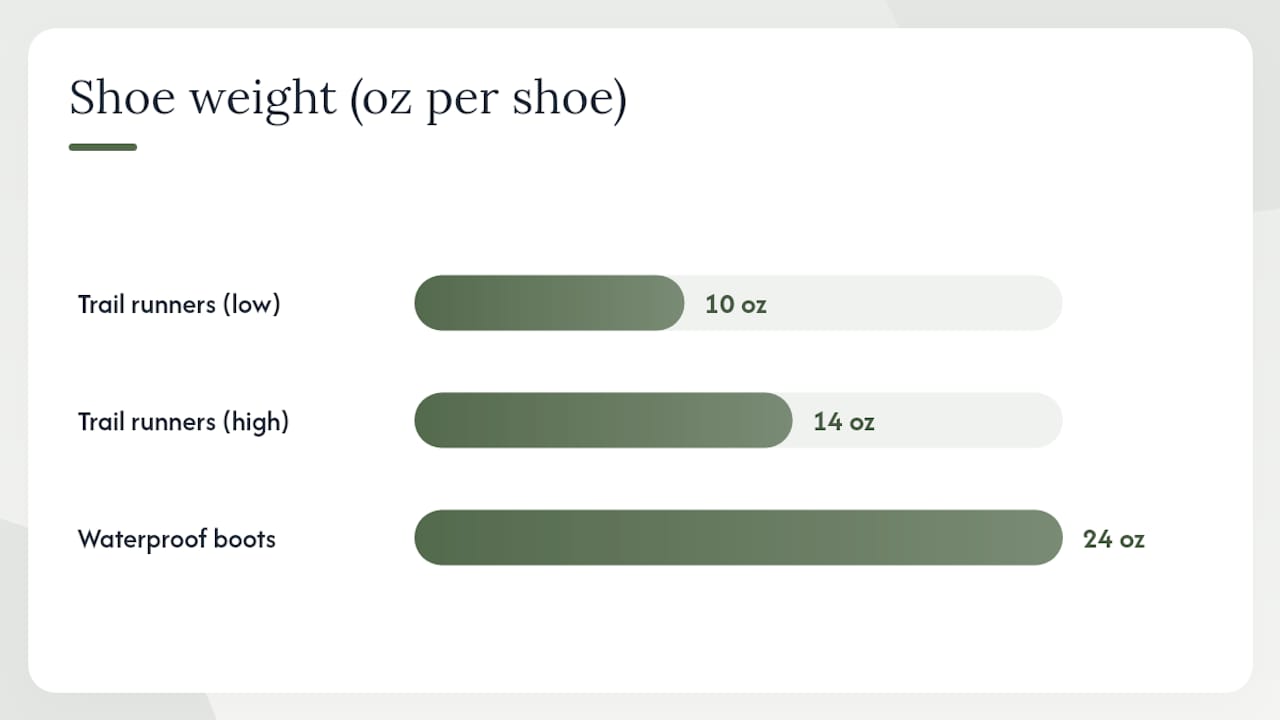
| Skip waterproof boots in summer | Breathable trail runners (10–14 oz) outperform waterproof boots on dry summer trails by keeping feet cooler and drying faster. |
| Hydrate before you’re thirsty | Plan for 50–100% more water than cool-weather hikes; add electrolytes every 1–2 hours on hot, sweaty days. |
| Start early, rest at midday | Target 10 miles by 10 a.m. and use the 1–6 p.m. window as a rest period to cut heat and UV exposure. |
| Firstriseoutfitters tees for casual hikes | Garment-dyed Comfort Colors and Bella+Canvas tees offer breathable, light-colored options for shaded summer trails. |
Table of Contents
- What to wear hiking in summer starts with when you hike
- How to dress from head to toe for a hot summer hike
- What shoes should you wear hiking in summer?
- Summer layering: what to carry and when to use it
- How much water and electrolytes do you actually need?
- How to recognize and respond to heat-related illness
- Your summer hiking packing checklist
- Why UPF long sleeves can be cooler than bare skin
- The gear rule most hikers get backwards
- Firstriseoutfitters gear that fits this guide
- Sources
What to wear hiking in summer starts with when you hike
Clothing choices only work if you time your hike right. The Washington Trails Association recommends targeting 10 miles by 10 a.m. and treating the 1–6 p.m. window as a siesta period on hot days. That single habit reduces your UV and heat exposure more than any single gear purchase.
Elevation helps, too. Temperature drops roughly 3–5°F for every 1,000 feet of gain, so a ridge at 9,000 feet can feel dramatically cooler than the trailhead at 5,000 feet. The tradeoff is UV intensity, which increases with altitude, making sun-protective clothing non-negotiable on high-exposure routes.
Shaded canyon trails and north-facing slopes stay cooler through midday. When you’re planning a summer route, check the aspect and tree cover on a topo map or trail app, not just the distance. A 6-mile exposed ridgeline at noon is a different challenge than a 10-mile shaded river trail.
Pro Tip: Before any summer hike, leave your full itinerary, trailhead name, and expected return time with a contact at home. If you’re on an exposed route and the forecast shows a heat index above 103°F, that’s a real reason to turn back or reschedule.
How to dress from head to toe for a hot summer hike
The core decision is simple: short-sleeve breathable tee for shaded or short hikes; UPF 50+ long-sleeve sun hoodie for long or exposed routes. UPF-rated long sleeves can actually keep you cooler than bare skin in direct sun by blocking radiant heat while still allowing sweat to evaporate. Think of a sun hoodie like a personal shade structure you carry on your back.
Tops
Look for polyester/nylon blends or lightweight merino. Both wick sweat away from your skin and dry fast. UPF 50+ fabric blocks most ultraviolet radiation, which is far more consistent protection than sunscreen alone on a 6-hour hike. Loose fit and light colors (white, tan, light gray) reflect radiant heat rather than absorbing it. Roll the sleeves when you’re in shade; drop them when you hit an open ridge.
For casual, shaded hikes, a well-made breathable cotton-blend tee can work in specific dry conditions, but avoid cotton for most summer hikes because it holds moisture and dries slowly, which leads to chafing and a clammy, uncomfortable feel on longer days.
Bottoms
Lightweight nylon or polyester shorts (5–7 inch inseam) work well for most summer day hikes. If you’re pushing through brush, dealing with ticks, or hiking on a fully exposed ridgeline, lightweight convertible pants give you sun coverage without overheating. Look for fabrics under 4 oz per yard with a UPF rating.
Underwear and sports bras
Synthetic or merino with flat seams. This is where cotton causes the most damage on long days. Moisture-wicking underwear prevents the kind of chafing that can end a hike early. Women’s-specific options with built-in support are worth the investment for anything over a few miles; see Firstriseoutfitters’ guide to women’s outdoor apparel for fit and fabric guidance.
Accessories
- Hat: a wide brim of 3+ inches shades your face, ears, and neck. Crushable straw or nylon works; a running cap with a neck flap is lighter.
- Buff or neck gaiter: soak it in a cold stream and drape it around your neck for fast evaporative cooling on hot stretches.
- Sunglasses: UV400 with a wrap frame to block peripheral UV.
- Lip balm: SPF 30+ on your lips, reapplied every 2 hours.
Pro Tip: Wetting a buff in a cold stream and wearing it around your neck or forehead is one of the fastest ways to lower your perceived temperature on a hot climb. It works best in low-humidity conditions where evaporation is rapid. In humid environments, it still helps, just more slowly.
What shoes should you wear hiking in summer?
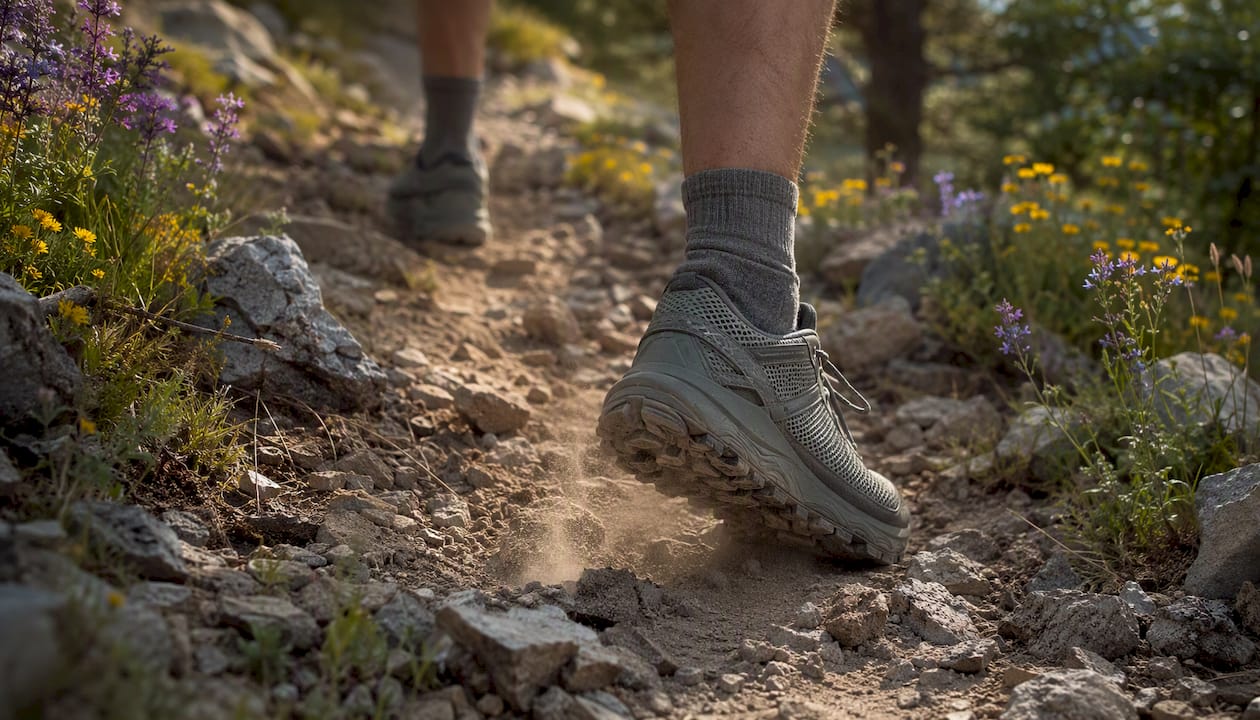
For most summer hikes, breathable non-waterproof trail runners are the right call. Waterproof membrane footwear can trap sweat and heat on hot days, turning your feet into a sauna by mile 3. Save waterproof boots for technical terrain, stream crossings, or wet-season routes where keeping your feet dry actually matters.
| Feature | Trail runners | Waterproof boots |
|---|---|---|
| Typical weight | 10–14 oz per shoe | 24 oz per shoe |
| Breathability | High | Low (membrane traps heat) |
| Drying time after water crossing | 30 minutes | Several hours |
| Ankle protection | Low to moderate | High |
| Best for | Dry summer trails, speed | Technical, wet, or rocky terrain |
Sizing matters more in heat than most hikers realize. Feet swell during long days in warm weather, and many experienced hikers size up a half to a full size compared with their street shoes to reduce friction. Buy your summer hiking shoes in the afternoon when your feet are already slightly swollen, and wear the socks you’ll actually hike in.
For socks, lightweight merino or synthetic blends prevent blisters far better than cotton. Merino regulates temperature and resists odor; synthetic dries faster. Either beats cotton, which bunches, stays wet, and creates hot spots. Pack a second pair of socks and camp sandals for post-hike comfort on overnight trips.
Summer layering: what to carry and when to use it
Summer layering is simpler than three-season layering. A two-layer system, a moisture-wicking base plus an ultralight packable shell, is usually all you need, with an optional thin insulating layer for alpine starts or cool evenings.
Here’s how each layer earns its place:
- Moisture-wicking base (worn all day): your primary temperature-regulation tool; keeps sweat moving away from skin.
- Ultralight wind shell (6–11 oz): blocks wind chill on exposed ridgelines and provides light rain protection for short summer storms. Pack it in the top of your bag for quick access.
- 2.5-layer rain shell: worth carrying on routes with afternoon thunderstorm risk; heavier than a wind shell but keeps you dry in a real downpour.
- Thin fleece or insulating layer: useful for alpine starts before sunrise or camp evenings when temps drop. Leave it at home on low-elevation summer day hikes.
The key is packability. A shell that weighs 6–11 oz and compresses to the size of a water bottle adds almost nothing to your pack but can be the difference between a miserable wet descent and a comfortable one.
How much water and electrolytes do you actually need?
Drink before you’re thirsty. By the time thirst kicks in, you’re already mildly dehydrated, and mild dehydration degrades both physical performance and decision-making. On demanding summer hikes, plan for 50–100% more water than you’d carry in cool weather.
A practical starting point: roughly 16–24 oz of water per hour of active hiking in hot conditions, adjusted up for high heat, direct sun, and steep terrain. Pre-hydrate with 16–20 oz of water in the hour before you start.
Electrolytes matter as much as water volume. Sweat carries sodium, potassium, and magnesium out of your body, and replacing water alone without salts can lead to hyponatremia (low blood sodium), which feels like nausea and confusion. Electrolyte tablets like Nuun or Liquid I.V., salted trail mix, or sports drinks all work. Aim for electrolyte replacement every 1–2 hours on hot, sweaty days.
Cooling tactic: pouring a small amount of water on the back of your neck or wetting your shirt provides fast evaporative cooling. On a Leave No Trace note, use water from your bottle rather than disturbing a stream source.
How to recognize and respond to heat-related illness
Heat illness follows a clear progression, and catching it early is the whole game. The Green Mountain Club and other trail organizations emphasize that immediate cooling, rest, and rehydration are the first responses, with evacuation required if mental status changes.
Signs of heat exhaustion: heavy sweating, weakness, cold or pale skin, fast or weak pulse, nausea, dizziness.
Signs of heat stroke (emergency): confusion, hot and red skin, rapid strong pulse, possible unconsciousness. Call 911 immediately.
Step-by-step response for suspected heat exhaustion:
- Stop hiking immediately and move to shade.
- Remove pack and any unnecessary layers.
- Lie down and elevate legs slightly.
- Apply cool, wet cloths to neck, armpits, and wrists.
- Drink water with electrolytes in small, frequent sips.
- Rest until symptoms fully resolve before continuing, or descend if they don’t improve within 30 minutes.
- If the person becomes confused, stops sweating, or cannot drink, treat as heat stroke and call for emergency help.
For anyone who spends significant time in the backcountry, NOLS wilderness medicine courses teach formal heat-illness response and broader first-aid skills worth having before a remote summer trip.
Your summer hiking packing checklist
Pack this before every summer hike:
Clothing:
- UPF 50+ sun hoodie or breathable long-sleeve shirt
- Lightweight shorts or convertible pants
- Moisture-wicking underwear and sports bra (synthetic or merino)
- Lightweight merino or synthetic socks (plus a spare pair)
- Breathable non-waterproof trail runners
- Wide-brim hat or running cap with neck flap
- Ultralight packable shell (wind or rain)
Sun and skin protection:
- SPF 30+ sunscreen (reapply every 2 hours)
- SPF lip balm
- UV400 wrap sunglasses
- Cooling buff or neck gaiter
Hydration and nutrition:
- Water (plan for 50–100% more than cool-weather hikes)
- Electrolyte tabs or salted snacks
- High-energy trail snacks
Navigation, communication, and safety:
- Downloaded offline map or paper topo
- Fully charged phone; consider a satellite communicator (Garmin inReach or SPOT) for remote routes
- Whistle
- Basic first-aid kit with blister supplies (tape, gel pads)
- Emergency space blanket
Often forgotten in summer: extra socks, SPF lip balm, electrolyte tabs, and a satellite communicator for off-grid routes.
Why UPF long sleeves can be cooler than bare skin
The counterintuitive truth about summer hiking clothes: wearing more can mean staying cooler. Lightweight UPF-rated long sleeves block radiant solar heat while supporting sweat evaporation, which is the body’s primary cooling mechanism. In dry heat especially, a loose sun hoodie acts like a personal shade structure, keeping direct solar radiation off your skin while letting airflow carry heat away.
Moisture-wicking synthetics and merino wool both support this by pulling sweat to the fabric surface where it evaporates. Cotton fails here because it saturates and holds moisture against your skin, slowing evaporation and adding weight. In specific dry-desert conditions, a dampened cotton shirt can provide short-term cooling, but it’s a poor choice for anything technical or long.
Waterproof/breathable membranes like Gore-Tex are worth understanding, too. They block liquid water from entering but also restrict vapor transmission under high-exertion conditions. On a hot summer day with sustained climbing, that means sweat builds up inside the shoe or jacket rather than escaping. That’s why breathable non-waterproof trail runners outperform waterproof boots on most summer routes.
A quick test you can run before a big trip: wear a lightweight UPF long-sleeve on a short 30-minute walk in direct sun and compare it to a short-sleeve tee. Most hikers are surprised to find the long-sleeve feels more comfortable once they’re moving and sweating.
UPF 50+ fabric blocks most ultraviolet radiation, providing consistent coverage that sunscreen alone can’t match over a full day of hiking.
For a deeper look at how technical shirts balance breathability and style, the Firstriseoutfitters guide to technical shirts covers what to look for in a summer-ready top.
The gear rule most hikers get backwards
Here’s the thing about summer hiking advice that most guides miss: the instinct to wear less is usually wrong. Stripping down to a cotton tee and shorts feels logical when it’s 90°F, but it leaves you exposed to radiant heat, UV, and the kind of dehydration-accelerating sunburn that turns a great day into a miserable one.
The smarter move is wearing smarter, not less. A UPF 50+ sun hoodie in a light color, loose fit, and breathable fabric does more for your comfort on a long exposed ridge than bare arms ever will. The Peak Gear Guide’s layering research backs this up: a two-layer system built around a moisture-wicking base and a packable shell covers nearly every summer scenario without overloading your pack.
The same logic applies to footwear. Heavy waterproof boots feel like the “serious” choice, but on a dry summer trail, they’re just hot, heavy, and slow-drying. Trail runners in the 10–14 oz range let your feet breathe and recover faster between days.
The best summer hiking kit isn’t the lightest possible kit. It’s the one that keeps you cool, protected, and moving comfortably for the full day. That usually means a few more ounces of smart fabric, not fewer.
Firstriseoutfitters gear that fits this guide
The shirts Firstriseoutfitters makes were designed for people who are outside before the heat of the day, which means breathability and comfort are built in from the start. The garment-dyed Comfort Colors and Bella+Canvas blanks the brand uses are soft, lightweight, and far more breathable than standard cotton tees, making them a natural fit for shaded summer hikes, trailhead mornings, and post-hike tailgates.
For casual hikes on shaded trails or lower-elevation routes, the Brook Trout Native Waters tee and the Glacier National Park shirt both fit the guide’s recommendation for a breathable, light-colored top that looks good on and off the trail. The muted, river-inspired tones reflect heat better than dark colors, and the relaxed fit allows airflow. Browse the full Trout Heritage collection to find the shirt that matches your trail and your style.
Sources
- How to choose the right summer hiking clothes - Hikes & Trails
- Summer, sun and sweat: A guide to keeping it cool — Washington Trails Association
- What to Wear Hiking in Summer | Peak Gear Guide
- What to wear hiking in summer: Hot-weather essentials - Tree Line Review
- Summer Hiking Tips for the Heat, Haze, and Rain - Green Mountain Club
- NOLS wilderness medicine courses