
What to Wear Under Waders: A Season-by-Season Guide
By Bobby Harris — Navy FMF Corpsman (2002–2010), founder of First Rise Outfitters
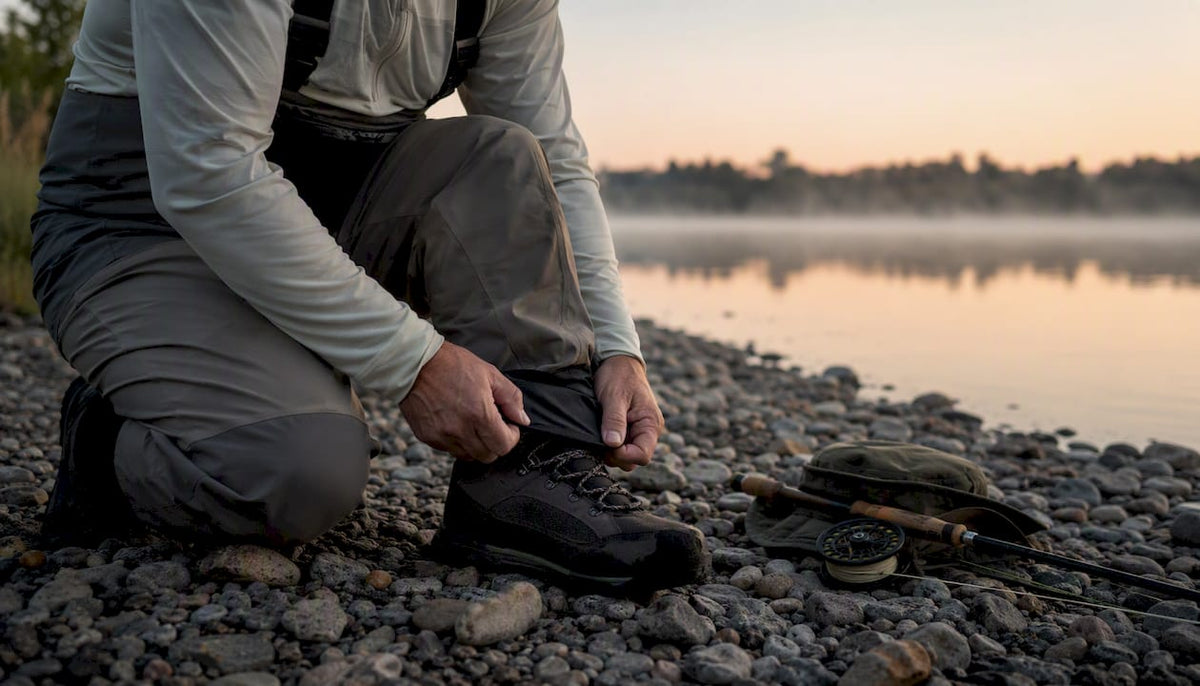
For warm water above 65°F, a lightweight synthetic or merino base layer is all you need. In cool conditions between 45°F and 65°F, add a thin fleece or synthetic mid-layer over that base. When temperatures drop below 45°F or you’re breaking ice at the launch, switch to heavyweight insulating layers or consider neoprene waders entirely. Your wading jacket goes over the waders, not under them, so the hem sheds water outside rather than funneling it in.
Quick TL;DR
Do:
- Wear moisture-wicking synthetic or merino wool next to skin
- Match layer thickness to water temperature, not just air temperature
- Size your wading boots with your full sock and layer system on
Don’t:
- Wear cotton in any layer, ever
- Stack so many bulky layers that your boots feel tight
- Go bare-skin or commando under stockingfoot waders
Two fit checks before you wade: Wiggle your toes freely inside your boots. If you can’t, your socks or mid-layers are too thick and circulation will suffer. Second, squat fully while wearing your waders. If the crotch pulls hard or your knees feel locked, your layers are too bulky for safe wading.
Table of Contents
- Why fabric choice matters more than wader brand
- How layering affects your circulation and safety
- What to wear under waders in every season
- Preventing chafing under your waders
- Your pre-departure checklist
- Key Takeaways
- The layer system that actually works on the water
- Useful sources
Why fabric choice matters more than wader brand
The wader itself is just a shell. What you wear underneath determines whether you stay warm, dry, and comfortable, or end up cold and miserable by 9 AM.
Breathable waders work by passing moisture vapor outward through a membrane, similar to how a Gore-Tex rain jacket breathes. But that membrane can only move vapor efficiently when your base layer spreads sweat thinly across its surface. A base layer that pools moisture against your skin creates a wet barrier the membrane can’t push through fast enough. The result: you feel clammy even when the wader is technically “breathable.”
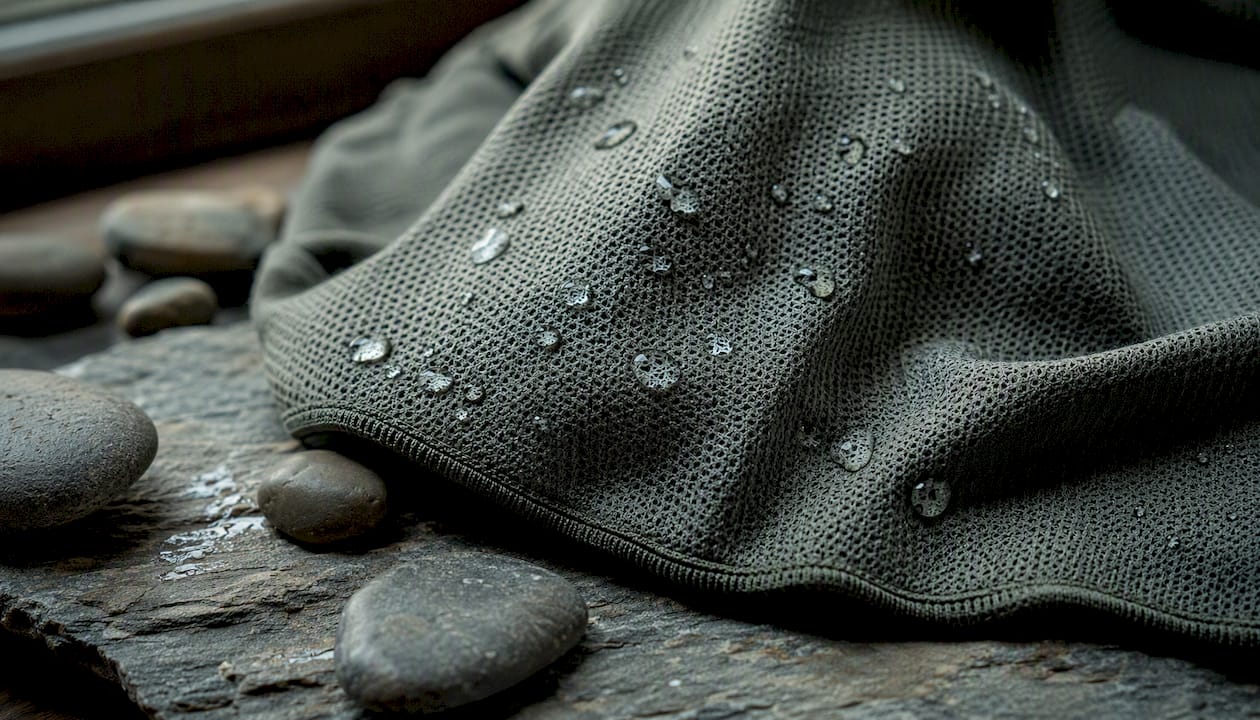
Cotton is the worst possible choice here. Wet cotton pulls heat from your body roughly 25 times faster than dry air, which means a soaked cotton base layer doesn’t just feel cold. It actively accelerates heat loss and raises your hypothermia risk. Jeans, cotton long underwear, and standard t-shirts all belong on the “never” list.
Here’s how the main fabric options actually compare:
| Fabric | Moisture handling | Warmth when wet | Drying speed | Odor control |
|---|---|---|---|---|
| Merino wool | Wicks well | Excellent | Slow | Excellent (natural) |
| Synthetic (polyester/polypropylene) | Wicks fast | Good | Fast | Moderate |
| Neoprene | Traps moisture | Excellent | Very slow | Poor |
| Cotton | Absorbs, holds | Poor | Very slow | Poor |
Pro Tip: Choose merino for multi-day trips or guided float days when you can’t wash layers between sessions. Its natural antimicrobial properties keep odor down far longer than synthetics. Go synthetic when you need fast drying after a dunking or when budget is a factor.
Both merino and synthetics are solid options for base layers under waders. Merino stays warm even when damp and feels softer against bare skin. Synthetics like polyester and polypropylene dry faster and cost less. Neither is universally better. Pick based on your trip length, water temperature, and how much you sweat.
How layering affects your circulation and safety
More layers do not always mean more warmth. Past a certain point, bulk becomes your enemy.
“Bulky layers that restrict movement or cause boots to fit too tightly reduce circulation and lead to cold feet and fatigue — the opposite of what you’re trying to achieve.” — Fly Fisherman
When your wading boots compress your feet and ankles because your sock stack is too thick, blood flow slows. Cold feet on the water are almost always a boot-fit problem, not a sock-thickness problem. Adding another pair of socks makes it worse.
Here’s a quick troubleshooting flow for cold feet: First, check boot tightness. If you can’t easily slide a finger under the lace at the ankle, loosen up. Next, check your sock thickness. If you’re wearing two pairs, drop to one midweight pair. Finally, check your mid-layer. A heavy, non-stretch fleece pant bunched at the ankle can restrict blood flow even when boots feel fine. Switch to a thin, stretchy synthetic layer instead.
For active wading, favor high-loft, low-bulk synthetic insulation or stretchy fleece over stiff, heavy layers. A sizing checklist worth running before you leave the truck:
- Waders: you should be able to take a full stride and lift your knee to hip height without the fabric pulling
- Boots: laced snugly but not tight; toes move freely
- Mid-layer: fits close to the body without bunching at the knee or ankle
- Base layer: no loose fabric pooling at the crotch or inner thigh
What to wear under waders in every season
Season is the single biggest variable in your layering decision. Water temperature, not air temperature, drives the choice.
Summer (water above 65°F)
A lightweight synthetic or merino base layer is usually enough. Many anglers skip waders entirely in summer and wet-wade in quick-drying shorts or lightweight wet-wading pants, which is a perfectly good option on warm, low-gradient streams. If you’re still wearing waders for sun protection or to keep dry, go with a single lightweight base layer and nothing else underneath. A sun-protective fishing shirt worn over your waders handles UV without adding heat inside them. Don’t forget a fishing ball cap for face and neck coverage on exposed water.
Spring and fall (45°F to 65°F)
This is the most variable range, and it’s where most anglers get it wrong by either over-dressing or under-dressing. A midweight base layer paired with a thin fleece or synthetic insulating pant covers most days in this band. On tailwater fisheries where you’re standing still in cold water for long stretches, lean toward the warmer end of your options. On freestone rivers where you’re hiking between runs and staying active, a single midweight base layer often does the job.
Winter and ice (below 45°F)
Heavy synthetic insulation or a union suit under breathable waders works well down to about 25°F. Below that, or when you’re standing in near-freezing water for hours, neoprene waders become the practical choice. Neoprene insulates even when wet, which breathable membranes simply don’t do as effectively in extreme cold. Under neoprene, wear a thin synthetic base layer to manage sweat and reduce the clammy feeling neoprene creates.
| Season | Water temp | Recommended layers |
|---|---|---|
| Summer | Above 65°F | Lightweight synthetic or merino base only |
| Spring/Fall | 45°F to 65°F | Midweight base + thin fleece or synthetic insulating pant |
| Winter | Below 45°F | Heavyweight base + insulated pant, or neoprene waders with thin base |
| Ice/Extreme cold | Below 45°F | Neoprene waders + thin synthetic base layer |
Preventing chafing under your waders
Standard cotton underwear is a bad idea under waders for two reasons: it holds moisture against your skin and the seams create friction points that become painful over a full day of wading. Going without underwear entirely is worse, especially in stockingfoot waders where the neoprene bootie seam sits right at the inner ankle.
Synthetic performance boxer briefs are the most practical next-to-skin option. They wick moisture, dry fast, and keep fabric moving with you rather than against you. Merino briefs work well for multi-day trips. Thin athletic compression shorts are a good choice if you’re prone to inner-thigh chafing on longer hikes between runs.
- Synthetic boxer briefs: best for single-day trips and warm conditions
- Merino briefs: best for multi-day float trips where washing isn’t possible
- Compression shorts: best for anglers who hike significant distances between fishing spots
Pro Tip: Apply a small amount of anti-chafe balm (like Body Glide) to your inner thighs and the back of your knees before a long day. Seam-free garments and flat-lock stitching make a real difference on trips over four hours.
For women, fishing-specific layering options designed for active movement reduce fit problems that standard athletic wear can create under waders.
Your pre-departure checklist
Run through this before you leave for the water.
Above 65°F: Lightweight base layer, synthetic underwear, thin merino or synthetic sock, wading boots sized for that sock stack. Wading jacket over waders if rain is likely.
45°F to 65°F: Midweight base layer, thin fleece or synthetic insulating pant, midweight merino sock, boots sized for that combination. Wading jacket over waders.
Below 45°F: Heavyweight base layer or union suit, insulated synthetic pant, heavyweight wool sock, boots sized accordingly. Wading jacket over waders. Hand warmers in your vest pocket.
Pack these extras regardless of season:
- One spare pair of socks in a dry bag
- A layer you can shed if you warm up (tie it to your pack, don’t leave it in the truck)
- A small wader repair kit (Aquaseal or similar)
- Hand warmers for cold mornings
Final fit checks at the water’s edge: lace your boots and squat. Knees should bend freely. Wiggle your toes. If anything feels tight, loosen before you step in. According to NRS’s layering guidance, matching base-layer weight to your activity level and water temperature is the single most reliable way to stay comfortable across changing conditions.
Key Takeaways
Avoiding cotton and matching your layer weight to water temperature are the two decisions that determine whether you have a great day or a miserable one on the water.
| Point | Details |
|---|---|
| Never wear cotton | Wet cotton loses insulation fast and raises hypothermia risk in cold water. |
| Match layers to water temp | Use lightweight base-only above 65°F; add insulation between 45°F and 65°F; go heavy or neoprene below 45°F. |
| Boot fit drives foot warmth | Cold feet are usually a circulation problem from tight boots, not a sock-thickness problem. |
| Jacket goes over waders | Wear your wading jacket over the wader top so the hem sheds water outside, not in. |
| Synthetic underwear prevents chafing | Synthetic boxer briefs or merino briefs outperform cotton on any wading day longer than two hours. |
The layer system that actually works on the water
There’s a version of this conversation that happens every spring on tailwater fisheries. Someone shows up in jeans and a cotton hoodie under their waders, and by 10 AM they’re standing on the bank, cold and done for the day. The water temperature was 42°F. The air temperature was 58°F and sunny, so it felt like a t-shirt day from the parking lot. That gap between air and water temperature is where most layering mistakes live.
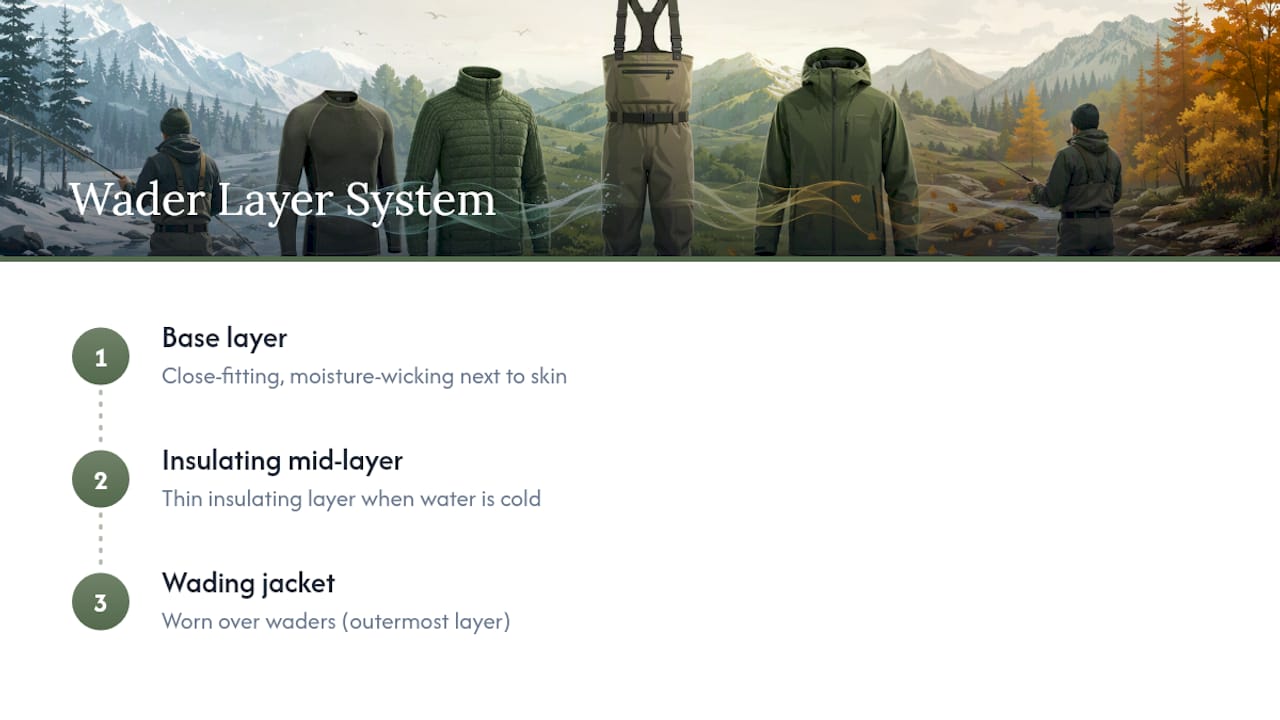
The system that works is simple: a close-fitting, moisture-wicking base layer next to skin, a thin insulating mid-layer when the water is cold, and a wading jacket over the top of your waders. That’s it. You don’t need expensive gear to get it right. You need the right fabrics in the right order.
At Firstriseoutfitters, we’re built around the angler who’s on the water before the sun clears the treeline. That means early mornings when the air is cold and the fish are moving. Getting your layers right isn’t a gear-nerd exercise. It’s what lets you stay out long enough to catch the first rise.
If you’re heading out soon and want something to wear over those waders that actually looks good at the tailgate, check out the Trout Heritage collection or grab something from the current sale before your next trip.
Useful sources
These are the resources that informed this guide. Each one adds something specific.
- What to Wear Under Waders - Fly Fisherman
- Fly Fisherman’s Tackle Checklist: Outerwear - Fly Fisherman
- What to Wear Fly Fishing: A Complete Guide | The Wading List
- What to Wear Fly Fishing: A Complete Guide | NRS
- What to Wear Under Waders: Top Layering Choices for Comfort - TackleVillage
- What To Wear Under Waders In Summer - Fly Fishing Fix
- The Right Way to Layer Waders and a Wading Jacket | Finntrail Blog