The Most Eco-Friendly T-Shirt Materials Worth Buying
By Bobby Harris — Navy FMF Corpsman (2002–2010), founder of First Rise Outfitters
The best eco-friendly t-shirt materials are organic cotton, hemp, linen, lyocell (Tencel), and recycled cotton or polyester blends, roughly in that order depending on how you weigh water use, durability, and feel against your budget. Before you check any of that, though, do one thing: look for a real certification on the tag or product page, not just the word “eco” in the description. GOTS certification is the closest thing this industry has to a gold standard, because it verifies the fiber, the dye process, and the labor conditions all at once.
Here’s the short version to act on right now:
- Prefer organic cotton, hemp, linen, Tencel/lyocell, or certified recycled blends over conventional cotton or virgin polyester.
- Verify with a label, not a marketing claim. GOTS, GRS, and OEKO-TEX all mean something specific.
- Check the print. A “sustainable” shirt printed with plastisol ink still carries a chemical footprint you didn’t sign up for.
Everything below explains why those materials made the cut, and then applies the same checklist to First Rise Outfitters’ own tees, including where they fall short of it.
Key Takeaways
Choosing an eco-friendly t-shirt comes down to picking a lower-impact fiber, verifying it with a real certification, and checking the ink before checking the price tag.
| Point | Details |
|---|---|
| Lead with fiber choice | Favor organic cotton, hemp, linen, lyocell, or certified recycled blends over conventional cotton or virgin polyester. |
| Certifications verify claims | GOTS covers fiber and processing together, while GRS verifies recycled content and OEKO-TEX confirms chemical safety. |
| Ink matters as much as fabric | Water-based and algae-based inks avoid the PVC and phthalates common in plastisol printing. |
| Durability beats disposability | A well-made tee worn for years often has a smaller footprint than a “biodegradable” shirt replaced annually. |
| Where First Rise Outfitters lands | Conventional cotton blanks from Gildan, Bella+Canvas and Comfort Colors. No fiber certification held; the blank is named on every product page so you can check it against this guide. |
Table of Contents
- What Are Eco-Friendly T-Shirt Materials, Material by Material?
- Which Certifications Actually Prove a T-Shirt Is Sustainable?
- Do Printing Inks and Dyes Matter as Much as the Fabric?
- How Should You Wash and Dispose of a Sustainable Tee?
- What Should Be On Your Sustainable T-Shirt Checklist?
- Where First Rise Outfitters Lands on This Checklist
- What Actually Matters More Than the Marketing Copy
- Get Durable, Garment-Dyed Tees Built for Real Mornings on the Water
- Frequently Asked Questions
- Sources
What Are Eco-Friendly T-Shirt Materials, Material by Material?
You’ve probably noticed that “sustainable fabric” gets slapped on everything from bamboo socks to recycled water bottle shirts. Not all of it holds up under scrutiny. Here’s how the fibers you’ll actually run into on a hangtag stack up, starting with the one that started the whole movement.
Organic cotton
Organic cotton solves a specific problem: conventional cotton is one of the most pesticide-intensive crops grown anywhere, and it drinks water like it’s going out of style. Organic cotton skips the synthetic pesticides and fertilizers, which means less runoff into the watershed and, generally, better soil health over time. The catch is that “organic” by itself only tells you about the field. It says nothing about how the fiber was dyed, bleached, or finished into a shirt.
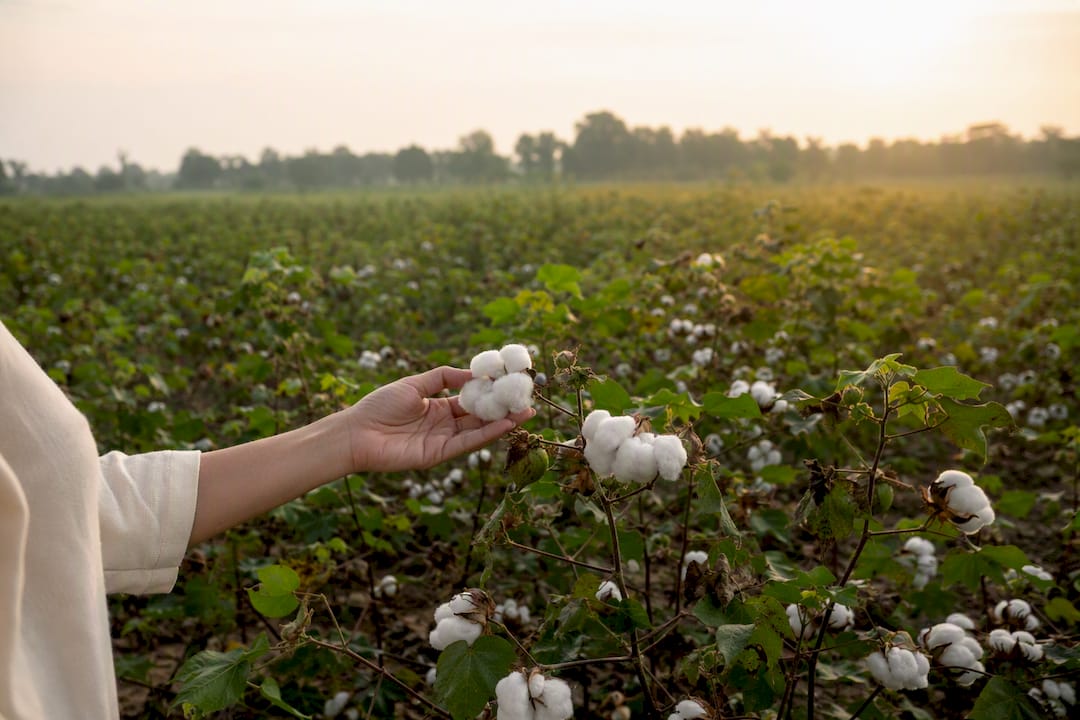
That’s where GOTS earns its reputation. The standard doesn’t stop at the farm gate. It covers harvesting, manufacturing, and labeling, including limits on the toxic dyes that turn an “organic” shirt back into a chemical cocktail somewhere in the supply chain. If you’re only going to remember one certification from this article, make it this one. In terms of feel, organic cotton behaves almost identically to conventional cotton on your skin, soft, breathable, a little heavier when garment dyed, which is exactly why it remains the default choice for most badge tees and graphic apparel.
Hemp
Hemp is the fiber sustainability writers love to talk up and shoppers rarely wear, mostly because early hemp blends had a reputation for feeling like a burlap sack. That reputation is outdated. Modern hemp processing produces a fabric that softens with each wash and holds its shape better than cotton over years of use. Agriculturally, hemp needs a fraction of the water cotton does and grows without much need for pesticides, since the plant is naturally resistant to most of what would bother a cotton field. It’s also fully biodegradable at end of life, assuming it isn’t blended with synthetic fiber.
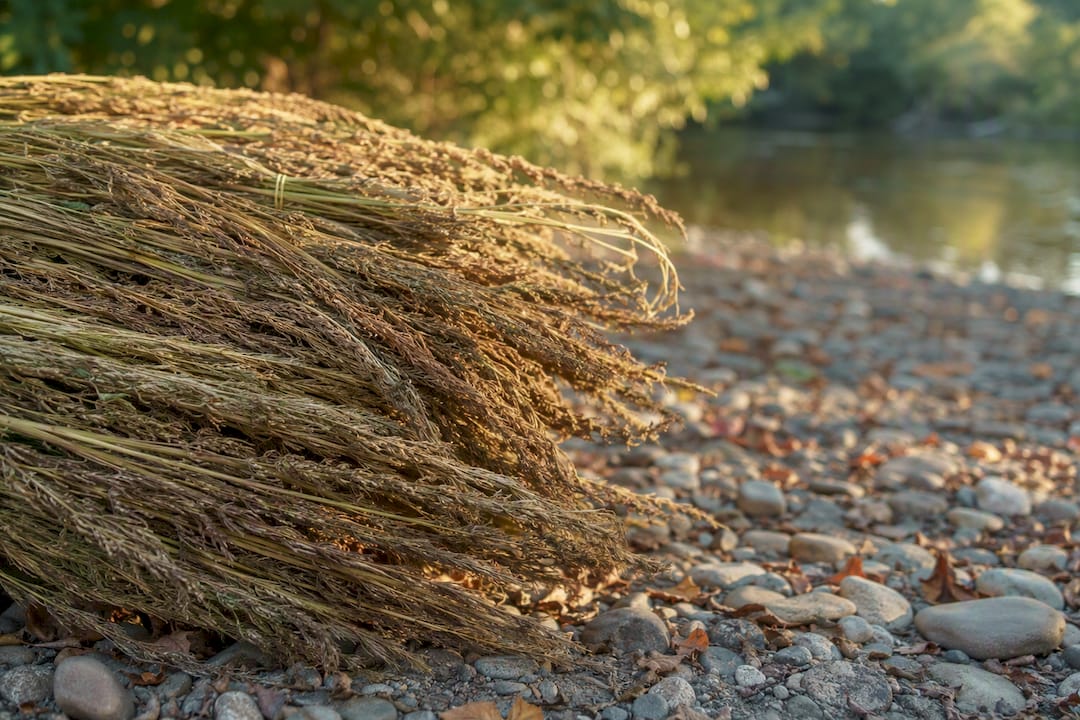
The trade-off is texture and availability. Pure hemp tees run slightly rougher than a combed cotton tee fresh out of the bag, and blends (usually hemp with organic cotton) are more common than 100% hemp for exactly that reason.
Linen
Linen, made from flax, is one of the oldest textiles in continuous use, and it earns that longevity honestly. When grown in regions suited to flax, the crop requires less water and fewer agrochemicals than cotton, and the resulting fabric is famous for lasting decades if you treat it decently. That durability is itself a sustainability feature. A shirt you wear for ten years has a much smaller footprint per wear than one you replace every two seasons.
For t-shirts specifically, linen’s crisp, breathable hand makes it better suited to warm-weather wear than the stretchy knit most people expect from a graphic tee. It’s less common in the badge-tee and printed-graphic space because the weave doesn’t hold fine print detail as cleanly as a ringspun cotton jersey.
Lyocell and Tencel
Lyocell is where fiber science actually gets interesting. It’s a regenerated cellulose fiber, meaning it starts as wood pulp (often eucalyptus) that’s dissolved and re-spun into fiber using a solvent. The reason lyocell shows up on so many “best eco fabric” lists is the production loop: manufacturers can recover most of the solvent used in the process and reuse it, which sharply cuts chemical discharge compared to older rayon methods. Tencel is the branded version of this fiber, and it’s become something of a shorthand for “the good rayon.”
On skin, lyocell drapes softer than cotton and manages moisture better, which is part of why you’ll see it blended into performance and outdoor apparel. It’s also biodegradable, since it’s cellulose at its core. The one caveat worth knowing: not every lyocell producer runs a verified closed-loop system, so a brand naming the fiber isn’t the same as a brand proving the recovery rate.
Pro Tip: If a product page mentions Tencel but doesn’t say anything about closed-loop or solvent recovery, email the brand and ask. A company confident in its sourcing will usually answer in a sentence or two.
Recycled cotton and recycled polyester
Recycled fibers tackle a different part of the problem: not what’s grown, but what’s already been made and thrown away. The environmental case here is strong and quantifiable. Blending recycled cotton with organic cotton, for instance, at a 50/50 ratio, can cut water consumption by up to 91% and lower the global warming potential by about 29% per kilogram compared to fully conventional cotton.
By the numbers: A 50% recycled/50% organic cotton blend uses up to 91% less water and generates roughly 29% less global warming potential per kilogram than 100% conventional cotton.
Recycled polyester carries a similar logic, diverting plastic waste (often bottles) into fiber instead of virgin petroleum as explained in this guide to recycled fabrics in swimwear. The trade-off is real, though: polyester, recycled or not, sheds microplastic fibers in the wash, something cellulosic fibers like cotton, hemp, and lyocell don’t do. If microplastic runoff bothers you, recycled polyester is a step up from virgin polyester, but it’s not in the same tier as a natural or regenerated fiber.
Circular sourcing programs that turn post-industrial cotton waste back into usable fiber are becoming more common across the supply chain, which is gradually making recycled cotton blends easier to find at scale.
Bamboo-derived fibers
Bamboo sounds like an easy win. It grows fast, needs little water, and doesn’t require much in the way of pesticides. The problem is what happens after harvest. Most “bamboo fabric” on the market is actually bamboo viscose, made using a chemically intensive process similar to older rayon manufacturing, and that processing step can undo a lot of the crop’s natural advantage. Mechanically processed bamboo fiber (sometimes called bamboo linen) skips the harsh chemical bath, but it’s rarer and stiffer, closer in feel to linen than to the buttery-soft “bamboo” tees marketed for their softness.
If you’re choosing between bamboo options, look for closed-loop processing claims the same way you would for lyocell. Absent that detail, treat bamboo viscose as a middle-tier choice rather than a top pick.
Wool and emerging materials
Wool rarely shows up in graphic tee construction, but merino wool blends have earned a niche among outdoor brands for odor resistance and temperature regulation. When wool is part of the picture, the Responsible Wool Standard is the certification to look for, since it addresses animal welfare and land management specifically.
Beyond that, a handful of experimental materials are worth knowing about even if they’re not shirt-ready yet. Piñatex, made from pineapple leaf fiber, and various seaweed-derived fabrics are gaining attention as future-facing alternatives, but they remain niche and are not currently a mainstream option for everyday t-shirts. File them under “watch this space,” not “buy this now.” For a deeper walk through how these trade-offs play out in real garment sourcing, there is a full breakdown of sustainable t-shirt materials worth a read.
Which Certifications Actually Prove a T-Shirt Is Sustainable?
A tag that says “eco-friendly” proves nothing on its own. A tag that says GOTS, OEKO-TEX, or GRS proves something specific, and knowing which one covers what keeps you from paying a premium for a marketing claim with no teeth behind it. Third-party certification remains the most reliable way to verify a sustainability claim, because self-reported claims are, unsurprisingly, easy to inflate.
- GOTS (Global Organic Textile Standard) verifies organic fiber content and follows that fiber through processing, manufacturing, and labeling, including limits on toxic dyes and basic social criteria for workers. This is the broadest and most demanding certification on this list.
- OEKO-TEX focuses on chemical safety in the finished product, not organic status. A shirt can be OEKO-TEX certified and still be made from conventional cotton; the standard is telling you it’s free of harmful chemical residue, nothing more.
- GRS (Global Recycled Standard) is the mark to look for on recycled cotton or recycled polyester claims, since it verifies the recycled content percentage and tracks chain of custody back to the recycling source.
- Fair Trade certification addresses labor conditions and wages rather than fiber content, so it’s a useful complement to a fiber certification, not a replacement for one.
- Responsible Wool Standard applies specifically to wool products and covers animal welfare and land management, relevant mainly for wool-blend outdoor gear.
Before you buy, run a quick check on the product page: does it name a specific certification with a certifying body, or does it just say “eco” or “sustainable” with no standard attached? Vague language without a named certifier is the single biggest tell of a greenwashed claim. Even a genuinely organic fiber loses much of its benefit if the downstream dyeing and finishing process undoes the good the farming did, which is exactly why process-inclusive certifications like GOTS matter more than fiber-only claims.
Do Printing Inks and Dyes Matter as Much as the Fabric?
Yes, often as much as the fiber choice itself. A shirt made from certified organic cotton can still carry a heavier chemical footprint than a conventional shirt if it’s printed with the wrong ink. Sustainability doesn’t stop at the fiber; dyeing, printing, and finishing materially affect both environmental impact and what ends up touching your skin.
The biggest divide in t-shirt printing is plastisol versus water-based or algae-based inks. Plastisol, the industry default for decades, is durable and vibrant, but it’s PVC-based and often contains phthalates, chemicals you probably don’t want pressed against your skin all summer. Algae-based inks are emerging as a lower-toxicity, drop-in replacement that performs comparably without the PVC baggage, and water-based inks have long been the standard lower-impact alternative for brands that care.
Dyeing carries its own wastewater concerns, which is why closed-loop dye houses (ones that treat and reuse their water rather than discharging it) matter more than most shoppers realize. Print size and ink coverage affect end-of-life too: a shirt with heavy, thick ink coverage is harder to recycle or compost cleanly than one with a lighter, more efficient print.
- Ask whether the brand uses water-based, algae-based, or plastisol ink, and expect a straight answer.
- Ask whether the dye house treats its wastewater on-site.
- Check whether garment dyeing (post-construction) or fiber dyeing was used, since each carries different water and energy profiles.
Pro Tip: If a brand’s product page mentions “garment dyed,” that usually means the shirt was dyed after sewing, which tends to produce the soft, slightly muted color you see on the Comfort Colors 1717 pieces in this catalog. It’s worth reading a full garment dyed vs. pigment dyed comparison if you want the full picture.
How Should You Wash and Dispose of a Sustainable Tee?
Even a perfect fiber choice can’t undo bad laundry habits. Cold washes, a lower spin speed, and full loads all reduce both energy use and the microfiber shedding that happens every time synthetic (and some cellulosic) fabric agitates in a machine. The EPA’s textile data points to washing as a real source of microfiber pollution, which is one more reason a natural or regenerated fiber, rather than polyester, is the better long-term bet if you’re washing a shirt weekly for years.
Biodegradability depends entirely on fiber type. Cellulosic materials, cotton, hemp, linen, lyocell, will break down in a compost environment over time. Synthetic fibers and most blends will not, no matter how “green” the marketing sounds. A cotton/polyester blend tee is not compostable just because half of it is cotton.
- Wash cold, skip the high spin cycle, and wash full loads instead of half-empty ones.
- Repair small holes and seam splits before you retire a shirt; a patch job adds years.
- Resell or donate rather than trash, and check whether the brand runs a take-back program.
- Remember that a more durable synthetic-blend tee worn for eight years can beat a “fully biodegradable” shirt replaced every eight months.
What Should Be On Your Sustainable T-Shirt Checklist?
Choice paralysis is real when every tag claims to be the responsible option. A short, ordered checklist cuts through that faster than reading ten different brand’s “About Us” pages.
- Check the fiber first. Favor organic cotton, hemp, linen, lyocell, or a certified recycled blend over conventional cotton or virgin polyester.
- Look for a named certification. GOTS, GRS, OEKO-TEX, or Fair Trade, listed by name, not just implied by adjectives like “clean” or “conscious.”
- Ask about the ink. Water-based or algae-based printing beats plastisol on toxicity every time.
- Look for supply chain transparency. Brands that name their mill, printer, or dye house are usually the ones with nothing to hide.
- Consider end-of-life. Does the fiber biodegrade, and does the brand offer repair or take-back options?
- Weigh durability against price. A slightly pricier shirt that lasts five years beats three cheap shirts that don’t.
Watch for red flags along the way: vague language (“eco-conscious,” “planet-friendly”) with no certification attached, missing fiber content on the label, or a brand that can’t answer a direct question about its printing process. None of those are automatic dealbreakers, but stacked together, they’re a pattern worth noticing.
Pro Tip: If you have to choose between a perfectly sustainable fiber that fits poorly and a solidly good fiber (organic cotton, say) in a cut you’ll actually wear for years, take the shirt you’ll wear. The most sustainable garment in your closet is the one you don’t replace.
Where First Rise Outfitters Lands on This Checklist
Run honestly, the checklist above does not flatter this brand, so here it is scored straight.
Step one, fiber: fails. First Rise Outfitters prints on conventional cotton blanks from Gildan, Bella+Canvas and Comfort Colors, in that order by volume. None of it is organic, hemp, linen or lyocell. By the standard set at the top of this article, an organic cotton or hemp-blend tee beats it on the fiber question, and pretending otherwise would make the rest of this guide worthless.
Step two, certification: fails. The brand holds no GOTS, GRS or Fair Trade certificate and does not claim one.
Steps four and six: holds up. Every product page names the blank model, fiber content, fabric weight, country of manufacture and care instructions, so you can run this checklist before you buy rather than after. And the blanks are chosen for weight and construction, which the next section argues is the most underrated lever in this entire conversation.
The best sustainability decision a small apparel brand can make isn’t chasing every new fiber trend. It’s picking a handful of well-made blanks, understanding exactly what’s in the ink, and sticking with suppliers you can actually stand behind.
Bobby, who covers material sourcing and printing methods for the Field Notes section, has written comparisons of water-based versus plastisol ink and garment dyed versus pigment dyed processes, which is where the reasoning behind those choices is written down.
What Actually Matters More Than the Marketing Copy
The conventional advice on eco-friendly fabric treats fiber choice like the whole story. It isn’t. A shirt printed with plastisol ink on organic cotton is still carrying phthalates against your skin, and a “recycled” polyester tee still sheds microplastic in the wash no matter how virtuous the fiber sourcing sounds on the hangtag.
What actually moves the needle, in order: certification you can verify, ink you can ask about by name, and a garment built to survive years of real wear rather than one season of light use. Durability is the most underrated lever in this whole conversation. A heavier, well-constructed cotton tee that lasts eight years often beats a delicate “fully biodegradable” shirt you replace every year, because the footprint of manufacturing a new shirt dwarfs the footprint of washing an old one a few more times.
Prioritize the fiber and the certification first. Everything else, softness, trend fabrics, novelty materials, is secondary to whether the shirt is still in your drawer five years from now.
Get Durable, Garment-Dyed Tees Built for Real Mornings on the Water
If certified organic fiber is your priority, this guide has told you exactly what to look for, and First Rise Outfitters is not it. Go buy the GOTS-certified tee.
If a durable, honestly labeled shirt you will still be wearing in five years is closer to the point, that is what is on offer here. The line runs on Gildan, Bella+Canvas and Comfort Colors blanks, chosen because they hold color and shape through years of dawn patrols, boat decks, and washes rather than one soft-feel season.
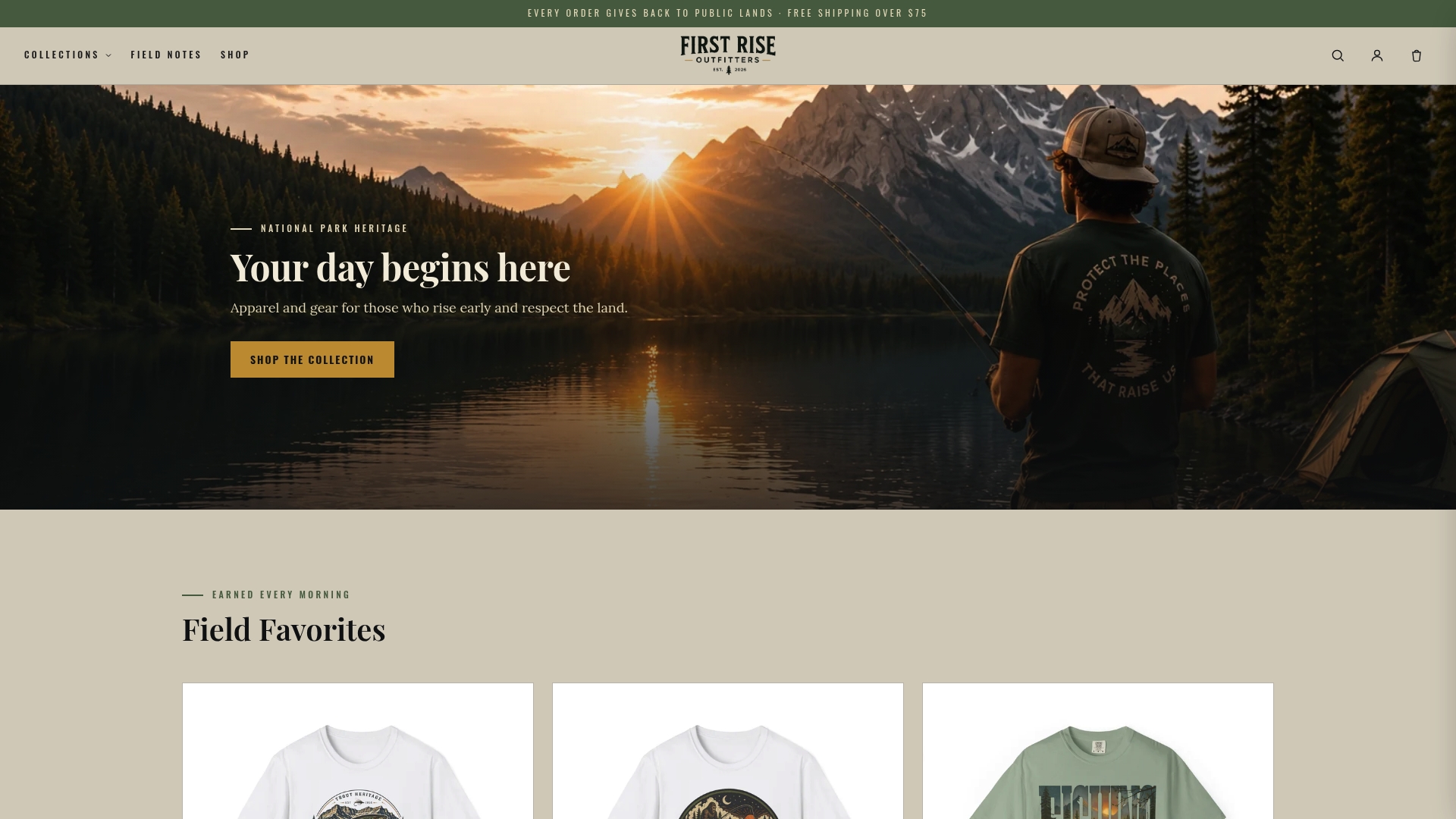
The blank is named on every listing along with fiber content and weight, so you can check it against the checklist above instead of taking anyone’s word for it. That applies to the Cutthroat Trout Anatomy Tee and the rest of the Trout Heritage collection, hand-designed artwork in muted, river-inspired tones. Pick the one that matches the water you fish.
Frequently Asked Questions
What are the most eco-friendly t-shirt materials available right now? Organic cotton, hemp, linen, lyocell (Tencel), and certified recycled cotton or polyester blends are the strongest options currently available at scale, each with different trade-offs in feel, durability, and biodegradability.
Is organic cotton actually better than conventional cotton? Yes, in terms of pesticide use and water impact at the farming stage, but the full environmental picture depends on how the fiber is dyed and finished afterward, which is why GOTS certification matters more than an “organic” label alone.
Are bamboo t-shirts really sustainable? It depends on processing. Most bamboo fabric is bamboo viscose, made with a chemically intensive process that offsets much of the crop’s natural advantage, so look for closed-loop processing claims specifically.
Can a recycled polyester t-shirt be considered eco-friendly? It’s a step up from virgin polyester since it diverts existing plastic waste, but it still sheds microplastic fibers when washed, which puts it a tier below natural or regenerated cellulosic fibers like organic cotton or lyocell.
Does the printing ink on a t-shirt actually matter for sustainability? Yes. Plastisol ink often contains PVC and phthalates, while water-based and algae-based inks offer comparable print performance with a much lower chemical footprint.
How can I tell if a “sustainable” t-shirt claim is genuine? Look for a named, third-party certification such as GOTS, GRS, or OEKO-TEX on the product page. Vague language like “eco-conscious” with no certifying body attached is the clearest sign of a greenwashed claim.
Sources
- Global Organic Textile Standard (GOTS) certification — Eurofins Sustainability Services
- Coats EcoRegen™ lyocell product page
- Texloop® and AGRALOOP™ recycled fiber technologies — Chemistry for Sustainability
- EPA — Textiles: material-specific data