
Anglers: 7 Checks to Spot Truly Eco Friendly Fishing Tees
By Bobby Harris — Navy FMF Corpsman (2002–2010), founder of First Rise Outfitters
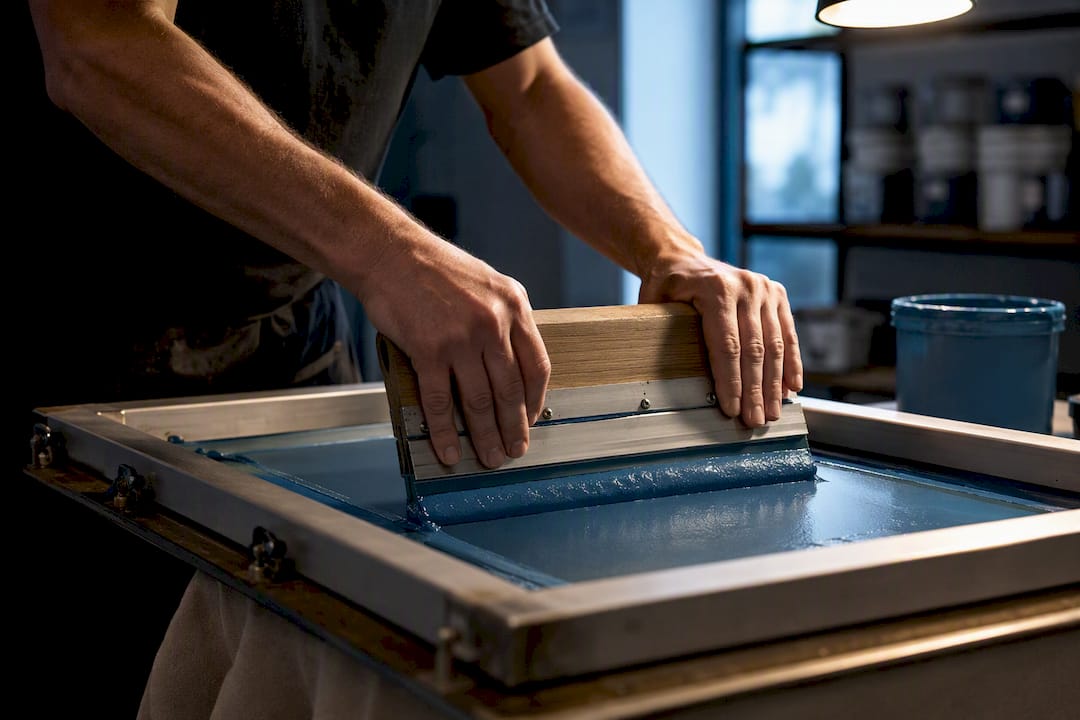
Genuinely eco-friendly screen printed shirts do exist, and you can spot them without a chemistry degree. Look for a named ink type (water-based or PVC-free, not just “eco ink”), a fabric certification like GOTS or OEKO-TEX, and a brand willing to explain its process in plain language. Expect a small trade-off in price or color punch. If a tag just says “sustainable” with nothing to back it, keep shopping.
TL;DR:
- Look for specific ink types like water-based or PVC-free, and verify certifications such as GOTS or OEKO-TEX before purchasing.
- Water-based inks emit fewer VOCs and can meet certification standards, while PVC-free inks show promise for recyclability but lack long-term validation.
- Organic cotton and recycled polyester blanks lower environmental impact prior to printing, especially when combined with garment-dyeing to reduce waste and improve texture.
- Proper curing and washing are essential for water-based prints to match plastisol durability and ease of recycling, with proper process management extending print life.
- Switching to eco-friendly inks can increase lead times and costs slightly, but offers improved durability for outdoor use and a tangible reduction in environmental impact.
Table of Contents
- What to look for when buying a printed shirt marketed as eco-friendly
- Water-based, PVC-free, and plastisol: what’s the real difference?
- Which blank fabrics actually matter for eco-friendly prints?
- How long do eco-friendly prints actually last?
- How do you verify a brand’s eco-friendly claims before buying?
- How First Rise Outfitters approaches eco-friendly screen printing
- Quick buyer checklist: what to confirm before you check out
- Does eco-friendly printing use less energy than conventional methods?
- Does eco-friendly printing slow down production or change pricing?
- An angler’s take on what actually matters in eco-friendly printing
- Sources
What to look for when buying a printed shirt marketed as eco-friendly
A product page that means what it says will tell you specifics, not slogans. You should be able to find the ink family (water-based, discharge, or PVC-free plastisol), the fiber content of the blank, and at least one certification you can look up independently.
Two certifications carry real weight here. GOTS (Global Organic Textile Standard) governs the whole product, from fiber to finished garment, and it sets biodegradability and toxicity limits that apply to the ink too. That last part surprises a lot of shoppers: a shirt printed with conventional plastisol cannot legally wear a GOTS label, no matter how organic the cotton underneath it is. OEKO-TEX ECO PASSPORT works differently. It certifies individual chemical inputs, including inks, so you’ll sometimes see it referenced on a specific ink line rather than the finished shirt.
Beyond certifications, watch for these signals on a listing or brand blog:
- A named ink type instead of vague “eco-friendly” language
- Fiber content plus a certification body you can verify online
- A technical post or field note explaining the actual production choices
- Test reports or third-party screening data, even preliminary ones
- Care instructions that match how water-based prints actually cure
Brands that write real explainers, not marketing fluff, tend to have done the homework the label doesn’t have room for.
Water-based, PVC-free, and plastisol: what’s the real difference?
Ink chemistry is where most of the environmental story actually happens, and the three main categories behave differently enough that it’s worth knowing them by name.
Water-based inks carry lower VOC emissions, skip PVC and phthalates entirely, and lay down a softer hand than a heavy plastisol print. When formulated correctly, they can meet GOTS and OEKO-TEX standards, and properly cured water-based ink on cotton holds up about as well as plastisol over typical garment lifetimes.
Removable, PVC-free inks are the newer development worth watching. A qualitative sustainability screening found these formulations show real promise for reducing toxicity and improving how well a garment recycles at end of life, since the print doesn’t leave behind a plastic film that contaminates textile recycling streams. The catch: that same screening flags open questions on cost and long-term durability, and calls for full quantitative life-cycle validation before anyone claims a final verdict. Treat “recyclable ink” marketing as forward-looking, not proven.
Plastisol remains the shop-floor default because it’s forgiving to print and holds saturated color better than most alternatives. Its downsides show up in cleaning and disposal: PVC content, phthalate plasticizers, and a plastic film that sticks around as microplastic long after the shirt wears out.
- Water-based: lower VOCs, softer feel, certification-friendly
- Removable PVC-free: promising recyclability, still cost/durability unproven at scale
- Plastisol: durable color, but carries PVC and phthalate baggage
Which blank fabrics actually matter for eco-friendly prints?
Ink is only half the equation. The blank underneath it decides whether a shirt can even carry an organic or low-impact claim, and it shapes how the print looks and wears.
GOTS-certified organic cotton and recycled polyester (rPET) reduce upstream impacts before a shirt ever hits a printing table. Organic cotton skips synthetic pesticides and fertilizers during growing, which matters more than most buyers realize since fiber production is often the heaviest environmental cost in a garment’s life, not the printing step. rPET diverts plastic waste into fiber instead of virgin polyester production.
Garment-dyed blanks, such as those made with Comfort Colors fabric, bring a different value: small-batch dyeing after the shirt is already sewn produces the soft, broken-in look anglers want on day one, and it typically uses less water per batch than piece-dyeing large fabric rolls. You can read more about how that garment-dye process cuts waste and still delivers a vintage feel.
- Organic cotton and rPET lower impact before printing even starts
- Garment-dyed blanks reduce batch waste and deliver a lived-in texture
- Tighter cotton weaves generally hold water-based ink detail better than loose knits
How long do eco-friendly prints actually last?
Properly cured water-based ink on 100% cotton holds up for the life of the shirt, comparable to plastisol, according to durability comparisons of the two methods. The curing step is what separates a print that survives years of boat decks and tackle boxes from one that cracks after a season.
Water-based prints also carry a practical afterlife advantage: without a plastic film sitting on top of the fibers, the garment is easier to recycle once it’s worn out, since plastisol’s coating is exactly the kind of contaminant that gums up textile recycling streams.
To keep any print looking sharp, wash inside out in cold water and skip the dryer’s high heat when possible. A print that’s failing shows fine cracks first, usually along fold lines, well before color actually flakes off.
How do you verify a brand’s eco-friendly claims before buying?
Ask three direct questions and you’ll separate real practice from marketing copy fast.
- What ink do you use, by name? A brand that can answer with “water-based” or a specific PVC-free formulation, rather than “eco-friendly ink,” has done real sourcing work.
- What certifications apply, and to what exactly? GOTS covers the whole garment; OEKO-TEX ECO PASSPORT often covers just the ink. Ask which one and get the certificate number if you can.
- Do you have any test data or process write-ups? Even a basic blog post explaining ink choice beats a bare sustainability badge with no context.
Vague language (“eco-conscious,” “planet-friendly”) with no named ink or certification behind it is the single biggest red flag in this category. So is a customer service rep who can’t answer a direct question about fabric sourcing.
Pro Tip: Save the product page before you buy. Brands sometimes update or quietly walk back sustainability claims after customers start asking pointed questions, so a screenshot protects you if a return dispute ever comes up.
How First Rise Outfitters approaches eco-friendly screen printing
The first thing to say is that it doesn’t. First Rise Outfitters does not screen print. Its shirts are printed direct-to-garment and direct-to-film, which is a different process with a different footprint, and applying this article’s checklist honestly means saying so before anything else.
The distinction matters for the ink question above. DTG lays down water-based pigment ink, so the lower-VOC and softer-hand advantages described earlier do apply to those pieces. DTF is a transfer process using a printed film and adhesive powder, and it does not carry the same claim. Both methods are used here depending on the design, and neither is a certified water-based screen print.
What the brand does do is write its choices out in plain language rather than burying them in a footer badge. The field notes break down water-based versus plastisol ink the same way this article does, and pair that with posts on eco-friendly fabric options so buyers aren’t guessing at what’s under the ink.
That transparency matters more for anglers than for casual apparel shoppers. A shirt that’s going to sit under a fishing vest and get soaked at the boat launch needs a print that survives real wear, not just a wash test in a lab. The blanks are Gildan, Bella+Canvas and Comfort Colors, in that order by volume, and every product page names which one you are buying along with fiber content, weight and country of manufacture. That is a narrower set of claims than most brands make in this category, and it is the set that can actually be checked.
Quick buyer checklist: what to confirm before you check out
Before you add a printed tee to your cart, run down this list. Most retailers can answer these in one email.
- Named ink type and any certification tied to it
- Fabric content and whether it carries GOTS or a similar organic certification
- Written care instructions specific to that print method
- Documentation behind any sustainability claim, not just marketing language
- A clear return or end-of-life policy for the garment
- Some visibility into supplier or production location
- Whether any conservation or charity tie-in is real and verifiable
Bookmark the page or ask customer service directly. A brand with nothing to hide will confirm all seven in a short reply.
Does eco-friendly printing use less energy than conventional methods?
Energy use in screen printing comes mostly from two places: curing ovens and washout stations, and eco-friendly ink choices shift the math on both. Water-based inks generally cure at lower temperatures than plastisol inks, which require heat sufficient to fuse the PVC film. Lower cure temperatures translate directly into less oven time per batch and less strain on a shop’s power draw during long print runs.
Washout is the other lever. Plastisol requires solvent-based reclaiming agents to strip screens clean between jobs, and that process often runs alongside ventilation systems working overtime to clear fumes. Water-based ink reclaiming uses water and mild degreasers instead, which cuts both the chemical load and the energy spent running extraction fans at full tilt. Shops that have made the switch to water-based systems report the changeover paying off in utility costs, not just environmental optics.
None of this makes screen printing energy-neutral. Curing still requires heat, and small-batch runs are inherently less efficient per unit than mass production. But the gap between a shop running water-based lines with proper filtration and one running solvent-heavy plastisol at scale is real, and it shows up on the utility bill as much as in any sustainability report.
Does eco-friendly printing slow down production or change pricing?
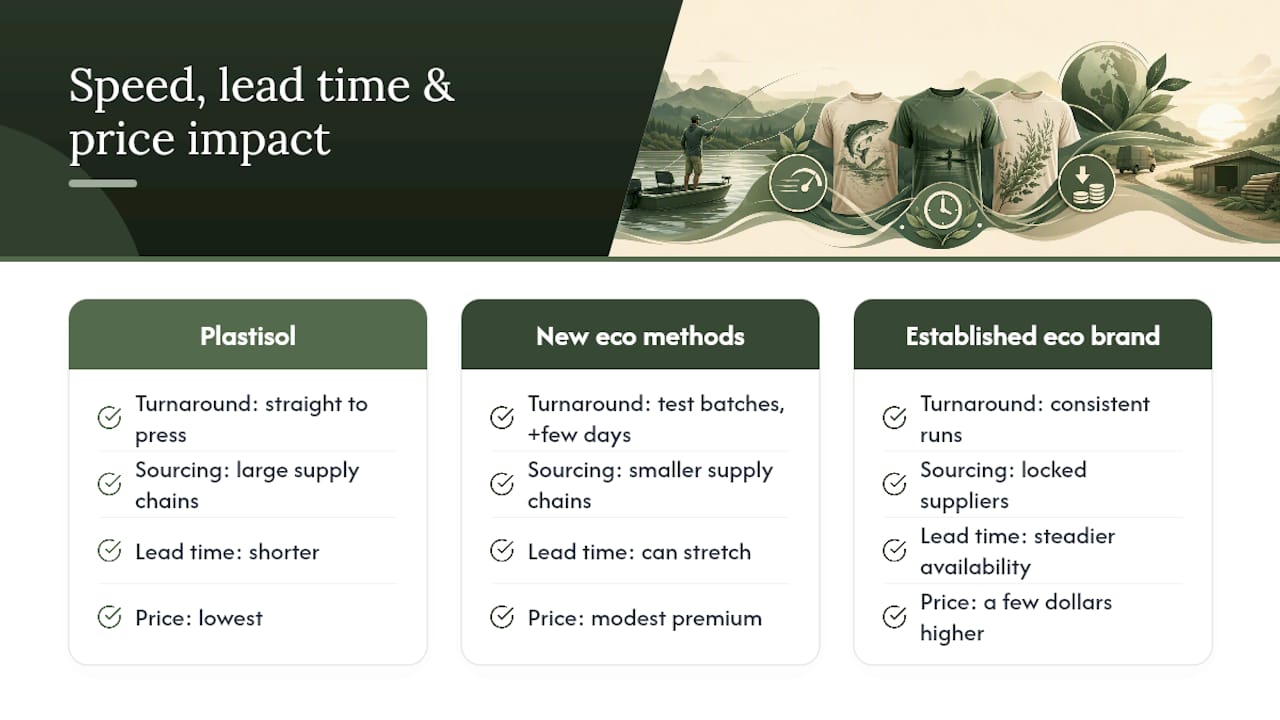
Switching to water-based or certified inputs can introduce additional considerations compared to the established plastisol supply chain. Water-based inks are more sensitive to humidity and screen mesh count, which means smaller shops sometimes run test batches before committing to a full order. That adds a few days to turnaround compared with a plastisol run that can go straight to press.
Sourcing is the bigger timeline factor. GOTS-certified organic cotton and rPET blanks move through smaller supply chains than conventional cotton or virgin polyester, so lead times can stretch, especially for brands ordering in the batch sizes a specialty apparel company works with rather than the volumes a mass retailer commands. That’s part of why small-batch, garment-dyed runs often carry a slightly longer wait and a modest price premium over big-box printed tees.
The upside is consistency once a brand has locked in its supplier relationships. A company that’s already sourced certified organic blanks and qualified a water-based ink line doesn’t face the same scramble every season that a brand switching methods for the first time does. For buyers, that translates into steadier availability from an established eco-conscious brand, even if the sticker price runs a few dollars higher than a shirt printed on the cheapest available plastisol line.
An angler’s take on what actually matters in eco-friendly printing
Most of the advice out there treats eco-friendly printing like a purity test, as if any trace of plastisol makes a shirt disqualified. That framing misses what anglers actually need: a shirt that survives boat decks, bug spray, and a dozen washes without cracking, while doing less environmental damage along the way. Water-based ink on a solid cotton blank hits that mark better than almost anything else on the market right now, and it does it without asking you to gamble on unproven technology.
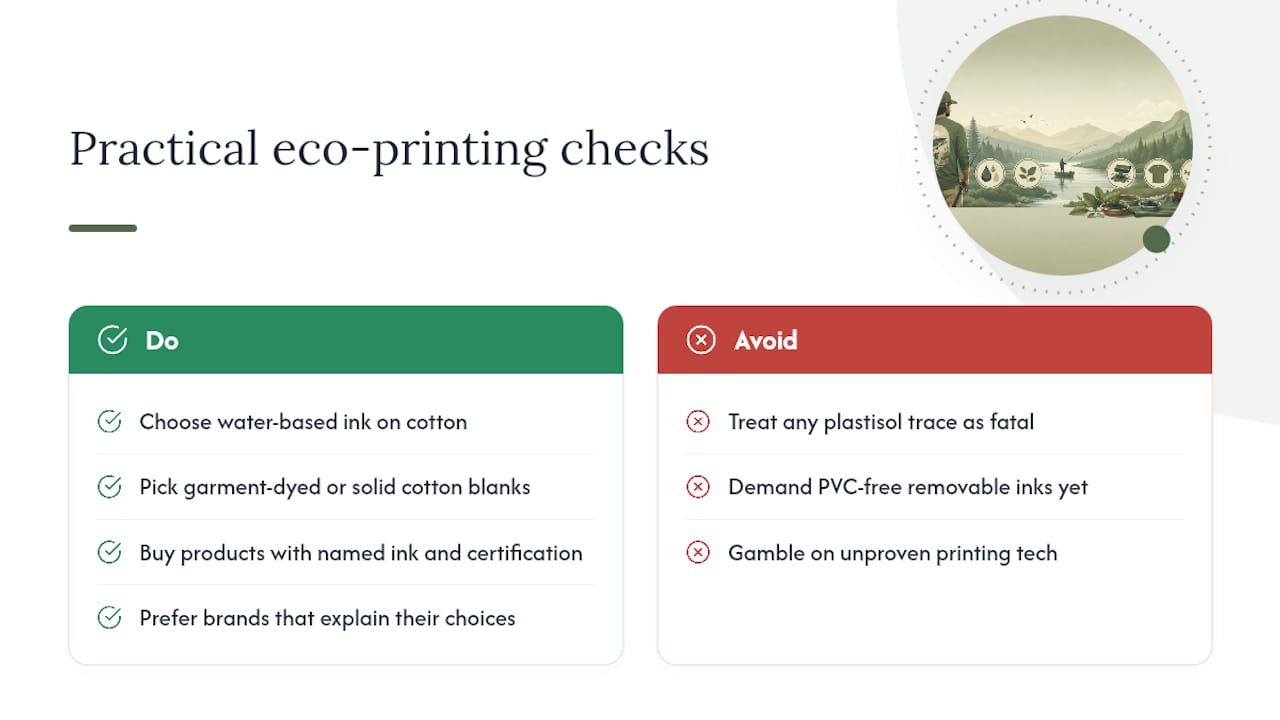
The removable PVC-free inks getting attention in early research are worth watching, not worth demanding yet. The screening data itself says durability and cost are still open questions. Buy based on what’s verified today: named ink, real certification, and a brand that explains its choices instead of hiding behind a leaf icon.
That standard cuts against my own shop as much as anyone’s. The trout tees here are printed direct-to-garment on cotton blanks chosen for durability, not for certification. That is not a GOTS-certified water-based screen print, and if that is what you are after, this guide has told you how to find one. What I will stand behind is that the blank is named on every product page and the process is written down where you can read it.
— Bobby
If garment-dyed cotton and artwork drawn from real rivers is closer to what you want, First Rise Outfitters prints on Gildan, Bella+Canvas and Comfort Colors blanks, with the blank named on every listing. Check the Trout Heritage line for species-specific artwork.
Sources
- Water-based inks vs Plastisol for T-shirt Printing
- Qualitative sustainability assessment of removable, PVC-free ink (SSbD screening)
- What are the environmental benefits of water-based inks? - Permaset