Cutthroat Trout Subspecies: A Field Guide to America's Native Trout
By Bobby Harris — Navy FMF Corpsman (2002–2010), founder of First Rise Outfitters
Cutthroat trout are not one fish. They are a species, Oncorhynchus clarkii, that split into more than a dozen distinct forms as the Pleistocene carved the West into separate basins. Robert Behnke identified 14 subspecies. Two of them are extinct. One is still debated. And in 2023 a committee proposed breaking the group into four separate species entirely. If you have caught a cutthroat in Montana and another in Nevada, you have almost certainly caught fish from lineages that have been apart for tens of thousands of years.
Key takeaways
- Cutthroat trout are a single species, Oncorhynchus clarkii, divided into 14 subspecies identified by Robert Behnke beginning in the 1950s.
- Two subspecies, the Alvord and the Yellowfin, are extinct.
- The name comes from the red-orange slashes under the lower jaw, present on every subspecies.
- In 2023 the Committee on Names of Fishes proposed elevating four cutthroat groups to full species rank.
- Most cutthroat you catch today live in headwater refuges, not the large rivers and lakes they once filled.
In this article
- Are all cutthroat trout the same species?
- What is the slash, and does every cutthroat have one?
- Which cutthroat subspecies are there?
- Which cutthroat subspecies are extinct?
- Why are scientists proposing four species instead of one?
- How big do cutthroat trout get?
- At a glance
- Why the subspecies matter when you are standing in the water
- FAQ
Are all cutthroat trout the same species?
All cutthroat trout belong to one species, Oncorhynchus clarkii, but that species contains far more variation than a single name suggests. Starting in the 1950s, biologist Robert Behnke reexamined the group and identified 14 subspecies, sorting them by morphological traits, Pleistocene events, and modern geographic ranges. His designations, as a 2024 review in Evolutionary Applications puts it, "became instrumental in recognizing and preserving the remaining diversity of cutthroat trout."
The reason there are so many is geography. Ice age flooding and drying repeatedly connected and severed western drainages. Fish stranded in the Lahontan Basin stopped exchanging genes with fish in the Snake River. Given enough isolation, each population drifted into its own form.
That same 2024 review opens by noting the taxonomy "has been in flux" for almost 200 years. This is not settled science. It is an argument that has been running since the 1800s and is still running now.
What is the slash, and does every cutthroat have one?
The slash is the mark that names the fish. The Oregon Department of Fish and Wildlife describes cutthroat plainly: "These trout are named for the red-orange slashes on the underside of the lower jaw." Every subspecies carries them, though intensity varies by fish, season, and water.
The slash alone is not a reliable identification. Rainbow trout and cutthroat interbreed readily, and the resulting hybrids commonly show a slash inherited from the cutthroat side while carrying rainbow traits elsewhere. Anglers see the red mark, stop looking, and log a cutthroat that is genetically half something else.
Spot distribution is the better second check. Cutthroat generally carry fewer spots toward the head and more toward the tail. On Lahontan cutthroat specifically, ODFW notes that spots on the head help separate that subspecies from other inland cutthroat.

Which cutthroat subspecies are there?
The subspecies list below follows the taxonomy used in the 2024 Evolutionary Applications review, which catalogs each form with its scientific name and current standing.
Coastal (O. clarkii clarkii). The Pacific slope fish, and the only cutthroat with a sea-run form. ODFW describes them as blue-green on top, red along the lateral line, white on the belly, with the red throat slash on adults.
Westslope (O. clarkii lewisi). Northern Rockies. Nine separate lineages have been hypothesized within it, making it the most internally varied subspecies on the list.
Lahontan (O. clarkii henshawi). Adapted to the dry, highly alkaline waters of the Lahontan Basin across California, Nevada, and southeast Oregon. Two lineages hypothesized.
Bonneville (O. clarkii utah). The Great Basin fish, with a distinct Bear River form.
Yellowstone (O. clarkii bouvieri). The best known inland subspecies and the one most anglers picture.
Colorado River (O. clarkii pleuriticus), Greenback (O. clarkii stomias), and Rio Grande (O. clarkii virginalis). The southern Rockies group. Genetic work places Greenback and Rio Grande as a single clade, suggesting one ancestral invasion of the east slope rather than several.
Humboldt (O. clarkii humboldtensis) and Paiute (O. clarkii seleniris). Great Basin desert forms with very small native ranges.
Snake River fine-spotted (O. clarkii behnkei). Status listed as debated. Whether it is a true subspecies or a form of Yellowstone cutthroat is unresolved.


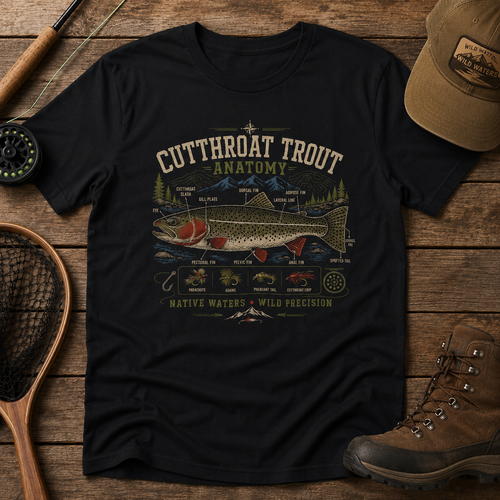
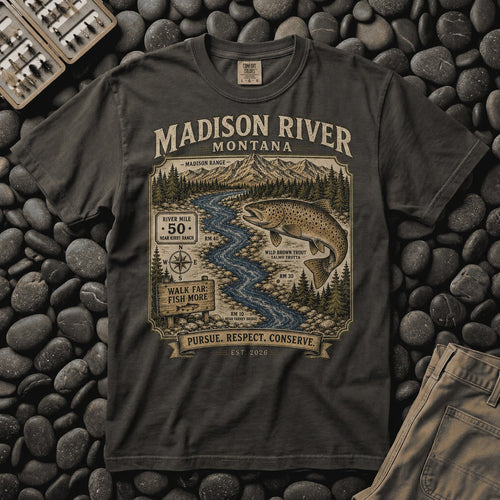
A native trout drawn the way a field guide draws one. Labeled, accurate, and printed on a garment-dyed blank.
Which cutthroat subspecies are extinct?
Two cutthroat subspecies are gone. The Alvord cutthroat (O. clarkii alvordensis) of the Alvord Basin in Oregon and Nevada, and the Yellowfin cutthroat (O. clarkii macdonaldi) of Colorado's Arkansas River basin, are both listed as extinct in the 2024 review.
The Yellowfin is the starker loss. It was a large fish from a single drainage, and it disappeared after rainbow trout were stocked into its water. Because no Yellowfin specimen could be examined with modern sequencing, its exact place in the family tree can only be inferred from geography. It sat between the South Platte and Rio Grande basins, so it most likely belonged to the same east-slope clade as the Greenback and Rio Grande.
That is what extinction costs beyond the fish. The answer to where it belonged is no longer recoverable.
Why are scientists proposing four species instead of one?
In 2023 the Committee on Names of Fishes recommended elevating four cutthroat groups from subspecies to full species: O. clarkii, O. lewisi, O. henshawi, and O. virginalis. Under that arrangement the coastal fish keeps clarkii, westslope becomes its own species as lewisi, the Lahontan group becomes henshawi, and the southern Rockies group including Yellowstone, Bonneville, Colorado River, Greenback, and Rio Grande falls under virginalis.
The argument is that the genetic distance between these groups is larger than the subspecies label implies. Molecular work has largely reinforced Behnke's original phylogenies while showing that some relationships within them are weakly supported.
For anglers this is not academic. Legal protection, hatchery policy, and which fish may be stocked where all follow taxonomic lines. Redrawing those lines redraws the management map.

Drawn from Glacier National Park water, where westslope cutthroat still hold on in the cold upper drainages.
How big do cutthroat trout get?
Cutthroat size depends almost entirely on what the water allows, and the spread is enormous. ODFW notes that coastal cutthroat living year-round in small streams "may not get any bigger than 8- or 9-inches." The same agency reports that Lahontan cutthroat stocked into Mann Lake at the base of Steens Mountain reach 20 inches or more, feeding primarily on smaller fish.
Sea-run coastal cutthroat sit between those extremes and grow fastest of all. Feeding on crustaceans and small fish in salt water, ODFW reports they can grow up to one inch a month.
A nine-inch headwater fish and a twenty-inch lake fish can be the same subspecies. Food supply and water volume, not genetics, account for most of the difference.
Cutthroat subspecies at a glance
| Subspecies | Scientific name | Core range | Status |
|---|---|---|---|
| Coastal | O. clarkii clarkii | Pacific slope, sea-run form | Accepted |
| Westslope | O. clarkii lewisi | Northern Rockies | Accepted, 9 lineages hypothesized |
| Lahontan | O. clarkii henshawi | Lahontan Basin, CA / NV / SE OR | Accepted, 2 lineages hypothesized |
| Bonneville | O. clarkii utah | Great Basin | Accepted, Bear River form |
| Yellowstone | O. clarkii bouvieri | Yellowstone and upper Snake | Accepted |
| Colorado River | O. clarkii pleuriticus | Upper Colorado basin | Accepted, 3 lineages hypothesized |
| Greenback | O. clarkii stomias | South Platte and Arkansas | Accepted, subject to revalidation |
| Rio Grande | O. clarkii virginalis | Rio Grande basin | Accepted |
| Humboldt | O. clarkii humboldtensis | Humboldt River, NV | Accepted |
| Paiute | O. clarkii seleniris | Silver King Creek, CA | Accepted |
| Snake River fine-spotted | O. clarkii behnkei | Snake River, WY | Debated |
| Alvord | O. clarkii alvordensis | Alvord Basin, OR / NV | Extinct |
| Yellowfin | O. clarkii macdonaldi | Arkansas River, CO | Extinct |
Subspecies, scientific names, and status follow the taxonomy table in the 2024 Evolutionary Applications review. Ranges are generalized.
Why the subspecies matter when you are standing in the water
Knowing which cutthroat you are holding changes how you treat it. A Yellowstone cutthroat from a large river and a Paiute cutthroat from a single California creek are the same species on paper and entirely different propositions in practice. One has a wide range. The other has almost none.
The 2024 review also explains how the damage was done. When cutthroat fisheries declined, managers "focused on re-establishing the depleted fisheries with fish from alternative sources, rather than reviving local populations." Stocking non-local trout into native water is how distinct lineages were blended away, and it is why hybridization is now a central conservation problem rather than a curiosity.
The practical version is short. Check the regulations for the specific water, because native cutthroat streams often carry rules the rest of the state does not. Keep fish wet and handle them briefly. And if you are fishing designated native water, treat every fish as though the population depends on it, because in the smaller drainages it does.
Our catch and release guide covers handling, and the trout conservation guide covers what native populations are up against.

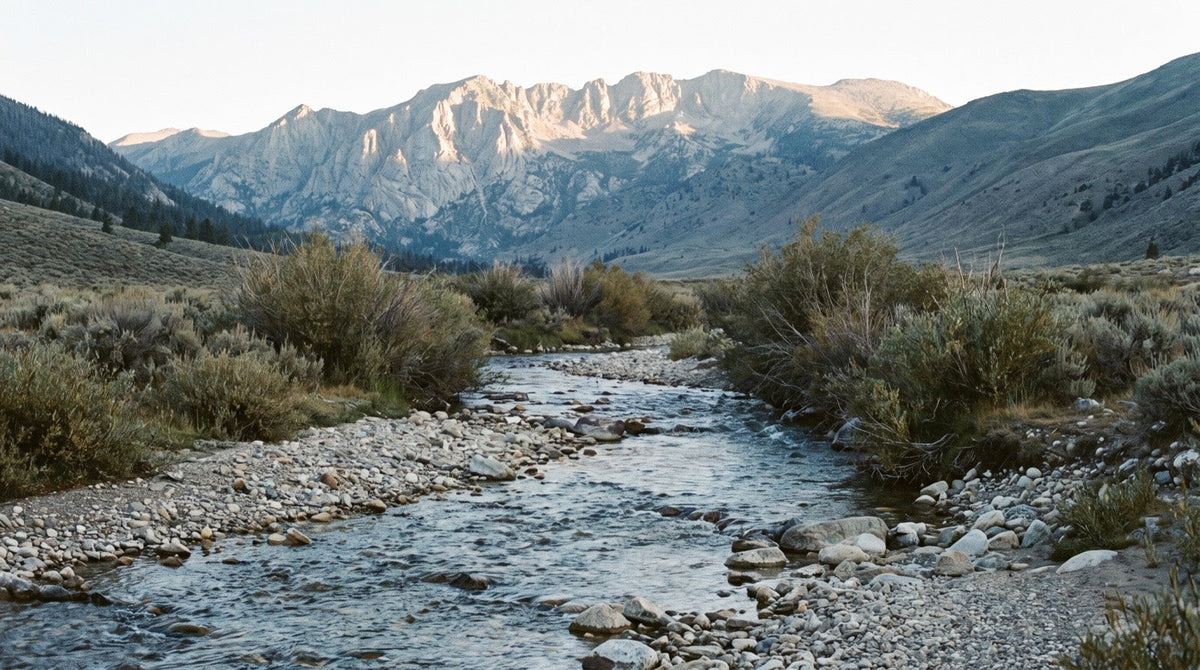
Colorado water. Greenback and Colorado River cutthroat country, and the drainage the Yellowfin was lost from.
Frequently asked questions
How many cutthroat trout subspecies are there?
Robert Behnke identified 14 subspecies of cutthroat trout beginning in the 1950s, sorting them by morphological traits, Pleistocene events, and geographic range. A 2024 review in Evolutionary Applications catalogs 13 named forms and notes that two of them, the Alvord and the Yellowfin, are extinct. The exact count is still debated because the taxonomy has been revised repeatedly for almost 200 years.
Why are cutthroat trout called cutthroat?
The name comes from the red-orange slashes on the underside of the lower jaw. The Oregon Department of Fish and Wildlife describes the mark as the defining feature of the group. Every subspecies carries it, though the intensity varies with the individual fish, the season, and the water it lives in.
Are any cutthroat trout subspecies extinct?
Two are. The Alvord cutthroat of the Alvord Basin in Oregon and Nevada, and the Yellowfin cutthroat of Colorado's Arkansas River basin, are both listed as extinct. No Yellowfin specimen was available for modern genetic sequencing, so its exact relationship to the other subspecies can only be inferred from where it lived.
Are cutthroat trout becoming four separate species?
It has been proposed. In 2023 the Committee on Names of Fishes recommended elevating four cutthroat groups to full species: Oncorhynchus clarkii, O. lewisi, O. henshawi, and O. virginalis. The reasoning is that genetic distance between the groups exceeds what a subspecies label implies. It matters beyond naming, because legal protection and stocking policy follow taxonomic lines.
How can you tell a cutthroat from a cutthroat-rainbow hybrid?
The throat slash alone will not tell you, because hybrids commonly inherit it from the cutthroat parent while carrying rainbow traits elsewhere. Check spot distribution as a second signal. Cutthroat generally show fewer spots toward the head and more toward the tail, and on some subspecies the pattern of spots on the head itself separates them from other inland cutthroat.
Sources
- Using de novo transcriptomes to decipher the relationships in cutthroat trout subspecies (Oncorhynchus clarkii), Evolutionary Applications, 2024
- Cutthroat trout, Oregon Department of Fish and Wildlife
- Behnke, R. J. Trout and Salmon of North America, 2002, for the original 14-subspecies framework
- Page et al., 2023, Committee on Names of Fishes, for the four-species recommendation
- Fish photography: Jim Mogen / USFWS and Joanna Gilkeson / USFWS, public domain
The Rivers You Fish. The Species You Chase.
Field-guide inspired apparel celebrating native trout, wild rivers, and the places worth getting up before daylight for.
Shop the Collection →Free shipping on orders over $75.